
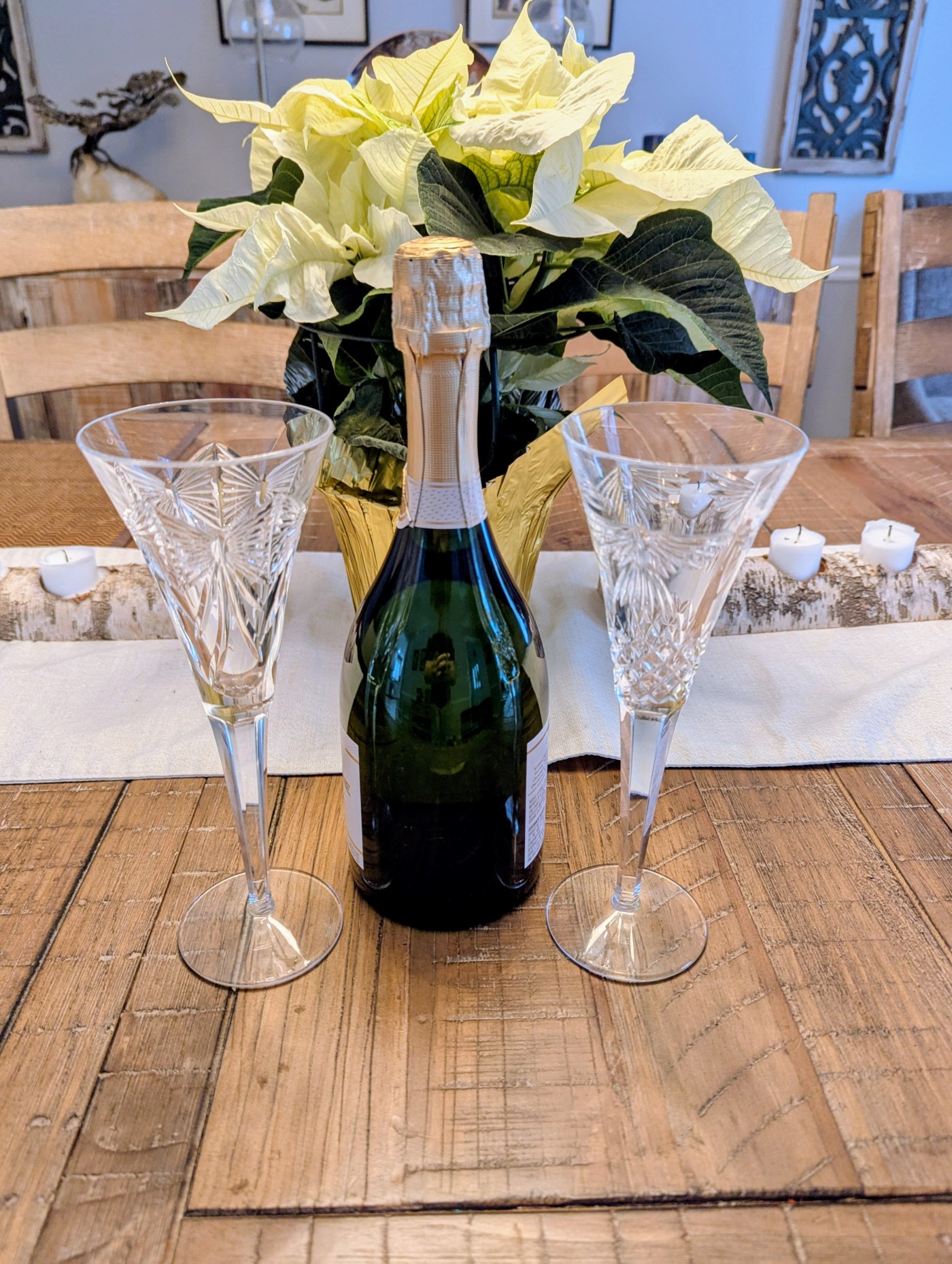
Here we go again, my merry band of misfits: New Year’s Eve. That magical night when we all pretend, we’re still 25, charming, and hangover resistant. You were safe.
You were home. Sweatpants on. Fridge stocked. Liver finally calling a tentative truce. And then, bam, another invite, another reason to button a shirt or slip on a dress and fake enthusiasm under a canopy of twinkling lights and bad playlists. Welcome to Amateur Night, as it’s lovingly called in the hospitality world.
Ring in the New Year in CT with some laughs from improv to stand-up comedy
If you’re heading out, don’t be that person. You know the one. Uber it. Walk it. Hand the keys to your sober friend who suddenly became very popular tonight. Two things are guaranteed: you’ll wake up with at least a mild case of regret, and you’ll toast with Champagne. And honestly, that part is not so bad. Champagne isn’t just a drink. It’s a declaration. The cork pops, the fizz erupts, and suddenly the room agrees that something worth celebrating just happened. It’s a symphony of acidity, brioche, and light, the liquid punctuation mark on life’s big moments and plenty of questionable ones too.
This whole beautiful mess starts in northern France’s Champagne region, where vines struggle just enough in the cold to build character, kind of like us. Back in the 1600s, that cold caused a happy little accident: still wines fermented twice, trapping bubbles in the bottle. Most winemakers called it a disaster. One monk, Dom Pierre Pérignon, called it destiny. Blending Chardonnay for elegance, Pinot Noir for backbone, and Pinot Meunier for charm, he chased balance while trying to tame those unruly bubbles.
Ironically, in trying to make better still wine, he accidentally created the most famous sparkling wine on Earth. Oops. History will forgive you.
Hollywood stars Idris Elba, Cynthia Erivo recognized in New Year’s honor’s list
“Come quickly, I am tasting the stars!” he supposedly said. True or not, it tracks. Great Champagne does taste like you’re sipping on something cosmic. The blend became sacred scripture. The process became a beautiful kind of madness known as Méthode Champenoise. Secondary fermentation in the bottle. Yeast doing its alchemical thing. Months or years aging on the lees, (primarily dead yeast cells) but somehow delicious, building that toasty, creamy depth no other wine can touch. Add in chalky ancient seabed soils for razor sharp minerality and precision, and you’ve got magic.
Big houses like Moët & Chandon, Bollinger, and Krug built empires on this blueprint, while grower-producers still quietly work limestone cellars like monks with better dinner parties.
That’s the corner of Champagne I love, the cellars. The places where ego dies underground and terroir gets the final word. Take Drappier in Urville, deep in the Aube, where Pinot Noir runs the show and the family’s been at it since 1808. Six generations deep, quietly becoming the largest certified organic grower in Champagne. As summers warmed and grapes got sugar-happy, Michel Drappier realized the sweetness was drowning out the land. So, he stripped it naked.
No dosage. No makeup. They top off the bottles with the same wine so nothing shrinks and nothing sweetens. What came out was one of Champagne’s first Zero Dosage Pinot Noir bottlings, raw, precise, and brutally honest. Charles de Gaulle drank Drappier. If it’s good enough for a general, it’s good enough for us. Their Carte d’Or Brut still carries that soul whether you’re popping a humble 750 or a table-crushing 30-liter Melchisédech that requires a small construction permit.
Then there’s the quiet rebellion at Francis Boulard & Fille in the Marne and Montagne de Reims. When Francis broke from his siblings over organic and biodynamic farming, he took three hectares and a stubborn streak and built something real. Today his daughter Delphine Boulard runs the show, seventh generation, no safety net. These are Champagnes that drink like wine first and bubbles second. Clay-grown Pinot Meunier. Mineral-snapped Chardonnay. Moody Pinot Noir from Mailly. After a devastating cellar fire and her father’s retirement, Delphine rebuilt everything and shifted to old Burgundy barrels and foudres. The wines now hum with texture, depth, and nerve. Her Murgiers Brut Nature comes without sugar or apologies. Around $75, it’s Champagne for people who care more about what’s in the glass than who’s holding it.
And back where the legend began in Hautvillers, you’ll find the surgical precision of Louis Nicaise. Four generations deep, now run by Laure Nicaise-Préaux and Clément Préaux. Organic farming. Lower yields. Riper fruit. Longer lees aging. Dosage so light it practically whispers. Nine hectares across 72 tiny parcels, each grape married to its perfect soil. Chalk for Chardonnay. Silex for Pinot Noir. Clay for Meunier. Natural fermentations. No malolactic. Aging in steel and old barrels. The wines come out electric and disciplined. And somehow, miraculously, their 2019 Premier Cru Brut Vintage still lands around $60. Champagne still surprises, if you know where to look.
Of course, Champagne lit a global fuse. Spain gave us Cava. Italy gave us Prosecco. Germany gave us Sekt. California showed up with sun-kissed sparklers from Anderson Valley. They’re all chasing the same thing: joy in a glass. Prosecco, made from Glera via the Charmat method, is the people’s champ. Pear, apple, peach, easygoing charm. It’s a linen shirt with the top button undone. Champagne is still wearing a tux.
CT theaters large and small are greeting 2026 with optimism and cool, different shows
New Year’s Eve, for all its beautiful chaos, is a collective exhale, a chance to pause, reflect, and lie to ourselves with optimism. Whether you’re toasting a promotion, a breakup, or just the fact that you’re still standing, Champagne makes it matter. So, my lovely misfits, raise a glass. To the nights we won’t remember, the friends we won’t forget, and the promises we’ll probably break by January 3.
Let the bubbles carry you forward, past the mistakes, the almosts, the what-ifs. Here’s to surviving another year, and to believing, just for a moment, that the best is still out there waiting.
And when the hangover hits, you’ll find me at Grateful Coffee Company, brewing the cure and quietly plotting our next Wine Walkabout.
The friendships I’ve cultivated and cherish to this day within the wine industry are central to the way I work and write. I’m especially grateful to my friend Christophe Dumoulin, regional sales manager at Slocum & Sons, one of Connecticut’s great wine importers and distributors, for his insight, and generosity in supplying the Champagne and Cru Beaujolais samples that help shape my articles.
Having friends who consistently place the right wines in front of my keyboard is an enormous gift, and one I never take for granted.
John Noakes is a sommelier, writer, and founder of Grateful Coffee Company, as well as the creator of Wine Walkabout and The Java Journals series— two sides of the same story: night and day, wine and coffee, chaos and calm. Find him, and the morning after at GratefulCoffeeCompany.com