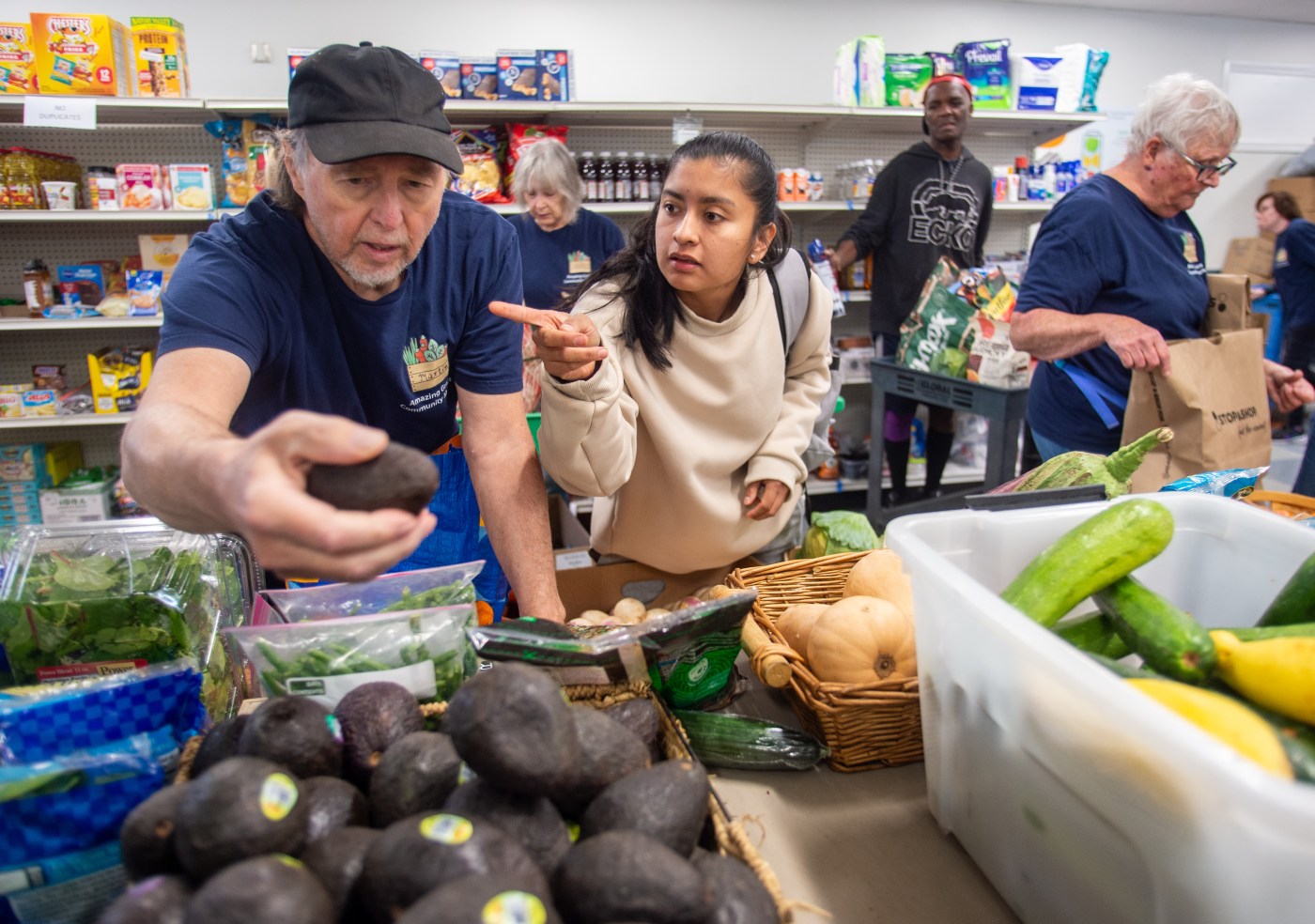
Biana Clark at Gifts of Love in Avon wants to clear up one thing as SNAP benefits halt: People in need of food aren’t necessarily unemployed or living only in Connecticut’s cities.
“One in five Connecticut households is food insecure or can’t pay their bills,” Clark said this week ahead of Nov. 1, when the federal Supplemental Nutrition Assistance Program runs out of money.
“We’re really trying to emphasize that there’s a decent chance that one family out of the five houses on your block can’t make ends meet and that number is only expected to increase. We just want to fight the stereotype of who the donations go to — it’s everywhere.”
State officials say 360,000 people or 10% of Connecticut residents get some amount of SNAP benefits to help them put food on the table. The average amount is just $6.25 per day.
Why is SNAP ending? Is the state helping?
Those benefits, accessible through an electronic benefits card, will not be refilled Nov. 1 because funding for the program, appropriated by Congress annually, has not been approved due to the federal government shutdown. The Trump administration has said the USDA’s $5 billion contingency fund, cited in its shutdown plan, would not be used to cover the benefits.
SNAP benefits have never before lapsed in previous shutdowns and Democrats, including Connecticut Attorney General William Tong have sued the Trump administration to release the funding.

Gov. Ned Lamont this week announced the state will allocate $3 million to Foodshare, which distributes food to local food pantries and through its mobile sites across the state. SNAP distributes about $72 million monthly to Connecticut residents.
With hunger already increasing due to rising prices and economic conditions, food pantries are likely to see an unprecedented wave of need starting next week.
“We’ve already seen the walk-ins increase and an uptick in referrals. The need already exists and once this happens it’s going to impact students and families and so many people,” Clark said. “One of the things we really try to get out is that it is every community. It literally is your neighbor.”
Opinion: Federal government shutdown or not, 581,000 CT families already live on the brink
An increasing need before the shutdown
Maty Swartz at St. Vincent de Paul in Middletown, which runs a soup kitchen, homeless shelter and a grocery store-style food pantry, said they usually serve 1,000 families a month but that number has jumped to 1,250.
“Mondays we’re used to seeing around 80 to 90 shoppers a day. We had 134 on Monday. People are definitely starting to panic a little bit and regardless of the issue with SNAP, people have just been struggling economically for a really long time,” she said, pointing to the cost of housing and food.
“I think that’s what people who are fortunate enough not to rely on our services don’t understand: It can happen to anybody. You can be one missed payment away from not being able to put food on the table. It’s everyone – our teachers, our local businessmen and women, our friends and neighbors.”
Lee Hay at Cornerstone Food Cupboard said that due to the increase in people seeking help, he has had to reduce the amount of food he’s able to give to each family.
“Our numbers have been going up constantly even before this (SNAP cutoff) so it’s going to be a big challenge,” he said. “A year ago we were doing 200 families. This past week we did 270.
“The biggest thing for us is keeping up with stocking enough food to distribute. Foodshare is helping and Cornerstone Foundation is helping but there’s a limit to their resources also so anything people can do to donate is appreciated,” he said.
Clark, at Gifts of Love, said the organization has seen a 25% increase in people requesting services over the last quarter.
“We are seeing the need increase quickly and that coincides with food prices going up and our food partners like CT Foodshare who are seeing the federal cuts hitting them directly so they’re hitting us secondarily. Food that used to be free for us (through Foodshare) we now have to pay for so it’s more expensive,” she said.
Gifts of Love serves families in the Farmington Valley with its food pantry, basic needs and holiday programs and its weekend backpack program through which it sends food home on Fridays with local students.
Its backpack program serves children in schools in Simsbury, Avon, Farmington, New Britain, Torrington and Granby, with more requests coming all the time. The SNAP cuts will impact funding for the weekend backpack program as well, Clark said, and previous federal cuts and rising food costs have already driven up the cost from $5,000 to $8,000 per child.
“We lament, we’re not sure that we have the capacity to serve more than the 350-375 that we’re serving and we know that there are more kids that need it,” she said. “We want to make sure that we’re giving them enough food because those weekend backpacks feed a family of four for the weekend and for some families that literally might be what they’re eating. We want to make sure that we’re able to feed everyone adequately.”

Friendly Hands Food Bank in Torrington serves 12,000 people a month and has seen lines out the door in the past couple weeks, Karen Thomas, executive director said. Most are single parents working two jobs who still can’t make ends meet, as well as an increasing number of elderly and homeless people. Eighty-five percent are working, she said, “solid working folks needing a helping hand.”
Next week, pantry clients could increase by hundreds of thousands of people.
“Because this situation is more pervasive, we are really going to rely on people in our community to really support us and people who may now need more help,” Swartz said.
How to help: donate, volunteer, give online, run a food drive
- Find your local food bank and drop off nonperishable food items that people can use to make meals.
- Check if your food bank accepts perishable foods like bread, meats, dairy and eggs. People are grateful to receive these more nutritious items.
- Look on pantries’ websites for Amazon wish lists which allow you to instantly supply a food bank with the items they most need.
- Check your pantry’s Facebook page. Some pantries post their lists of needs there.
- Start a food drive in your neighborhood, workplace or other organization to donate to your local food bank.
- Check grocery store sales for buy-one-get-one deals and give the extras either in donation boxes at the front of the store or to your local pantry.
- Volunteer. Many places are also in need of volunteers to help handle the extra volume of donations and people using the pantry.
- Donate money directly to the food pantry. They often can get more for the money than you can at the grocery store. Most websites have a donation button.
To find a nearby food pantry, call 211 or visit its online food pantry locator. A soup kitchen locator, where people in need can get a hot meal and often are given to-go bags of food to carry them through between times, is also available on the 211 site.
While an end to the federal government shutdown will likely restore SNAP benefits, but the need will continue. Trump’s One Big Beautiful Bill Act, signed July 4, cuts SNAP benefits by $187 billion over the next decade. As a result, officials expect 34,00 Connecticut residents to lose their benefits, with another 50,000 are expected to see benefits reduced.


With cuts to federal funding and increased food prices, food pantry directors say they are looking to the community for help.
Justin Woerz of the Plainville Food Pantry said his community is always supportive.
“We’re definitely getting more inquiries for help but we’re also having more and more food drives crop up in response to that ahead of time,” he said. “And that kicks off two months of people putting together their own food drives for the holiday season.”
Clark said she’s seen a willingness to help, too.
“What’s nice right now is we are getting the sense that people are aware of the world we’re in right now and there are food drives happening and people are contributing and people are giving,” but, she said, the need is enormous.
Swartz said anything will help.
“Personally I know that everybody is feeling a little uneasy right now and a lot of people are asking how they can help. And just by donating a bag of groceries or a few canned goods or volunteering at our food pantry or soup kitchen, all those things make a big difference.”