
By Miriam Fauzia, The Dallas Morning News
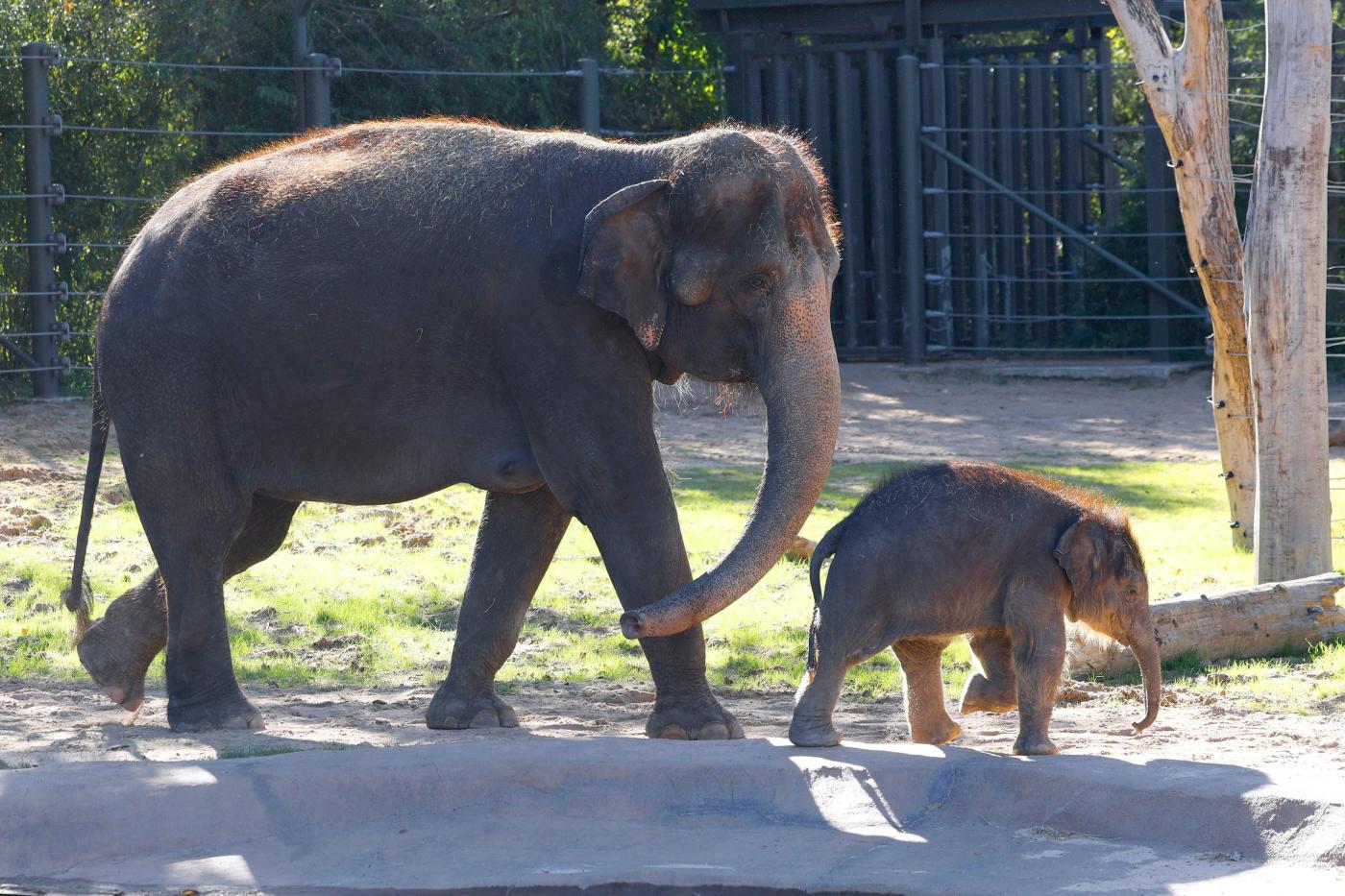
DALLAS — On a cool December afternoon at the Fort Worth Zoo, Lady Bird splashes her tiny trunk in a watering hole while her mother, Bluebonnet, and honorary aunt Angel flank her like bodyguards. To zoogoers watching the fuzzy, 3-foot-tall and over 650-pound elephant calf, she’s a pure delight.
Elsewhere on the grounds, Lady Bird and other elephants in human care represent something else: hope for the species’ future. Veterinarians and researchers gathered here this week for a summit on a stealthy killer that strikes mostly young elephants in the wild and in zoos.
The culprit? Elephant endotheliotropic herpesvirus, or EEHV, for short. No one knows exactly how many elephants are infected by it, said Dr. Sarah Cannizzo, an associate veterinarian at the Fort Worth Zoo, but essentially every adult Asian and African elephant carries it. In North America, 33 Asian and nine African elephants died as a result of the virus between 1980 and 2024, according to data presented at the summit.
That toll, combined with the steady decline of wild herds, has pushed zoos, veterinarians and researchers to the front lines of conservation. They’re working on refining how clinicians detect and treat the virus, using antiviral drugs and intensive care to buy time for sick calves and juveniles. Their ultimate hope is in vaccines that have shown promise toward loosening EEHV’s deadly hold on young elephants.
What is EEHV?
Herpesviruses are found throughout nature, infecting vertebrates from fish to primates. In elephants, at least 19 related viruses infect virtually all adult Asian and African elephants in zoos and the wild. Exposure usually happens when an elephant is young, Cannizzo said, as infected animals quietly shed the virus and pass it on through everyday contact.
“Herpesviruses are for life,” Cannizzo said. “They live in the body and stay there. [EEHV] has evolved with elephants for millions of years.”
As with many herpesviruses, EEHV typically lies dormant in an elephant’s body without causing illness. In some young elephants, though, the virus suddenly activates, triggering a rapid, often fatal hemorrhagic disease that overwhelms the immune system and damages blood vessels. What follows is shock, organ failure and sometimes death within 12 to 72 hours of the first sign of symptoms such as lethargy and poor appetite.
This hemorrhagic disease accounts for about 75% of deaths in Asian elephants between the ages of 1 and 14 in North America, according to data presented at the summit. What triggers the virus is still unclear, but stress is a leading suspect, said Paul Ling, a professor of microbiology and virology at Baylor College of Medicine, who studies herpesviruses in humans and animals, particularly elephants.
“There probably are a lot of different factors,” Ling said, noting that both environment and genetics are at play.
There is no cure for the disease. Many zoos in the United States, including the Fort Worth Zoo, routinely monitor viral levels to watch for infection before it strikes. According to data presented at the summit, advances in diagnosis and treatment have reduced the fatality rate of EEHV hemorrhagic disease among elephants from 83% in 2013 to about 50% today. Some of these treatments include antiviral drugs, antibiotics and fluid therapy.
But these methods aren’t foolproof. In 2023, a 7-year-old African elephant at the Dallas Zoo died after nearly two weeks of intensive treatment that included multiple drugs, blood transfusions and stem cells, The Dallas Morning News reported. That death and those of other young elephants are why scientists are turning to vaccines as the best answer to combat EEHV.
Preventing severe illness
In late 2024, Lady Bird’s older half-brother Travis and full brother Brazos received a new vaccine developed by Ling and his lab at Baylor College of Medicine. Much like some of the COVID-19 vaccines, this shot is an mRNA vaccine that helps a young elephant’s immune system create antibodies against EEHV — especially during the vulnerable period when calves are being weaned and the protective antibodies from their mother’s milk decline.
The vaccine is not meant to stop EEHV hemorrhagic disease among elephants, Ling said, nor is it designed to provide “sterilizing immunity,” or enough immunity that no elephants would be infected if exposed to the virus. “We want to prevent severe disease and death. That’s the main goal of the vaccine.”
For now, the vaccine targets viral strains that typically infect Asian elephants. Ling and his colleagues are working on a version tailored to the EEHV types that infect African elephants.
Other researchers are pursuing different vaccine strategies. Falko Steinbach, a professor of veterinary immunology at the University of Surrey in the U.K., is developing an EEHV vaccine that focuses on activating T cells — white blood cells that play a key role in fighting viral infections. His team has tested the vaccine in three healthy adult elephants at the U.K.’s Chester Zoo with good results, Steinbach told attendees at the summit. He and his colleagues plan to test their vaccine in young elephants next.
At the Fort Worth Zoo, Travis and Brazos aren’t expected to be the only vaccinated calves for long. Lady Bird will receive her shots once she weans from her mother, Cannizzo said. Since starting at the zoo over a decade ago, Cannizzo now feels more relieved that vaccines are available, even if they’re still experimental.
“Within an hour of Brazos being born, I was like, ‘Oh, now I have to worry about EEHV,’ ” she said. She is a member of the EEHV Advisory Group for North America and often thinks about the virus. “But I feel better that Brazos has the vaccine.”
©2025 The Dallas Morning News. Distributed by Tribune Content Agency, LLC.