
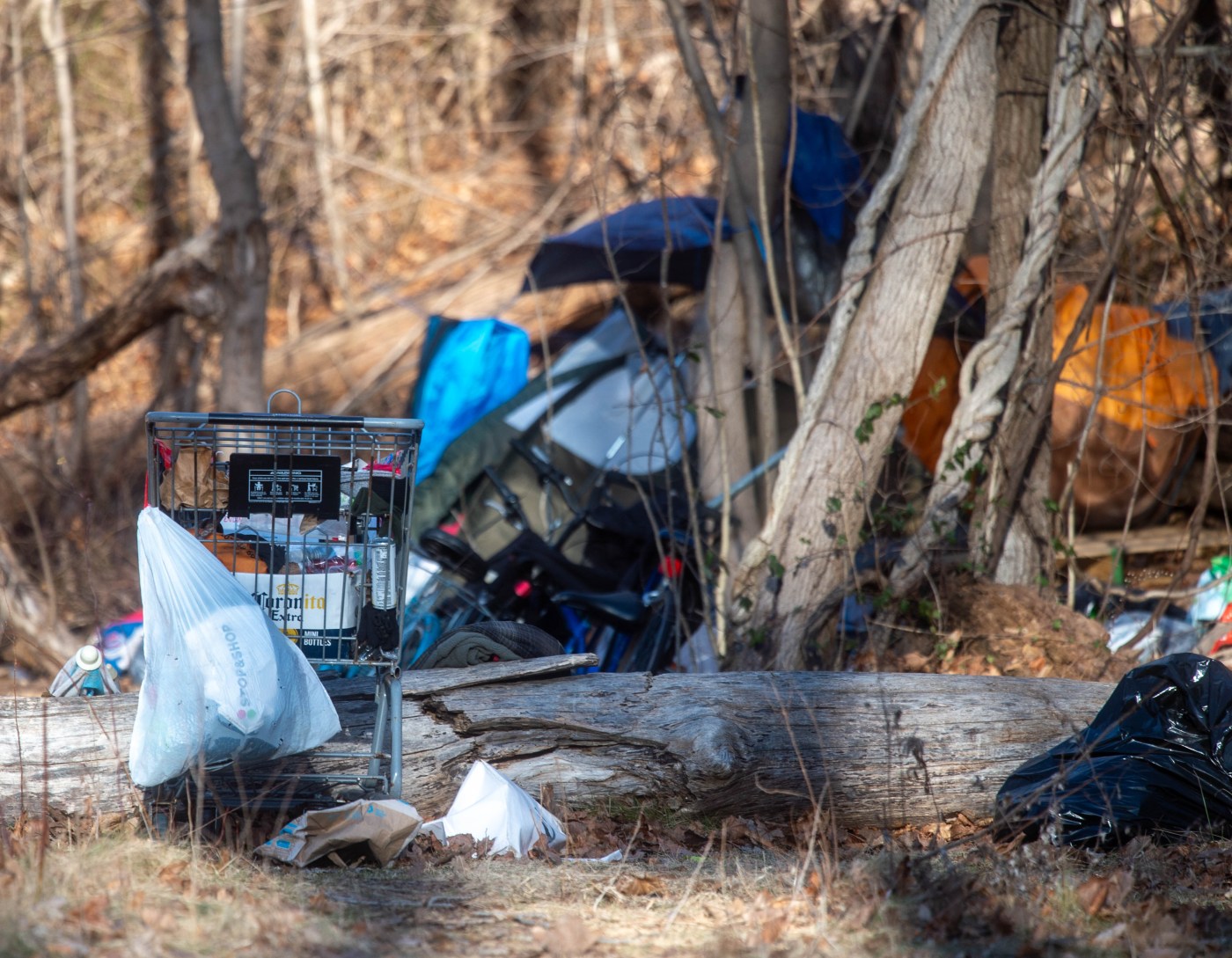
Imagine undergoing the plight of homelessness due to reasons beyond your control, like mental illness, disability, or substance use disorder.
In addition to the daily strain of dealing with physical or mental health conditions, you lose your home and are living on the streets in the heat of summer and dead of winter. You finally are able to access aid, permanent housing that allows you to recover, only for it to be stripped from you for no fault of your own.
For years, to better advocate for the needs of those experiencing homelessness and housing insecurity, I have met and worked with individuals directly, even learning how it feels to sleep outdoors in freezing temperatures with little relief. That’s why I’m disgusted by the Trump administration’s plans for federal housing programs – they threaten to pull aid from people actively receiving it, with the potential to throw thousands of Connecticut residents and hundreds of thousands of Americans out of their homes.
In November, the federal Department of Housing and Urban Development announced it plans to shift how it administers funds through its Continuum of Care program, which connects people experiencing homelessness to the resources they need. That program usually spends most of its funding on permanent housing support, but under the Trump administration, HUD is instead shifting focus to temporary transitional housing, complete with work or service requirements. Before this change was announced, about 87% of all Continuum of Care funds for use in 2026 were supporting permanent housing. After the change, only about 30% of funds are expected to go toward the same purpose.
More than 100,000 people are expected to be at risk of homelessness if these funding cuts go through as planned, with Connecticut officials estimating 2,300 people residents receiving aid would be at risk in our state.
CT sues Trump administration over HUD housing funding changes
Let me be clear: even outside of the impact on those affected, this is simply bad policy. The rapid adjustments to HUD regulations are occurring while some programs around the country are currently operating on grant money; one-third of currently awarded grants will expire before the next round of grants is even awarded, meaning some programs face immediate fiscal cliffs of just months, or even weeks. This new effort claiming to relieve homelessness could increase it before it even gets off the ground. Whether incompetence or malice, it’s the typical mismanagement one has come to expect from the Trump administration.
To make matters worse, following lawsuits filed against the policy change, the Trump administration withdrew the plan, though it is expected to be reissued after minor changes are made. Such a move further complicates the adoption of these changes. Whether incompetence or malice, it’s the typical mismanagement one has come to expect from the Trump administration.
In messaging explaining the shift in funding, the Trump HUD claimed that “housing first” policies, that aim to get people in need housing and then address their underlying issues, are ineffective. That’s simply false. A proactive, respectful approach that gets clients housing as a first act DOES work.
A review of 26 separate studies of “housing first” policies in the United States and Canada, compared to “treatment first” policies championed by the Trump HUD, reduced homelessness by 88% and improved housing stability by 41% in impacted communities. The authors of that review concluded that focusing on housing first reduced homelessness and improved resident health. To claim the opposite is to ignore what works in favor of imposing your own rules.
More people crowdfunded for essential needs like food and housing in 2025, according to GoFundMe
Speaking of rules, let’s look at some of the requirements the federal government is imposing to even access these programs. Communities that have laws outlawing homelessness would receive priority support. Residents would be forced into treatment as a precondition for housing, the reverse of current policies that will result in more failed attempts to provide help.
Services aiding people with mental health and substance use issues would be disincentivized and programs that recognize transgender and nonbinary people would be deprioritized. How else can one interpret that other than insult added to injury? Removing resources to help people seeking aid is plainly counterproductive to those people recovering. This shift will increase homelessness while it seeks to expand criminalization of homelessness. It continues the federal government’s nonsensical preoccupation with gender identity, shoving it into a completely unrelated issue.
Contrast that with the day-to-day life of struggling individuals and you can see how it simply doesn’t make sense. When we know that providing stability is the first step to help people rebuild their lives, why rob them of that stability from the start? When we know which policies are proven to reduce homelessness, why are we pushing them aside? Why are we taking aid supporting our most vulnerable away from our most vulnerable?
It simply doesn’t make sense, almost by design. Almost a year into the Trump administration, it’s becoming easier to acknowledge that our federal leadership is not focused on the needs of the American people but whatever it wants on any given day. There’s no other way to describe revamping programs meant to prevent housing insecurity in ways that will do nothing but increase homelessness.
State Sen. Saud Anwar represents East Hartford, Ellington, East Windsor, and South Windsor. He is a medical doctor,