
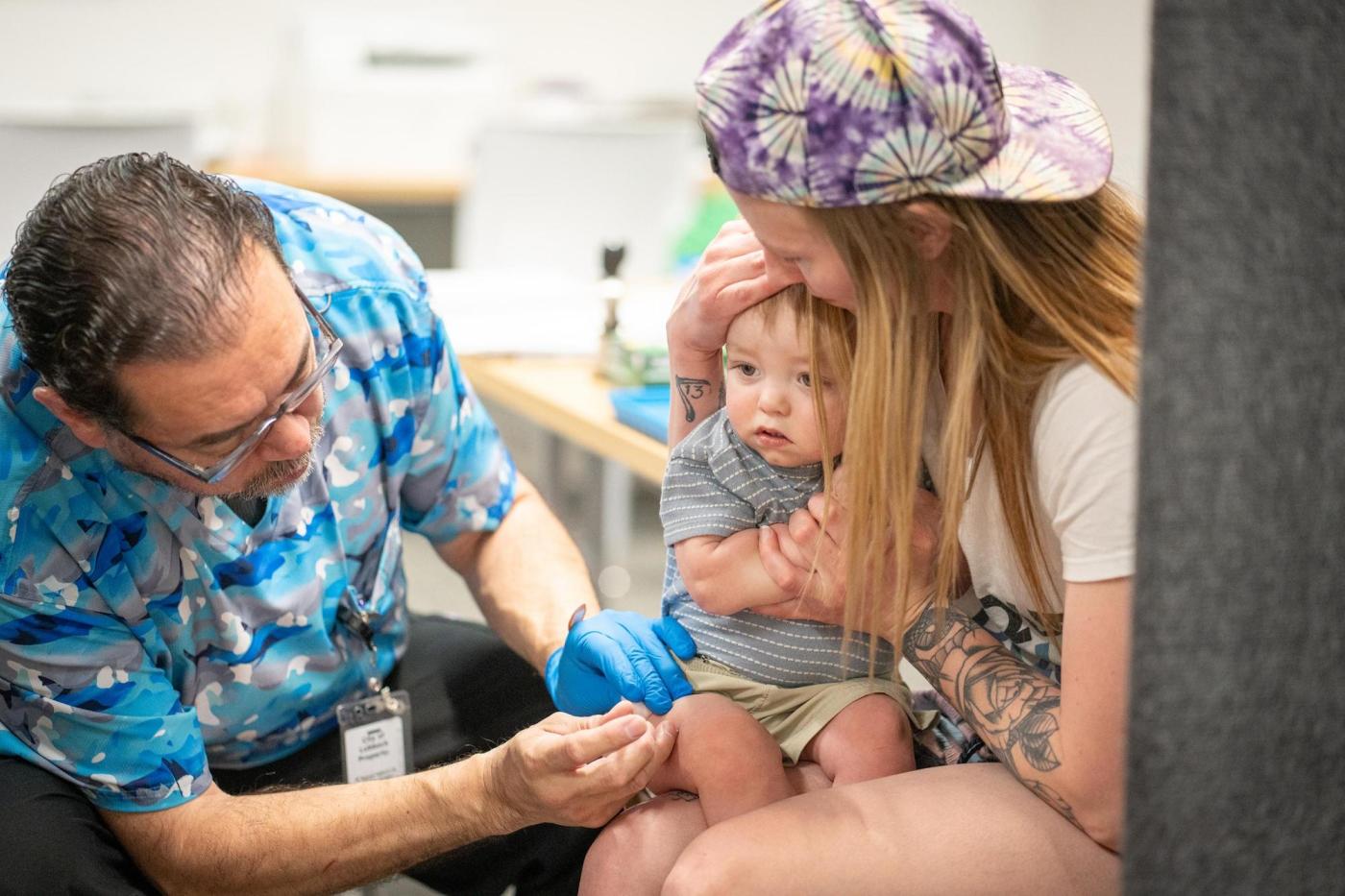
As the federal government rolls back guidance on immunizations, Connecticut officials are pushing back, defending the safety of vaccines and encouraging residents not to be swayed.
The Centers for Disease Control and Prevention’s vaccine advisory committee, whose members were selected by U.S. Secretary of Health and Human Services Robert F. Kennedy Jr., voted Friday to change hepatitis B immunization guidance for newborns.
The vaccine, which has been recommended for all babies within 24 hours of birth for the past 34 years, protects against hepatitis B, “an infectious and potentially serious disease that can cause liver damage and liver cancer,” that has no cure, according to the CDC.
The panel voted to change the guidance to recommend that only babies whose mothers test positive for the disease, or who haven’t been tested, be immunized. The decision, to implement “individual-based decision-making for parents,” was widely condemned by medical groups.
State Democratic legislative leaders condemned the vote and Kennedy’s push to discredit vaccines.
“We will work to ensure that our state’s immunization policies continue to protect our most vulnerable infants from a preventable, potentially deadly disease,” said Senate President Martin Looney. “Secretary Kennedy and President Trump are turning the CDC into a platform for conspiracy theories and placing American lives at risk.”
Senate Majority Leader Bob Duff said there’s no scientific reason to change the vaccine recommendation and that “Connecticut will not follow Trump and Kennedy down this dangerous path of vaccine denial.”
“Since universal newborn vaccination against hepatitis B was first recommended in 1991, rates of infection among children and teens have plummeted. That’s evidence of lives saved, illness avoided and the overwhelming success of this universal standard,” said Sen. Saud Anwar, a medical doctor and co-chair of the Public Health Committee.
“According to the American Public Health Association, this policy has prevented more than half a million infections and 90,000 deaths in the last 30 years,” he said. “Ending a standard with such obvious benefits is outlandish and disturbing, and when even members of the Advisory Committee on Immunization Practices itself are questioning their peers, it makes any future decisions from that body difficult, if not impossible, to trust.”
U.S. Rep. John B. Larson said Kennedy’s “anti-vaccine conspiracies” are endangering the health of the nation’s children.
“This latest move by his panel of conspiracy theorists, yet again has no basis in facts or evidence, and will only further imperil the progress we’ve made against preventable diseases — in this case, Hepatitis B,” Larson said. “Vaccinations are backed by decades of extensive scientific research. If the CDC moves forward with this baseless recommendation, children will die. The longer RFK Jr. stays in his role as our nation’s top health official, the more harm he and his pseudoscientific conspiracies will cause.”
Connecticut health officials last week defended the Hepatitis B vaccine’s longtime use and the role of all approved vaccines in keeping children and the community healthy.
“Amid discussion of vaccine schedule changes at the national level, the Connecticut Department of Public Health (DPH) is reaffirming its position that all newborns should receive a dose of the Hepatitis B vaccine within 24 hours of delivery. Additionally, all children should complete the full vaccination series within 18 months,” DPH said in a statement Dec. 1.
“The Hepatitis B vaccine is a crucial safety net for newborns from an incurable, life- threatening disease,” said Connecticut Department of Health Commissioner Dr. Manisha Juthani. ”The Centers for Disease Control and Prevention (CDC) and AAP have recommended the series of shots for 35 years, and over that time, infections have plummeted. We have decades of real-world evidence to show us that this vaccine protects our children from unanticipated exposures to an easily transmitted, potentially deadly virus.”
In September, Gov. Ned Lamont took steps to allow Connecticut residents access to the COVID-19 vaccine despite conflicting federal guidance that recommended it for only certain high-risk populations.
“As uncertainty in Washington continues, our administration is doing everything we can to ensure the residents of Connecticut have access to the health care they need to stay safe,” Lamont said. “Making vaccines accessible is grounded in health and safety, which is too important to leave to the whims of a political agenda.
“Vaccines have been proven for many decades to prevent serious illness, hospitalization, and death, and patients and their doctors should be able to decide what is the best course of treatment for themselves. We will not allow gridlock in Washington to put the people of our state at risk.”
DPH Commissioner Juthani at the time released guidance recommending the vaccine for residents 6 months and older as in years past and indicated that the department was further planning for conflict over vaccines.
“I am currently assembling an advisory committee to work with me on matters relating to recommendations by the Centers for Disease Control and Prevention and the federal Food and Drug Administration using evidence-based data from peer-reviewed literature and studies,” she said in a statement at the time. “I am looking forward to discussing with this group the ongoing changes at the federal level regarding vaccines and other public health recommendations to ensure that we continue to provide the best care and guidance to the people of Connecticut.”
Connecticut, along with Maine, Massachusetts, New Jersey, New York State, Pennsylvania, Rhode Island and New York City forged the Northeast Public Health Collaborative to make up where the federal government is withdrawing: emergency preparedness, disease management, data collection and protecting “evidence-based public health.”
When the CDC changed its website to cast doubt in late November on the disproven link between vaccination and autism, Connecticut officials also refuted the federal claims.
“Vaccines are held to the highest scientific standards as they are given to healthy individuals. Every vaccine recommended for infants and children has undergone extensive research, including clinical trials, to ensure it is safe and effective. Once approved, vaccines continue to be monitored for safety.”
DPH noted that “Decades of high-quality studies show no link between vaccination and autism, and the small risks of vaccination are vastly lower than the risks from disease. The few studies that suggest such a connection have either been fully retracted or widely discredited due to serious methodological flaws, small or biased samples, or failure to meet basic standards of scientific rigor, replication, and peer review.”
At the time, American Academy of Pediatrics President Susan Kressly, M.D. said, “We call on the CDC to stop wasting government resources to amplify false claims that sow doubt in one of the best tools we have to keep children healthy and thriving: routine immunizations.”
Connecticut health officials reported that the state’s vaccination rate, boosted when in 2021 legislators passed a law doing away with the religious exemption for vaccination for school admission, is high, with 98.2% of kindergarteners vaccinated with the MMR vaccine in the 2024-25 school year. Connecticut is only one of seven states and D.C., DPH said, that did not have a case of measles in 2025 due to the high vaccination rate.
In the last legislative session, lawmakers voted to decouple some state health regulations, including its water fluoride level, from federal recommendations. The state’s childhood vaccine schedule is currently based on the recommended schedules published by the National Centers for Disease Control and Prevention Advisory Committee on Immunization Practices, the American Academy of Pediatrics and the American Academy of Family Physicians.