
The Connecticut man was sentenced to 50 years in prison for gunning down a 23-year-old man in 2019.
The killing took place during the early morning hours of August 3, 2019, when Joseph Thorpe shot and killed Roberto Vargas.
Thorpe was found guilty in 2023 of one count of murder in the shooting death Vargas, who was 23 when he died. Now, Thorpe claims, and the Connecticut Supreme Court will review the claim, that the trial court committed “plain error in permitting the state to cross-examine him as to his pre-arrest silence,” according to the judicial branch. Thorpe claims that “evidence was introduced without satisfying the evidentiary standard for admissibility, which requires proof of circumstances naturally calling for him to speak.”
At the time of the shooting, police said Vargas had known his killer and that the shooting was not random.
Surveillance cameras in the area captured the moments leading up to the shooting, showing a man, later identified as Thorpe, wearing a white tank top and black pants with a white stripe walking west on Farmington Avenue where he confronted Vargas, who was on a bicycle, according to the arrest warrant affidavit.
Several witnesses were also able to identify Thorpe as the shooting suspect. One witness said it appeared as though Thorpe had an issue with Vargas that resulted in an argument, the arrest warrant affidavit said. The same witness reported hearing gunshots before Vargas collapsed on the ground.
A ShotSpotter alert detected gunfire in an area of Farmington Avenue in Hartford. Officers dispatched to the area found Vargas, who had multiple gunshot wounds, court records said.
Vargas was taken to Saint Francis Hospital where he died later that morning, according to court records.
According to the judicial branch, Thorpe, who was living in Hartford at the time, was selling drugs and had contact with individuals who were also allegedly “involved in drug dealing, including Vargas; Vargas’ brother, Dariyan Hillson;” and another man.
According to evidence, including surveillance videos of the incident, Vargas and Hillson were together on Farmington Avenue. The other man, and his friend… “joined Vargas and Hillson but left to go inside the restaurant. The defendant was seen joining Vargas and Hillson on the street. The (other man and the friend) exited the restaurant to join the group. The defendant and Vargas had a verbal altercation during which the defendant accused the other men of trying to rob him,” the judicial department reported.
Vargas then “started to throw a punch at the defendant, and the defendant pulled his gun and fired at Vargas. He continued to shoot while Vargas and the other men fled,” the judicial department reported.
“At trial, the defendant’s theory was that he acted in self-defense. He claimed that he approached Vargas because (the other man) told him that Vargas wanted a large amount of cocaine; that Vargas asked if he had the cocaine after he approached the group and that he responded by asking if Vargas had the money; that the altercation worsened after (the two other men) exited the restaurant to join the group; and that he pulled out his gun and shot at Vargas after Vargas pulled out a gun.”
However, before cross-examining Thorpe, “the state informed the trial court that it wanted to question the defendant about ‘why he didn’t report the fact that he had fired in self-defense’ and cited several cases,” in support of the contention prosecutors could question Thorpe on his pre-arrest silence.
“The defendant objected, contending that such questions were outside the scope of the direct examination. The trial court overruled the objection, and the defendant then sought clarification that the state was requesting to ask the defendant why he did not report self-defense, noting that he “had an absolute right to silence” and “didn’t have to report anything.”
The trial court clarified that the state only was inquiring about his “pre-arrest” silence, and the defendant did not object further, according to the judicial branch.
“The trial court then ruled that the state could cross-examine the defendant on any pre-arrest failure to report self-defense, finding that the defendant waived his fifth amendment right to silence by taking the stand and therefore could be impeached by admissible evidence. The trial court determined that the failure to report self-defense was presumptively conduct that was inconsistent with a claim of self-defense, noting that it was essentially an admission by silence or circumstances where one would naturally be expected to speak,” according to the judicial branch.
The trial court then stated that it would “allow the defendant on redirect to address any circumstances that might explain why a person in the defendant’s situation might not report self-defense. During cross-examination, the state elicited the defendant’s testimony that he did not stay on the scene to tell any first responders what happened and that the only people he told that he acted in self-defense before his arrest were his parents.”
Thorpe now claims that the trial court erred in permitting prosecutors “to cross-examine him as to his pre-arrest silence because that evidence was introduced without satisfying the evidentiary standard for admissibility, which requires proof of circumstances naturally calling for him to speak.”
However, Robert L. O’Brien, of the Law Office of Christopher Duby LLC, who represents Thorpe, said in his brief to the court, that a “manifest injustice” occurred.
“The trial court’s error was to allow cross-examination on prearrest silence outside of a setting in which the defendant would be naturally expected to speak,” he wrote. “Applicable case law on the admissibility of pre-arrest silence makes it clear which circumstances would naturally call for a defendant to speak. It is equally clear that this situation was not one envisioned by these cases and, therefore, the error is obvious and readily discernible from the existing record.”
That “error constituted manifest injustice in that it permitted the state to meet its burden of disproof of self-defense beyond a reasonable doubt by injecting inadmissible evidence into the trial, effectively, and unfairly, neutering his claim of self-defense,” O’Brien wrote.
O’Brien also contends the state “failed to establish a motive for the defendant to kill Roberto Vargas nor did they establish a reason for the altercation that led to the shooting. Instead, the state relied on (a witness), who saw nothing but heard an altercation and gunshots.
“The state relied on two drug dealers who wanted the neighborhood where this incident occurred for their own drug sales territory,” O’Brien wrote. “Even one of them, Vargas’ brother, admitted that Vargas went to punch the defendant first; this was after he sought to get help with his own criminal case before giving information about his brother’s killing.”
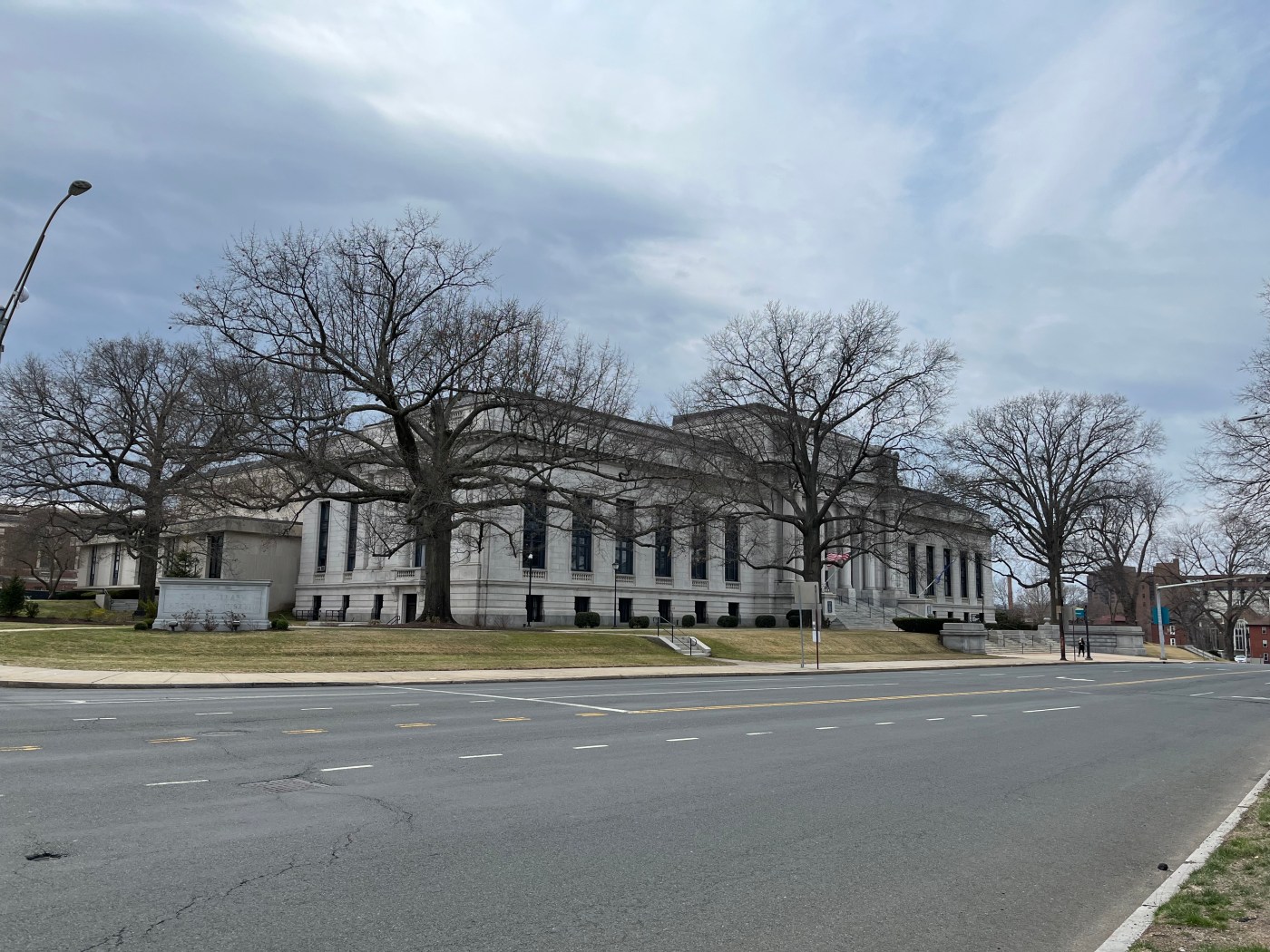
The case will be heard by the Supreme Court on Monday, Nov. 3, at 10 a.m.
The handgun that was used was never recovered, according to court records.
Previous reporting by Justin Muszynski was included in this story.