
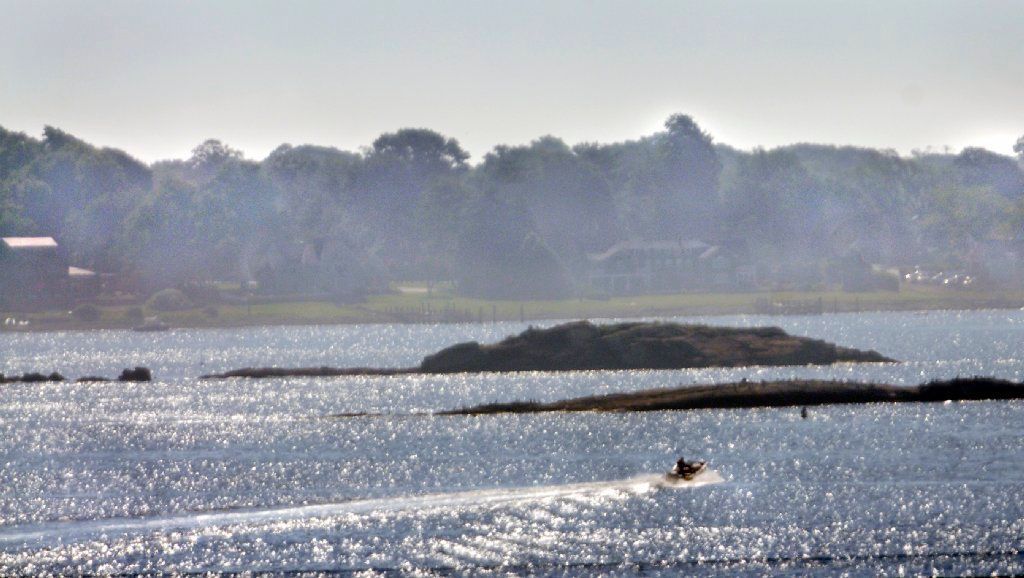
The Long Island Sound, which stretches into the open mouth of the Atlantic Ocean, provides Connecticut’s most important ecological habitat with over 600 miles of diverse coastline that are home to hundreds of unique species.
On Tuesday, state officials announced nearly $12 million in grant money that is being distributed to various groups to help protect the Long Island Sound and its wildlife for generations to come. The grants will leverage more than $8 million in matching contributions, with a total of $20 million for 36 conservation projects in Connecticut, Massachusetts, New Hampshire, New York and Vermont, according to officials with the Long Island Sound Partnership.
The money is part of the Long Island Sound Futures Fund, a grant program created in 2005 through a partnership with the Environmental Protection Agency’s Long Island Sound Office and the National Fish and Wildlife Foundation. Since its founding, the Futures Fund has invested $68 million in 688 projects and has generated an additional $87 million of grantee matching contributions, officials said.
The Long Island Sound suffers from several challenges including coastal erosion from rising seas, storm water runoff impacting water quality, the buildup of nitrogen from fertilizer and pollution and habitat loss, according to officials. This year, grant money will be used for projects that help support water quality improvements, restore and protect habitat and ensure greater quality of life for people living along the state’s largest estuary.
“Estuaries and their surrounding lands and waters represent some of the most productive wildlife habitats and most economically important areas in the world,” said Jeff Trandahl, executive director and CEO of the National Fish and Wildlife Foundation.
“The Long Island Sound is the second-largest estuary on the East Coast and one of North America’s most biologically diverse estuaries,” Trandahl said. “Its watershed stretches 16,820 square miles across five states with more than 16,000 miles of rivers feeding fresh water into the sound. Sustaining the health of Long Island Sound benefits a wondrous assortment of wildlife while also ensuring prosperity for thousands of communities, large and small.”
Grant area categories included clean waters and heathy watersheds, thriving habitats and abundant wildlife, sustainable and resilient communities, and projects around community engagement.
“The Connecticut Department of Energy and Environmental Protection stands proudly with the Long Island Sound Partnership and the National Fish and Wildlife Foundation in welcoming another year of impactful Futures Fund projects across the Long Island Sound Watershed,” DEEP commissioner Katie Dykes said.
“In Connecticut, 11 distinct NGOs took home a total of 12 awards for projects ranging from riparian buffers to fish passage restoration, hands-on science programs to salt marsh restoration and a green roof,” Dykes said. “These are just a few of the ways that today’s grantees are embracing this funding opportunity to further the health of our resources and residents across the Long Island Sound Watershed.”
Several Connecticut organizations took home millions in grant money for various projects. Among the 11 organizations that were awarded grant money are Aspetuck Land Trust with $279,300, Eastern Connecticut Conservation District with $770,200, two grants to Save the Sound totaling nearly $1.2 million, Pomperaug River Watershed Coalition with $241,500, New Haven Urban Resources Initiative with $413,000, Norwalk River Watershed Association with $247,200, The Greenwich Land Trust with $278,300, American Rivers with $1.6 million, SoundWaters with $259,700, ReWild Long Island with $591,700, and Earthplace — The Nature Discovery Center with $243,900.
“This year’s Futures Fund projects will support water quality improvements, habitat restoration, and other critical efforts across the watershed that are vital to protecting Long Island Sound,” said EPA New England regional administrator Mark Sanborn. “Long Island Sound is a national treasure, and this funding exemplifies EPA’s commitment to supporting the economic and recreational benefits the Sound offers to millions of people.”
Among some of the Connecticut projects getting funded are:
- Supplying 40 free buffers to qualified residents and business owners in Bridgeport and installing a 3,100-square-foot demonstration buffer at a high-traffic community art and event site along the Pequonnock River.
- Constructing a composting facility in Woodstock that will reduce 2,300 pounds of nitrogen from entering the Long Island Sound.
- Installing nature-based infrastructure, as well as a green roof at the Beardsley Zoo in Bridgeport, to protect against 29,000 gallons of stormwater runoff into the Long Island Sound.
- Implementing a coordinated stormwater management effort for Edgewood Park in New Haven.
- Complete planning, designs and permitting to restore fish passage along the Norwalk River in Ridgefield.
- Remove invasive plant species across four acres on Shell Island in southwestern Long Island Sound through invasive species control and native plant installation.
- Host six in-person and virtual educational events and beach cleanups to remove 500 pounds of marine debris from the Long Island Sound.
- Provide high school and college students with educational opportunities to use the Long Island Sound watershed as their living classroom.
In total, the grant money will help prevent 618,934 gallons of stormwater and 2,996 pounds of nitrogen pollution from entering the Long Island Sound. Officials said the projects will also help remove 161,250 pounds of marine debris and restore 70 acres of coastal habitat.
The grants come amid another recent announcement that $2.6 million in congressionally directed spending has been awarded to restore dozens of acres of salt marsh at Hammonasset Beach State Park after decades of erosion. Hammonasset provides critical habitat for thousands of native species and is one of the state’s most popular beaches and state parks.
Stephen Underwood can be reached at [email protected].