
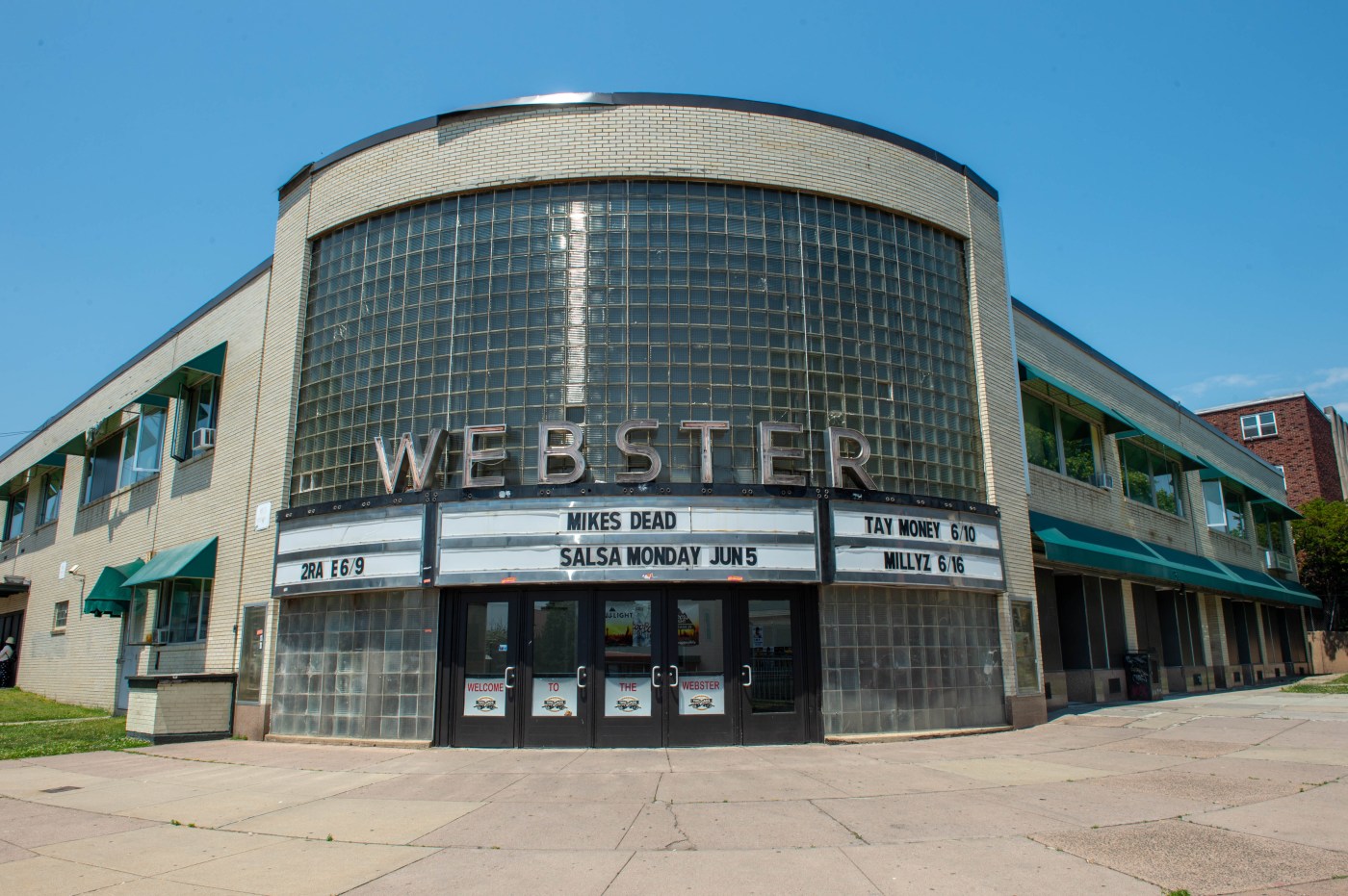
Recently I heard a preshow speech at a local theater that bothered me so drastically that I had to take care to collect myself in the few seconds before the show started.
In these remarks, a gregarious and affable new leader of the theater in question (whom I will not embarrass by name here) made two oratorical blunders in the space of a couple of minutes. One was when a local pizza place was praised by saying “… and I’m from New York, so I know pizza!” You could sense suppressed hisses in the New Haven County pizza-loyal audience.
The other even bigger faux pas was, when spelling out the theater’s name so that audience members could access its website, this administrator specified that this was “theatre” with an “re” rather than” theater” with an “er,” then explained that the variant spellings had purpose. One spelling, it was carefully explained, stood for the physical building, the other for the craft of acting, directing, etc.
This brought a few I-didn’t-know-that “Aahs” from the audience and an under-my-breath sigh of exasperation from me.
As it happens, the supposed theater/theatre distinction is hogwash, misinformation spread by drama teachers who’ve heard it from drama teachers before them who must like how people say “Ahh!” as if a coded language has been unlocked.
The dramatic truth is that there is no difference between “theater” and “theatre.” Connecticut has added to both the clarification and the confusion.
First, there is no reputable dictionary — whether of theater terminology or of the English language in general — that validates the institution vs. practice theory. Not only that, you’ll hear the argument made both ways.
The dictionary that caused all the trouble is the one compiled by Connecticut lexicographical icon Noah Webster. Webster was born in Hartford in 1758, died in New Haven in 1843, was in the Yale University class of 1778 and served in the Connecticut House of Representatives from 1802-1807.
In 1806, Webster published his “Compendious Dictionary of the English Language.” One of its signature features was its “Americanization” of British words. The main way Webster Americanized words was by changing British “re” endings to “er.” “Theatre” became “theater” but also “centre” became “center,” “metre” was now “meter” and so on.
By the time Webster published the mammoth first edition of his dictionary in 1828, he’d chickened out a bit. Both “theater” and “theatre” were listed as acceptable spellings, but all his definitions for the word had to do with theater buildings or theater platforms or concepts like “theater of the world.” A few words later in the same book, the definition for “theatrical” covered the more acting-related aspects. In Webster’s time it was more common to use “drama” to express that.
The word “theater,” or “theatre” (it doesn’t matter!) derives from Greek and Latin words which referred to a theater building, but even those ancient civilizations used the word to express not just the edifice but what was happening in it.
If the theater/theatre discrepancy were meaningful, you’d think it would matter most to Noah Webster’s alma mater. Yet Yale University, where Webster toiled on his wordy tome, is home to the Yale University Theatre built in 1846, as well as the Yale Repertory Theatre founded in 1966, but also the 200-seat Iseman Theater which was renamed in 2009 after being called The New Theater for a few years. The undergraduate department where they teach various performance disciplines is called “theater, dance, and performance studies.”
The University of Connecticut, on the other hand, teaches theatre studies, with an “re.” Its Department of Dramatic Arts holds performances at the Harriet S. Jorgensen Theatre, the Nafe Kotter Theatre and the Studio Theatre, all also” re.” Wesleyan University, by contrast, goes with “er” across the board, with a theater department, the Center for the Arts Theater, the Patricelli Theater and other theater venues.
The University of Hartford’s Hartt School is famous for its music theatre division, which holds performances in the Lincoln Theater. Western Connecticut State University has a theatre arts program and a Mainstage Theatre. Eastern Connecticut State University has a Department of Communication, Film and Theatre and has performance spaces called the
Delmonte Bernstein Studio Theatre and the Proscenium Theater.
The University of New Haven goes with “er” for both its theater arts program and Bucknall Theater space.
Get the picture-or should that be pictuer? It just doesn’t matter. A theater is a theatre is a (pronounced haughtily) a the-ay-ter. Now sit back and enjoy the show, or the acting class, because you spell ’em both the same way.