
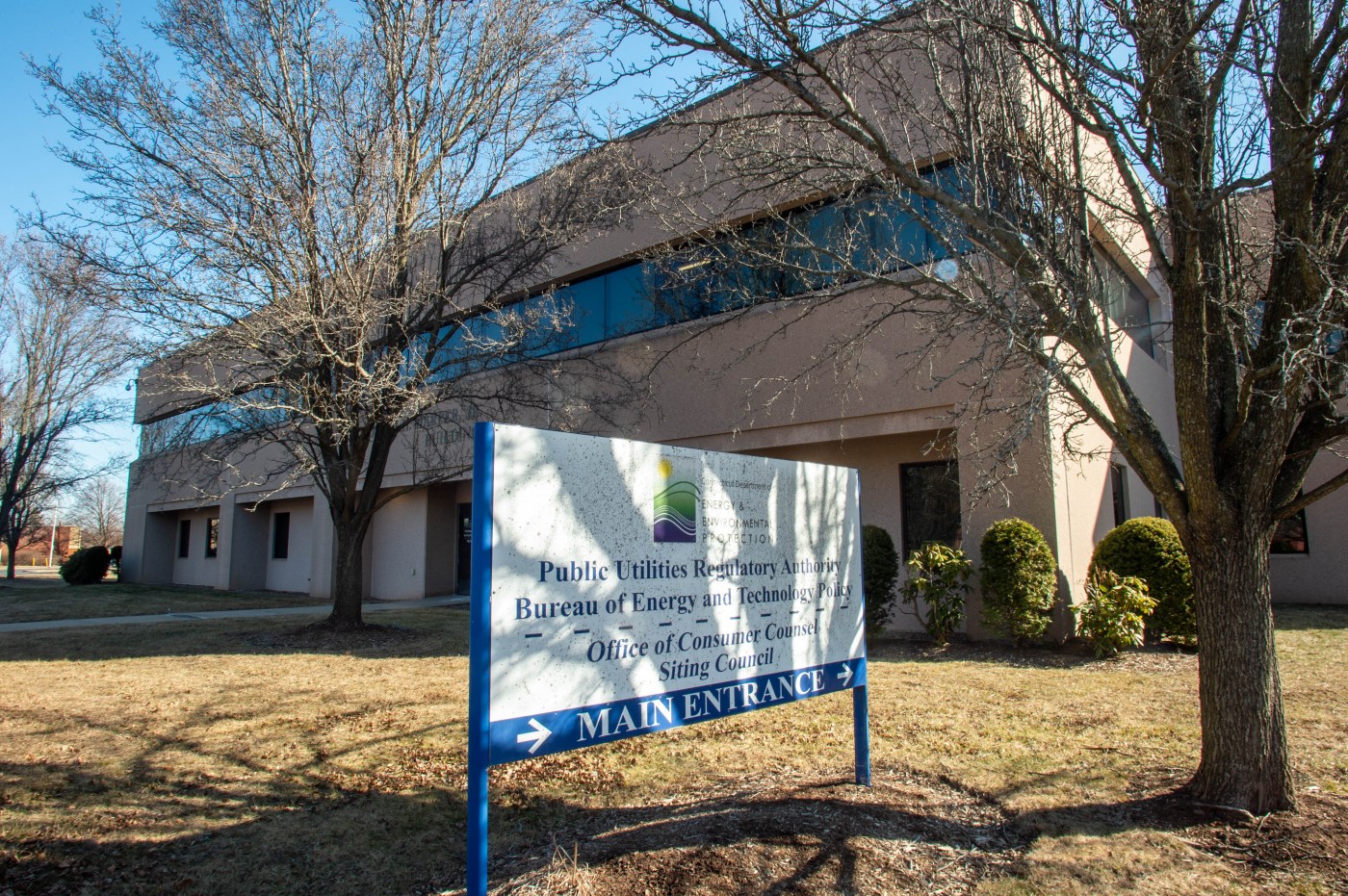
A judge overseeing the tumultuous legal battle between the Public Utilities Regulatory Authority and two Connecticut gas companies on Wednesday agreed to allow a do-over of the companies’ most recent rate case after regulators admitted to a series of longstanding procedural errors by PURA’s former leader, Marissa Gillett.
At the same time the judge, Matthew Budzik of the New Britain Superior Court, referred two attorneys representing PURA to the Statewide Grievance Committee to determine whether they misled the court earlier this year during an effort to uncover Gillett’s personal phone records.
The decision was only a partial victory for the gas companies, Southern Connecticut Gas and Connecticut Natural Gas, which are both owned by Orange-based Avangrid.
The lawsuit began as an appeal of PURA’s decision last year to slash the companies’ revenues by a combined $35 million, but it has since evolved to focus largely on Gillett and the actions she took while running PURA between 2019 and her resignation in October. In particular, Avangrid’s attorneys were looking into whether Gillett played any role in drafting a controversial op-ed last year accusing utilities of spreading “propaganda” — and whether she lied about her involvement.
After Gillett stepped down, PURA offered to resolve the lawsuit by reconsidering the companies’ request for a rate increase. But Avangrid sought to continue looking into allegations involving Gillett.
During a hearing last week, Perry Rowthorn, an attorney representing the company, said, “all of these issues remain in play, and we need to get to the bottom of it.”
Budzik, the judge in the case, was more skeptical of that argument.
By sending the case back to PURA for new proceedings in the underlying rate case — this time with a new cast of commissioners recently appointed by Gov. Ned Lamont — Budzik said questions about the former chair’s alleged bias were moot.
His decision also quashed efforts by Avangrid’s attorneys to depose the two authors of the op-ed: state Rep. Jonathan Steinberg, D-Westport, and state Sen. Norm Needleman, D-Essex.
“The court does not have a roving commission to authorize investigations into matters that may be of interest to the parties, or to the public,” Budzik wrote in his opinion.
In a statement Wednesday, Avangrid spokeswoman Sarah Wall Fliotsos said Budzik’s ruling was “unequivocal.”
“Under former Chair Gillett, PURA violated state law in order to achieve the outcome they wanted, one that exacted severe financial and reputational consequences for our companies, risked our customers’ experience of safe and reliable service, and harmed the public interest,” Fliotsos said. “Nor are these consequences limited to this rate case appeal alone, but they have permeated cases since 2023: it is clear from this decision that PURA must now fix them all.”
Budzik did say further investigation was warranted to look into the actions of two state attorneys involved in the case: PURA General Counsel Scott Muska and Assistant Attorney General Seth Hollander.
The judge’s concerns arose from statements those attorneys made about their efforts to recover text messages from Gillett’s phone that she exchanged with the authors of the op-ed.
A spokeswoman for PURA didn’t immediately respond to requests for comment Wednesday evening.
Attorneys for the utilities first sought access to those texts in February, after several exchanges between Gillett and Steinberg discussing an op-ed were published by the Hartford Courant.
In their initial responses to those requests, attorneys for PURA said they could not find copies of the text messages. In an affidavit on June 6, Muska said he had asked both Gillett and her chief of staff to search their phones in an unsuccessful effort to locate copies of the text messages.
It was not until a hearing on June 23 that Hollander acknowledged to the court that Gillett had an auto-delete function on her phone rendering the sought-after texts irrecoverable.
“Moreover, and even more troubling, is that the circumstances of this case indicate that PURA actively sought to conceal the fact of the auto-delete function from opposing counsel and from the court,” Budzik said. “Attorney Hollander admitted that PURA was aware of the auto-delete function when it provided its initial discovery responses on May 1, 2025, and that someone at PURA chose to omit the fact of the auto-delete function from PURA’s initial discovery responses.”
Budzik went on to say that he had concluded Muska had intended to mislead both the court and opposing counsel in his June 6 affidavit. He added that he had no reason to believe that Hollander was personally aware of the deletion of texts, but he “ought to have made more reasonable and diligent inquiry of his client.”
In an phone interview with the Connecticut Mirror on Wednesday, Muska said that he first found out about Gillett’s auto-delete functions in mid-May, at which point he relayed his findings to Attorney General William Tong’s office. It was only after “much discussion” within that office, Muska said, that the decision was made not to reveal the auto-delete function to the court.
Asked why he did not mention his findings in his sworn affidavit, Muska said he was “tailoring” the affidavit based on cues he received from the attorney general’s office.
“The judge does not have, or does not appear to have, a full factual record of the case,” Muska said.
A spokesperson for the attorney general’s office declined to comment on Budzik’s order Wednesday. Told later of Muska’s comments, the spokesperson, Elizabeth Benton, referred to a letter Tong sent earlier this month defending Hollander from criticisms from Senate Republicans.
“Assistant Attorney General Hollander is a dedicated public servant who has distinguished himself over many years by providing vigorous and diligent representation to his agency clients, including in many appeals where he has defended decisions by PURA to reject the utility companies’ requested rate hikes,” the letter read.
“Like many experienced attorneys, Mr. Hollander does his very best to represent his client agency in often complex and difficult matters, and he must advise his clients and represent their interests zealously, even when his clients have been accused of doing something wrong. It is highly inappropriate and unfair to hold Mr. Hollander responsible for the alleged actions of his clients, and to second guess his actions as a lawyer and an advocate.”
The Statewide Grievance Committee is a branch of the state’s judiciary established to review and adjudicate ethics complaints against attorneys.
Steinberg, the lawmaker who was one of the authors of the op-ed, reiterated his previous assertions Wednesday that he had not discussed the op-ed with Gillett prior to its publication in the Connecticut Mirror on Dec. 19. However, he said he did not know whether she discussed it with his co-author, Needleman.
Needleman did not immediately respond to a request for comment on Wednesday. Gillett has repeatedly denied, including under oath, they she helped to draft the piece.
Steinberg said he was relieved by the judge’s ruling, which he said he hoped would “close this chapter” and allow PURA to return its focus on other pressing issues, such as Connecticut’s high cost of electricity and investment’s in the region’s power grid.
“It’s really a shame that we’re so distracted when there’s do much work to be done,” he said.
John Moritz is a reporter for the Connecticut Mirror. Copyright 2025 @ CT Mirror (ctmirror.org).