
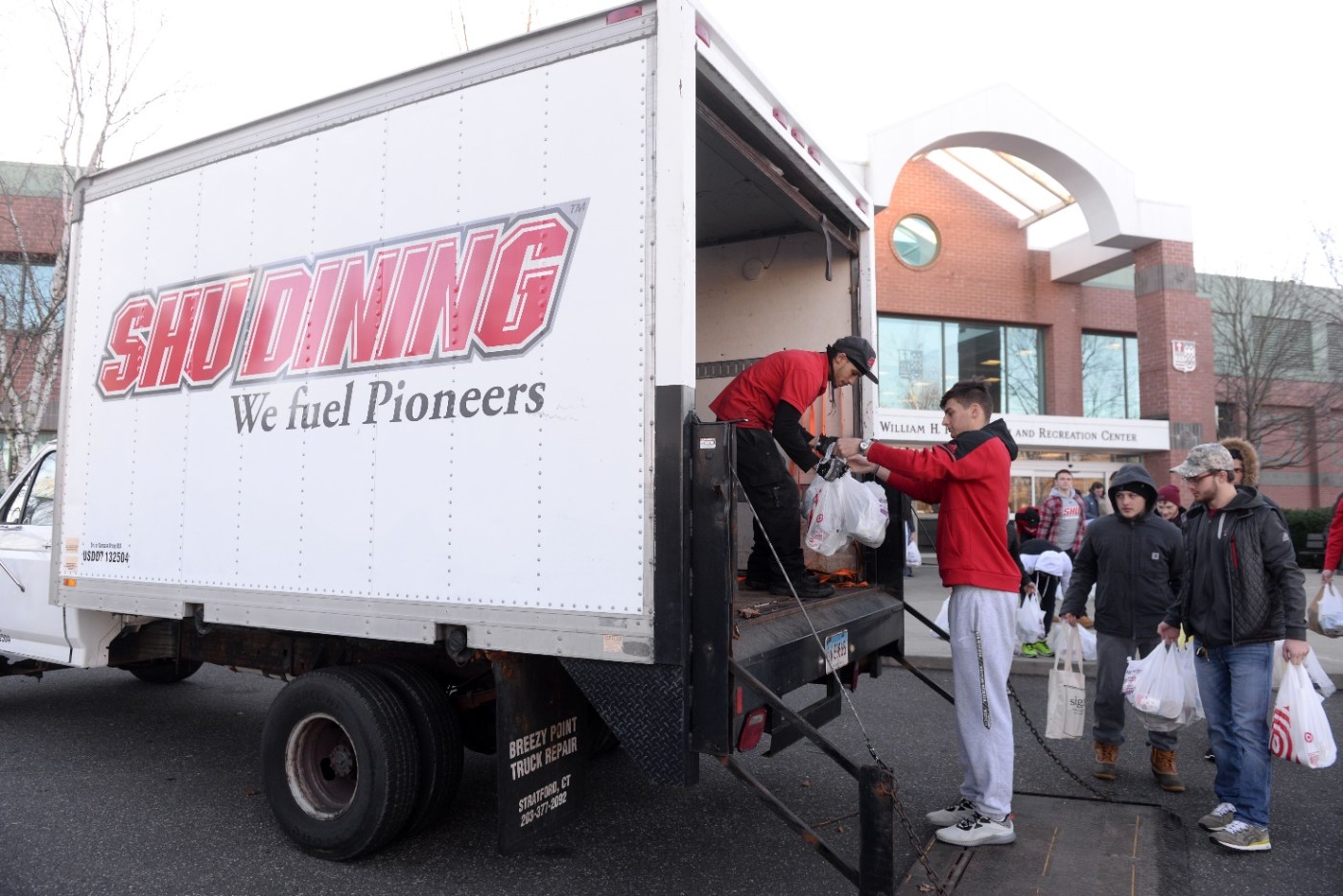
A Connecticut university has shown the way to pull the campus together across economic barriers at this divided time going into Sacred Heart University has shown that schools which emphasize enlightening brains can still warm hearts.
This spring we helped catalyze hundreds of college and university presidents to unify in their resistance to recent assaults from the White House regarding academic freedom, admissions, staffing, and endowments. To our surprise public schools have suffered worse than private schools as victims of these intrusions. This external threat has diverted attention from a rarely discussed tension on many campuses which is the diversion of attention from the well-being of college students and the undergraduate campus life.
The great sociologist of higher education, David Riesman warned of this in his prescient 1968 book “Academic Revolutions,” highlighted how the “logic of the research university” prioritized focus on specialized disciplinary research, professionalizing faculty in increasingly narrow silos, at the expense of college life and learning.
To fight declining enrollments, some schools have addressed this with controversial expensive superficial luxury resort amenities like fancy gyms and internal lazy river drifting streams for recreation. But Sacred Heart, with surging enrollment, discovered there are more immediate, tangible, meaningful ways to address the quality of the college experience for all, in ways that fortify the values of a faith-based school. Sacred Heart University certainly stands on the side of its students, exemplifying themselves as having a culture of support and involvement. Faculty, staff, and even students live out their mission and guiding principles that shape their community: who we are, how we interact and who we aspire to be.
This comes especially true when looking at the impact the institution has on the community. According to Francis Origanti, Senior vice president for Mission and Culture at Sacred Heart University, the overall institution has “grown about three times since 2012… Now we have about 10,500 students,” all while maintaining their vision and commitment to shape the university’s future and upholding their dedication to the students.
In recent years, SHU has demonstrated exceptional commitment to supporting students facing food insecurity, providing programs for those who experience insufficient food resources, while alleviating the worry associated with the negative stigma of asking for help.
Before the Covid pandemic and the government shutdown crisis that cut off SNAP funding, Dr. Petillo, president of Sacred Heart University, witnessed a student attempting to take food from someone else’s plate in the dining hall, which Origanti notes “triggered the conversation about what are we doing and how we can make this better” for those in need. Over the years, Sacred Heart has developed programs to help students who have identified as struggling financially and experiencing food insecurity.
During the winter of 2020, during the midst of the covid pandemic, SHU’s deans and senior leadership created a committee which identified a big need related to food insecurity. Wanting to create a program available on campus for students, the idea of a meal swipe program was described by Annie (Wendel) Johnson, director of the Office of Community Engagement, as “the most kind of impactful types of programs that could be provided to the students. So, SHU Shares was born” in the spring of 2021.
SHU Shares was created initially to allow students to access meal swipes without coming to campus due to COVID restrictions, while also allowing confidential requests to be submitted online requiring minimal information, helping reduce the stigma associated with food insecurity. With support from students and peers, meal swipes are contributed towards an online bank allocated for those who request additional meal swipes.
Designed to support students with immediate needs during the school year, the initiative has collected between 875 – 2,500 donated swipes each semester, aiding 50 – 200 students and drawing 135 – 252 student donors per semester, according to Johnson. While some recipients are repeat participants, many are graduate or international students.
The government shutdown crisis caused SNAP funding to shut down for roughly 17 days from October 26 to November 12, 2025. As the government is now up and running, it may take some time for benefits to be re-distributed.
As Origanti notes, “190 students who have self-identified as being on SNAP benefits,” affecting 101 students on campus, 25 students living off-campus, and 64 student commuters. SHU also facilitates informal outreach to students who self-report, beginning with broader questions about academics and well-being, to invite dialogue about potential food insecurities. Canned goods, gift cards, and a well-stocked pantry of nonperishable items and toiletries are provided to students in need through internal funding and donations.
Students across various universities are facing a widespread frequency of food insecurity with some officials underestimating the severity of the issue. A negative stigma or sense of guilt is present when students seek help, particularly when making the request in person. While there are universities working on this opportunity, Sacred Heart University has spearheaded an initiative focusing on helping students who are facing food insecurity while standing by their culture of coming together to help one another.
The social critic HL Mencken complained a century ago that “universities tend to teach dead languages as if they were alive and living languages as if they were dead.” Sacred Heart’s beating heart keeps it sacred values and cutting edged learning very much alive.
Jeffrey Sonnenfeld is a senior associate dean at the Yale School of Management, Lester Crown Professor of Management Practice, and founder of the Chief Executive Leadership Institute. Isabella Giansanti is assistant director of the Yale Chief Executive Leadership Institute and a 2022 graduate of Sacred Heart University, Jack Welch College of Business and Technology.