
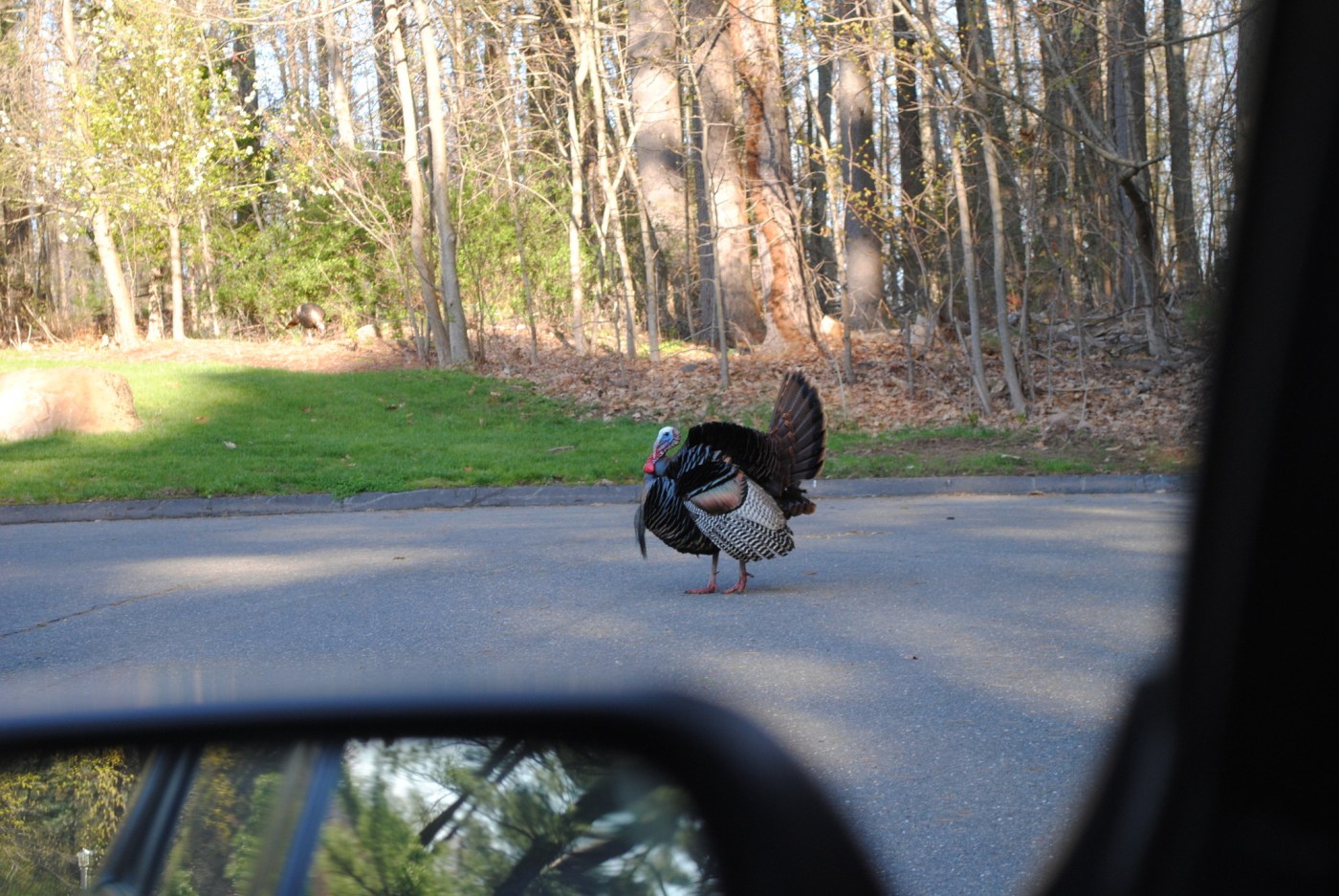
The Eastern wild turkey is considered to be one of Connecticut’s conservation success stories, as decades of restoration efforts have brought the bird back from a population of less than 1,000 to an estimated 35,000.
As the Thanksgiving holiday approaches, many think of a turkey as a symbol of the great American feast, but while the bird was plentiful during the time of the first colonists, it was hunted to near extirpation in the state by the 1830s, according to William Cassidy, wild turkey program biologist with the state’s Department of Energy and Environmental Protection. Before the 1970s, Cassidy said it would have been rare to see a wild turkey in the state.
“Around the 1950s, there was a lot of talk about what we can do to bring wild turkeys back, but many attempts were unsuccessful,” Cassidy said. “In 1975, there were a number of attempts made in upstate New York to capture some birds and release them on Canaan mountain. Subsequently from that initial population of around 20 birds, there were many trap and releases throughout the state. That led to the population we see today.”
Between 1975 and 1992, 356 wild turkeys were released at 18 sites throughout the state, according to DEEP. In 1981, the state held its first hunting season, showcasing the bird’s comeback. Now wild turkeys can be found in all 169 cities and towns throughout Connecticut. While there is no hard number on the population total, DEEP officials estimate around 30,000 to 35,000 are scattered across the state.
“What we saw throughout the 1980s and 1990s was a very large upswing in the number of wild turkeys,” Cassidy said. “In one point in time, we figured we probably exceeded how many there were when the colonists showed up. The population grew rapidly during this time. But around 2003, we noticed we started seeing a decline. But we kind of expected this given that often things grow until they hit a peak and then will slump down a bit.
“It kind of depends on who you ask, some will say there’s more turkeys because they’re seeing them in their yards. But hunters will probably say they see less than they did 20 years ago. So there’s a lot of perspective involved in that. We expect there is probably some decline since the early 2000s, most likely because those birds have hit their carrying limit,” he said.
A carrying limit is the maximum population number a species can have in a given habitat before it can no longer compete for food or reproduce, according to DEEP. While usually seen on the ground, turkeys can fly, according to Cassidy. A wild turkey can fly short distances to escape predators or fly up to trees for safety. One turkey can range several miles per day and are known to traverse long distances in search for food.
Turkey breeding season starts in late March and early April when male turkeys begin gobbling and displaying for the hens. In the fall, turkeys gather for the winter and start building up their winter flocks. Wild turkeys are spotted in both rural forested and urban areas, Cassidy said. Backyards present opportunities for turkeys to roam and pick on grubs and acorns.
“This is the time you’re going to see more birds than in the spring or summer, as they are now in bigger groups for the winter,” Cassidy said. “They’re also changing their eating habits. They are looking for acorns and any of the native nut trees. Now if you’re seeing turkeys in your backyard, that may indicate they’re eating grubs. That’s not always the case, but if you see turkeys pecking at the ground, it very well could indicate a grub presence.
“The wild turkey fares better in less-disturbed areas. However, in some areas of dense human populations, where food and cover are plentiful, turkeys have adapted and seem to survive well,” he added.
There are three hunting seasons for turkey in Connecticut, one in the spring and two in the fall, according to DEEP. The spring hunting season runs from April 30, to May 31, with a bag limit of five bearded birds. In the fall, the firearm season runs from the first Saturday in October until the end of the month. The archery season parallels the deer archery season with a two bird bag limit.
“It’s kind of funny that a lot of folks think of turkeys around Thanksgiving, but the contrast to that is that more of our turkey hunters are active in the spring,” Cassidy said. “Our spring turkey hunting season is far more active than the fall. That’s because there’s a lot more dialogue between the hunter and bird in the spring. Typically, the male turkeys are trying to draw hens to them. So in the spring, the hunters can mimic calls to draw that hen to them. A lot of our hinters want that interaction. That’s completely different in the fall because the birds are already in a flock and are not mating.”
Heath Cater, regional director for the National Wild Turkey Federation, said that the re-emergence of the wild turkey in Connecticut is a lesson that conservation efforts work. The NWTF has been an active wildlife conservation organization since 1973 and is dedicated to the conservation of the wild turkey and preservation of its hunting heritage, according to Carter.
“There has been a successful comeback for the wild turkey in Connecticut. It’s probably the greatest conservation success story in the state, but it’s also no accident either,” Carter said. “The NWTF advocates for the conservation of the species and for responsible harvesting and good use of their habitat. The difference between conservation and preservation is that conservation is the idea you want to have something around as a precious resource, preservation is you don’t want to touch it at all. We want there to be a stable population so folks can take part in that hunting tradition.”
Carter said that a big part of the turkeys comeback is the reintroduction of forests and wild habitat. The NWTF has played a part in influencing over 1,200 acres of wildlife habitat restoration since 2018 in the state, he said. Of those acres, there are 16 conserved or enhanced acres of wildlife habitat for wild turkeys. The hope is that the population will remain stable for generation to come.
“The wild turkey is a great symbol of successful conservation efforts and the importance of protecting wildlife habitat,” Carter said. “If you go back a few generations, seeing a turkey would have been a newsworthy event. Now they are abundant across the state. We want to ensure future generations can take part in that hunting tradition.”
Stephen Underwood can be reached at [email protected].