
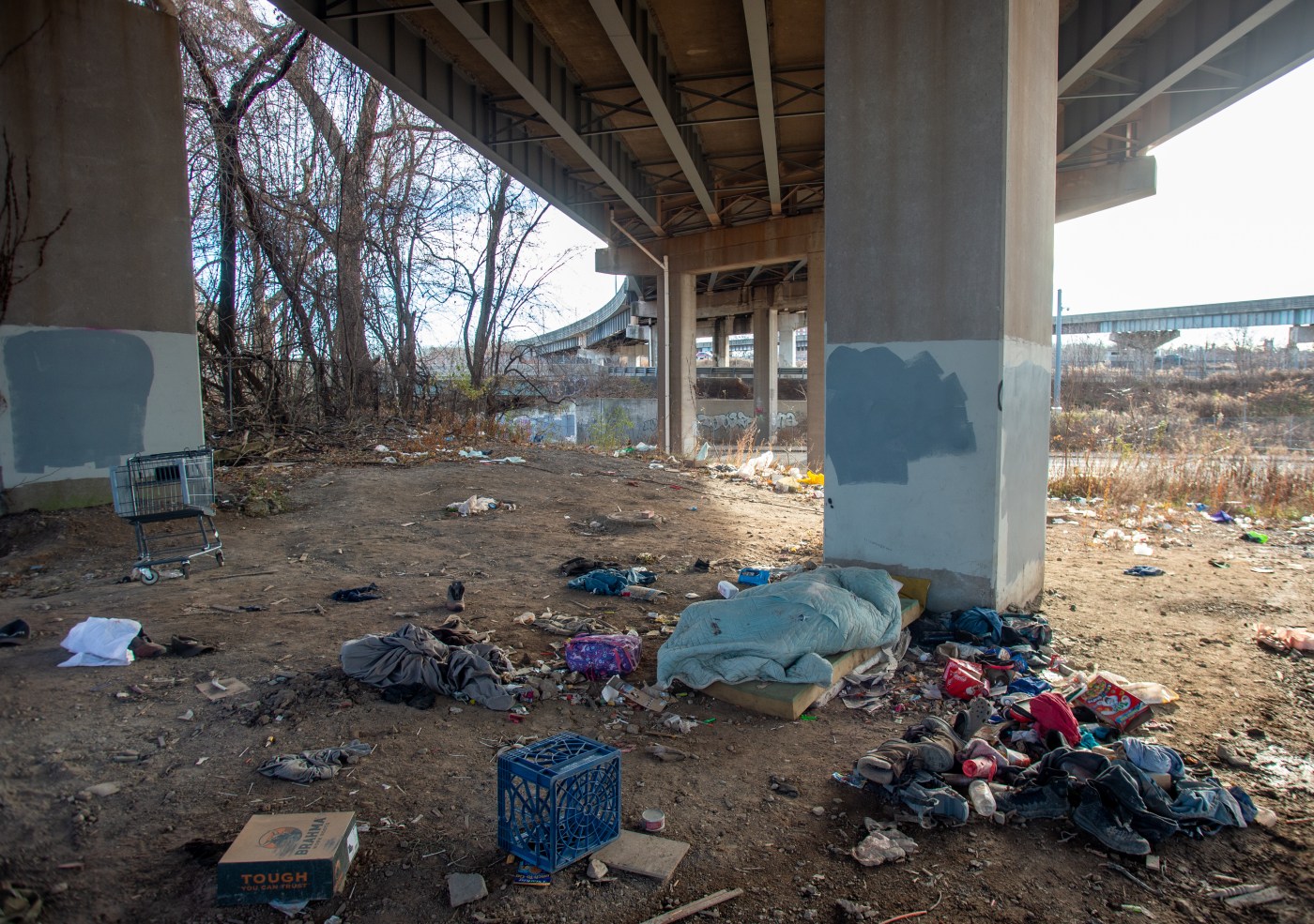
With a 45% increase in unsheltered homelessness in the state, lawmakers are proposing legislation to prohibit municipalities from using general laws like trespassing against unhoused people who are simply resting or storing their belongings on public land.
Rep. Laurie Sweet, a Hamden Democrat, is advocating for HB 5260, which is co-sponsored by Rep. Kadeem Roberts, a Norwalk Democrat. The bill was introduced by the Housing Committee and a public hearing was held. The measure drew opposition due to concern about public spaces and how they are used.
“This bill is important because we are in the midst of a housing and affordability crisis and unsheltered homelessness has increased 45% in the last year alone,” said Sweet in an email. “When we ticket, arrest or sweep, we are making it harder for people experiencing homelessness to overcome existing challenges. It’s also a far more expensive strategy than providing access to stable housing.”
Sarah Fox, CEO of the Connecticut Coalition to End Homelessness and other advocates for the homeless say that incidents have occurred where the unhoused are fined and ticketed for sleeping outside.
Fox said she has not heard about many arrests but she is aware of incidents where the unhoused have had interactions with police officers and moved out of encampments that have been shut down.
There are 6,000 people actively experiencing homelessness, according to Fox. Homelessness in Connecticut has increased by 10% in the past year, with hundreds of children living in homeless shelters, people living in tents and cars and and more seniors going without shelter.
When the cold weather protocols ended last week, some shelters saw three times the number of people, Fox said.
“We know homelessness has increased exponentially and we also know that there are fewer safe places for people to go,” Fox said. “In light of what is happening at the federal government and in light of the sheer volume of people experiencing homelessness who are out in their cars trying to sleep, trying to live and trying to rest and do their daily activities while not having a place to call home, it is a strong step forward for the state to codify protections for unhoused people into law.”
Gov. Ned Lamont, state and federal lawmakers and housing advocates last August denounced President Donald Trump’s executive order directing states to remove people from the streets, possibly by committing them for mental health or drug treatment without their consent.
HB 5260 specifies that no “municipality may enact or enforce an ordinance that prohibits a homeless person’s ability to use or move freely in public places in the same manner as other persons; occupy or sleep in a motor vehicle or recreational vehicle that is legally parked in a public place; use any publicly accessible hygiene facility in the same manner as other persons.”
The bill adds language stating that it does not prohibit a “municipality from enacting or enforcing an ordinance to prohibit activities that endanger or are likely to endanger the health, welfare or safety of the public.”
Sweet said it is very difficult to get the number of arrests in the state for those who are unhoused.
However, Sweet said she would argue that “a carceral approach only makes life worse for folks sleeping outside and makes permanent housing exponentially more difficult.”
Connecticut State Police said they do not keep data “on how many unhoused individuals are arrested.”
Mayor Arunan Arulampalam said HB 5260 comports with the practices of the city in regard to the unhoused.
“We believe deeply that we should do everything we can to bring inside those who are outside, especially in a capital city that experiences the level of cold and snow that we have seen,” he told the Courant. “It is important that in the capital city in one of the wealthiest states and one of the wealthiest countries in the history of the world that we offer basic shelter to those in the city and we should be able to address those needs without criminalizing it. I continue to believe that it is best for residents to be in shelter indoors.”
Arulampalam said when the city identifies encampments, officials spend five days providing services to bring individuals indoors.
“It is not punitive but it is built around a strong belief it is important to bring those who are homeless into shelter to ensure their public health and safety,” Arulampalam said.
Arulampalam said those who are cleared from encampments are offered shelter beforehand.
Hartford City Councilor Josh Michtom said in his testimony that HB 5260 is a “small, important step in creating a humane, statewide response to a statewide problem, keeping the humanity of our neighbors front and center.
“About two thirds of the people in Hartford experiencing homelessness did not live in the city before losing their housing,” Michtom said. “I think we have met the challenge of helping these people, who are now our neighbors, with compassion and good will. I have some faith that Hartford’s mayor and my colleagues on City Council will not seek to drive unhoused people from our city through the kinds of targeted enforcement that HB 5260 would prohibit.”
‘It ceases to be public space’
By contrast, New Haven Mayor Justin Elicker said he is not in support of the bill in its current form.
“Individuals experiencing homelessness should be treated with compassion, dignity, and respect – that’s always our approach and it’s why we dedicate more resources than any other municipality in Connecticut to support the unhoused,” Elicker said in an email. “This includes new innovative housing approaches like our noncongregate shelters, expanded services like Elm City COMPASS to support individuals struggling with related substance use and mental health crises, and leading the charge in advocating for more resources from the region and state.”
But in the same measure, Elicker said he doesn’t “believe an individual should be able to permanently occupy public land, parks and spaces.
“When someone permanently occupies a public space, it ceases to be public space,” he said. “It’s also been our experience that public encampments often result in unsafe, unhealthy and unsanitary conditions, and it’s our responsibility to make sure our public spaces are safe for all.”
Harland Christofferson wrote in his testimony in opposition to the bill that “allowing people to live indefinitely in parks, vehicles, rail corridors, and town greens is not compassion — it is abdication.
“It leaves vulnerable individuals exposed to crime, weather, and unsafe conditions, while simultaneously eroding shared civic spaces relied upon by the broader community,” Christofferson’s testimony said.
Selina Rifkin also wrote testimony in opposition to the bill.
“Municipalities should be deciding how they manage homelessness problems,” she said in her testimony. ”That being said, there is nothing at all kind about allowing people to sleep and defecate in public places.”
Strongbow Lone Eagle, organizer with the Unhoused Activists Community Team, told the Courant that while being unhoused he lost his diabetes and seizure medications three times.
“They took all my property and they didn’t leave me anything,” he said, explaining that he was also summoned for trespassing.
Bill Bromage, lead organizer of U-ACT, a human rights-based organization, said U-ACT believes people have a right to a safe place to stay without being harassed.
“By ticketing people, they are really trying to displace people and move them along versus doing anything to actually support someone in getting housing,” he said. “By moving people along, by getting ticketed, the policies of these municipalities, it makes it so people are having to focus on being criminalized and worried about somebody hunting them down all the time versus doing the things you need to do to get housing.”
Tammy Varney, organizer with U-ACT, said she has been unhoused for three years and said there are no places to go. She said she set up her tent on the bike route by Fuzzy Coffee in New Haven but two police officers removed her tent and all her belongings.
“Everything was ripped from me,” she said. “I was aggravated.”
She called the incident dehumanizing.