
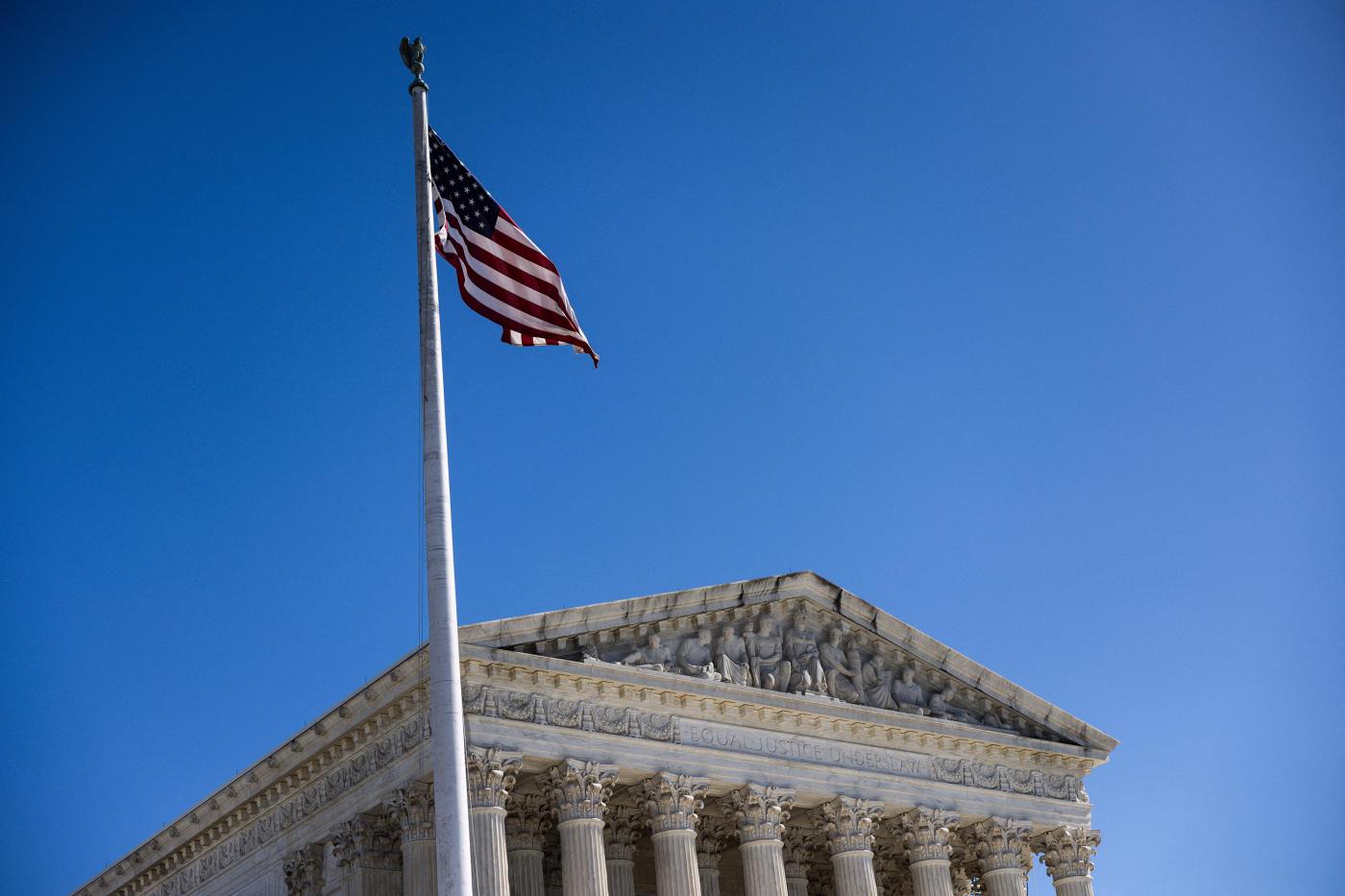
In a landmark 6-3 ruling on February 20, 2026, the United States Supreme Court struck down President Trump’s sweeping tariffs imposed under the International Emergency Economic Powers Act, or IEEPA, dealing a significant blow to one of his signature economic policies. Chief Justice John Roberts held that IEEPA, a 1977 law designed for national emergencies, does not authorize the president to unilaterally impose tariffs of unlimited amount, duration, and scope.
The ruling invalidates tariffs that had pushed the average US tariff rate to its highest level since the 1930s, affecting imports from dozens of trading partners and touching virtually every sector of the US economy. Within hours, President Trump defiantly announced plans to reimpose a 10% worldwide tariff using Section 122 of the Trade Act of 1974, signaling that the battle over US trade policy is far from over.
Why the Ruling Matters
The ruling is significant for several reasons. First, it sends a powerful signal that the U.S. remains a nation governed by law and that the rule-based global trading system is still alive. Second, it reaffirms the constitutional separation of powers: the power to impose taxes and duties on Americans belongs to Congress, not the executive branch. Third, the decision will deter future presidents from invoking IEEPA as a pretext for sweeping economic measures without genuine emergency justification. No president before Trump had ever used IEEPA to impose tariffs. Fourth, the ruling forces the Trump Administration to pursue its trade agenda through more constrained legal channels.
Alternative instruments, such as Section 301 of the 1974 Trade Act, Section 232 of the 1962 Trade Expansion Act, and Section 122 of the 1974 Trade Act, all require formal fact-finding processes and carry time or scope limitations. Section 122, which Trump immediately invoked, can only sustain tariffs for 150 days. These guardrails exist to ensure trade policy is grounded in evidence and congressional intent rather than presidential whim. Fifth, if allowed to take full effect, the ruling may help restore predictability to the US business environment, battered by a tariff regime that was imposed in fits and starts over the past year.
Short-Term Challenges
The ruling is not without complications. The US federal government will likely be required to refund tariff revenue already collected. The Penn Wharton Budget Model estimates potential refunds exceeding $175 billion, and President Trump has signaled his administration will resist those claims, setting the stage for protracted litigation. While businesses may ultimately recover what they paid, ordinary consumers who absorbed higher prices through the retail chain have no formal legal mechanism for reclaiming their losses. Nor will prices necessarily fall even if tariffs are reduced. Businesses do not automatically pass savings back to consumers, and price inflation driven by tariffs tends to stick around even after tariffs are slashed. The damage to household budgets, in other words, may prove more lasting than the tariffs themselves.
IEEPA tariffs generated roughly $130 billion in revenue through late 2025, accounting for about 60% of total tariff collections. The Trump Administration had counted on the tariff revenue to help finance the tax cuts enacted under the “One Big Beautiful Bill Act”. Without this source, the government faces a difficult choice between finding alternative revenues, deepening spending cuts, or adding further to the national debt. Additionally, the flurry of bilateral trade agreements and framework trade deals negotiated around the IEEPA tariff regime now faces legal uncertainty, potentially unraveling months of trade diplomacy.
Trump Strikes Back
Trump’s immediate pivot to Section 122 makes clear his administration will not abandon its protectionist agenda. But there is a more concerning possibility: the Trump Administration may turn to non-tariff barriers, or NTBs, as tools of economic pressure against other countries. These can include import licensing requirements, selective regulatory hurdles, national security reviews to block foreign investment, and restrictions on market access for foreign service providers. These instruments are harder to challenge before the WTO (which in any case has been rendered largely ineffective by US opposition to appointing new judges) or in domestic courts, less visible to the public, and often more difficult for trading partners to counter with retaliation. A shift toward NTBs would represent a subtler but potentially more durable form of protectionism, one that can exacerbate the trade war
The Long-Term Outlook
Despite near-term disruptions, the ruling is broadly positive for the US economy over the medium and long term. The Yale Budget Lab estimates the effective US tariff rate has already fallen from approximately 17% to around 9% following the decision as a result of this ruling. This is a significant relief given that a Federal Reserve Bank of New York study found that US businesses and consumers bore roughly 90% cost of the 2025 tariffs. The ultimate impact will, however, depend on how aggressively the Trump Administration works to circumvent the ruling through alternative tariff authorities, non-tariff barriers, or new legislation explicitly granting broader tariff powers to the president.
The Supreme Court has enforced an important constitutional boundary. But a court ruling alone cannot repair the damage done to America’s trading relationships, its reputation as a reliable partner, or the confidence of businesses that invested on the assumption of a stable, rules-based trade environment. What the ruling does accomplish is to reassert that even a president determined to reshape the global trading order must operate within the bounds of law. For a world that had begun to wonder whether those bounds still matter, this ruling is no small thing.
Mohammad N. Elahee ([email protected]) is a professor of International Business at Quinnipiac University, Connecticut.