
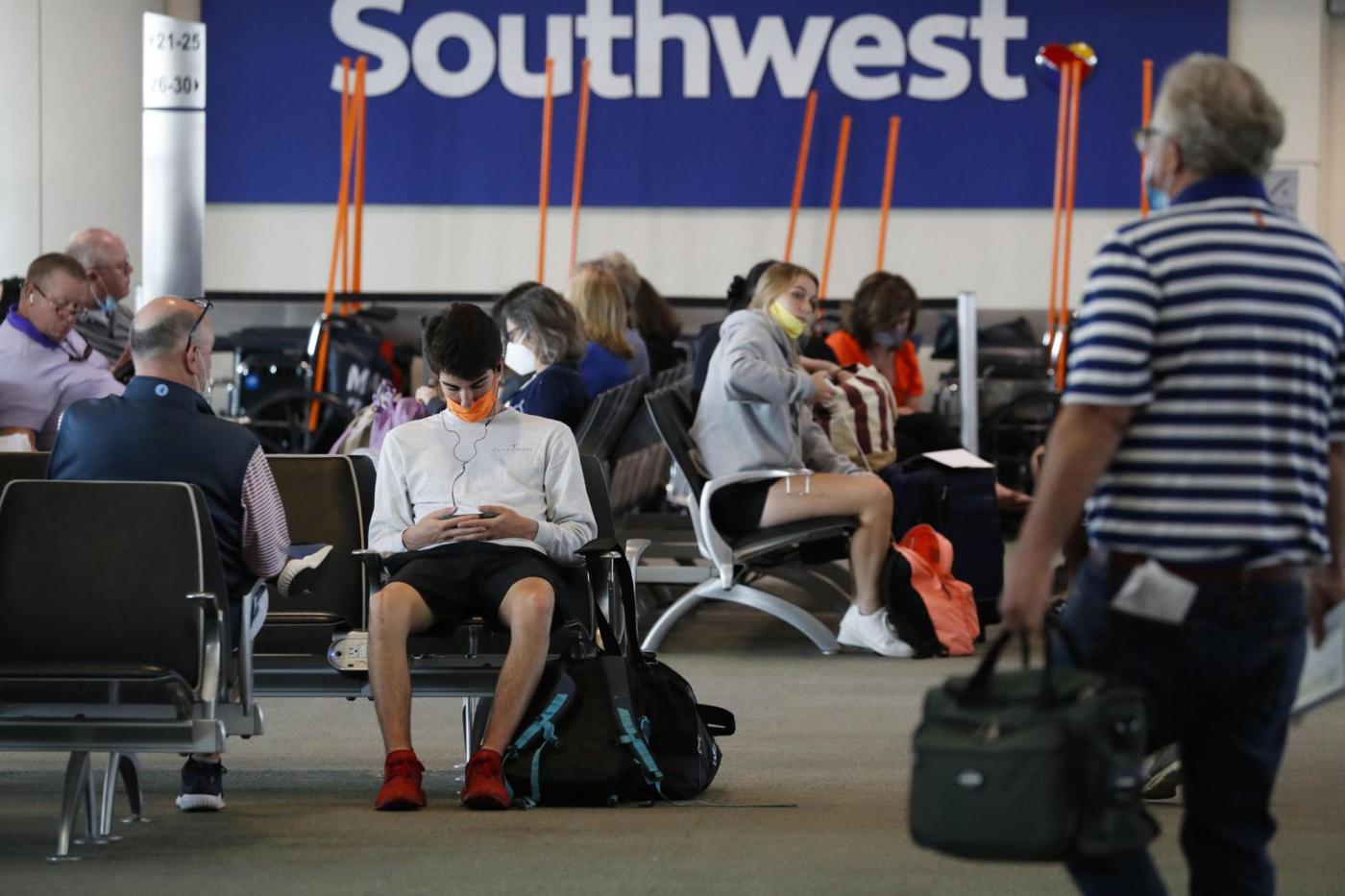
By Jordan Parker, The Dallas Morning News
Washington D.C. area resident Brad Todd was stunned when a Southwest Airlines flight attendant barred him from switching seats on a mostly-empty flight from Kansas City to Reagan National Airport on Feb. 11.
Todd, a Republican media consultant who frequently flies for work, said he paid for seat in row two before attempting to move one row back – in order to spread out after a passenger had purchased the middle seat next to him.
Then, he found out that wasn’t allowed even though, as he estimated, only 43 passengers were slated to travel on the aircraft.
“She goes, ‘well you have to go back to your assigned seat or we can’t leave,’” Todd told The Dallas Morning News in an interview. “Five rows wide open behind me. It couldn’t be a weight and balance issue to sit one seat back or it wasn’t a price issue, I’d already paid.”
After Todd documented his experience in a social media post that garnered 4 million views on X, more than 3,000 people chimed in with their own thoughts – the majority of which slammed Southwest.
The dominant carrier at Love Field Airport first announced the switch to assigned seating in 2024, part of a series of moves the carrier made to increase revenue. CEO Bob Jordan previously said that a majority of customers and potential customers preferred the ability to pick a seat.
But experiences like Todd’s are one of many horror stories since the Dallas-based airline scrapped open seating in favor of assigned seating on Jan. 27. And judging by a public outcry that’s gone viral on social media, the transformative switch is off to a turbulent start.
‘When everyone has a microphone’
“I’m for assigned seating,” Todd said. “I think it’s a good thing for Southwest. I’m somebody who buys a ticket last minute and I’m willing to pay more for a better seat.”
When asked if he would continue to fly the airline if changes aren’t made, Todd said he “would definitely fly them less.”
Henry Harteveldt, a longtime aviation analyst and founder of Atmosphere Research Group, told The News that flight attendants not allowing passengers to switch seats is where Southwest “potentially made a mistake.”
“Any time you make a major change to a policy, as Southwest did after 54 years, there are inevitably going to be teething pains and some unhappy people. And in the age of social media, where everyone has a microphone, you’re going to hear a lot of people grousing.”
Many complaints have focused on those passengers being forced to place carry-on bags in compartments way to the back of the plane, a different experience from the prior boarding process. A frequent criticism is that non-preferred passengers were boarding ahead, and taking up available overhead space. Families have also complained about children being separated from them.
Harteveldt said he was “surprised” when he heard of the issues with family boarding, saying the airline “clearly overlooked the need for family seating and I’m hoping that they will address that.”
There have also been reports that A-list Preferred customers, who are supposed to board in either groups one or two, are boarding in later groups, also leading to bin space troubles.
Todd added that Southwest’s new boarding process seemed to create confusion among passengers. “Going to this assigned seating system without requiring people to use the bin that’s over their seat is going to cause mass chaos and the quick turn won’t be possible,” he said.
In response to early complaints, company spokesperson Chris Perry told The News the airline was making a “series of early adjustments designed to smooth operations and reduce friction designed to smooth operations and reduce friction.”
Southwest still has not specified what the adjustments are going to be and declined to comment beyond its original statement when contacted by The News for follow-up questions.
TWU Local 556, the union that represents Southwest’s flight attendants, did not immediately respond to a request for comment.
Even though Todd does not have status with Southwest, he still frequently flies the carrier for business trips.
“Southwest made its mark and went from a regional airline to the number one carrier because it broke from the pack in how it made decisions,” Todd said.
“Their customer picks their brand because the brand is fun and flexible. If they’re not going to be fun and flexible, then you might as well go with somebody that has a first class cabin, a sandwich and a lounge in the airport.”
Harteveldt emphasized that switching to assigned seating, along with implementing new product offerings like extra legroom seating and soon-to-come Starlink Wi-Fi, will make Southwest “much stronger” and “more compelling.”
“I think that these threats from people ‘I’ll never fly this airline again’ are almost always proven to be empty claims. If people aren’t happy with Southwest, they certainly have the right and ability to change airlines but the grass is no greener on the other side.”
“It’s just like the era of Southwest old club seating with the pairs of seats facing each other across a table, just like flight attendants dressed in hot pants, open seating has come and gone,” Harteveldt said. “It’s now part of the airline’s history. Get used to speaking about it in the past tense.”
©2026 The Dallas Morning News. Distributed by Tribune Content Agency, LLC.