
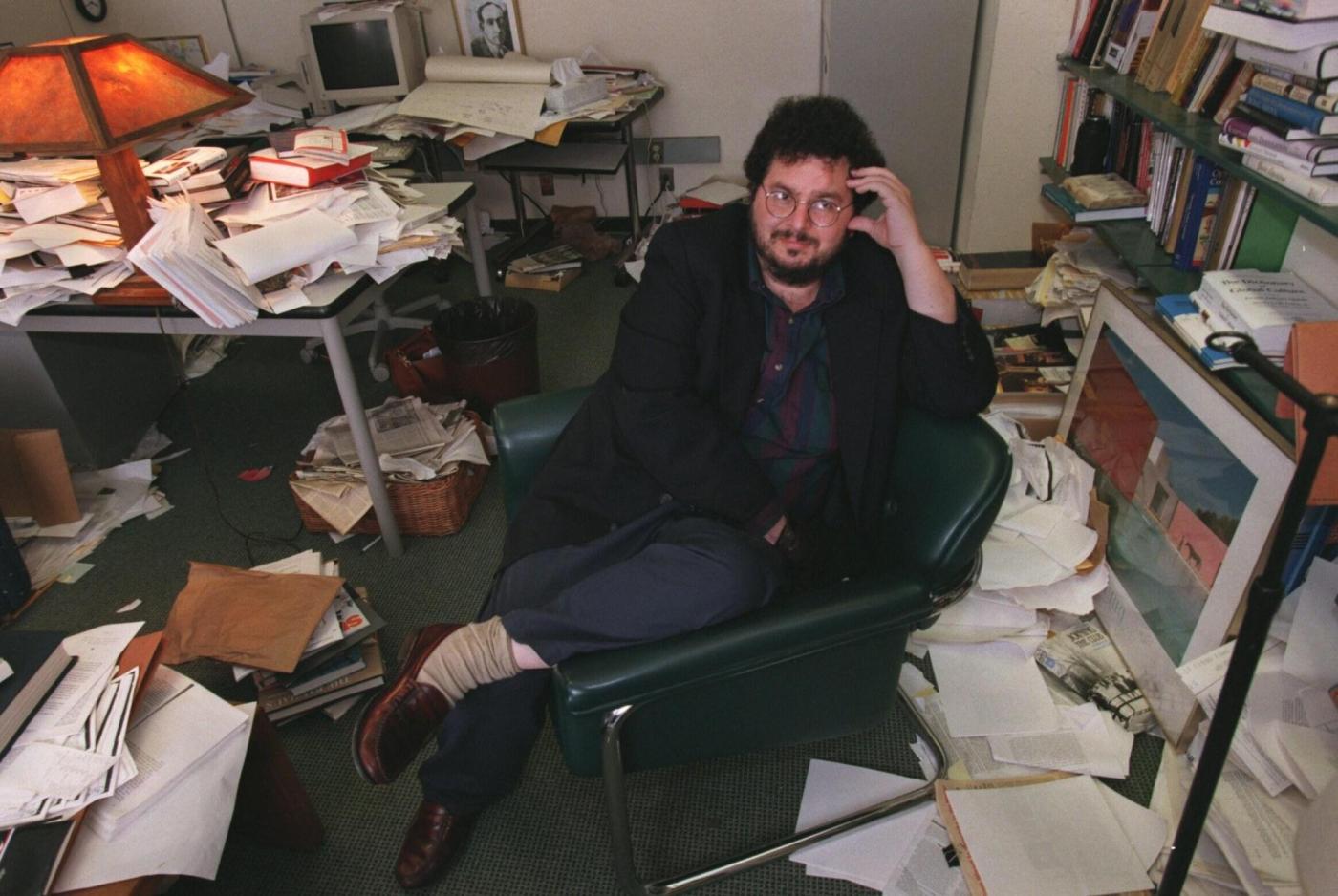
By DAVE COLLINS
Yale University says a prominent computer science professor will not teach classes while it reviews his conduct, after newly released documents show he sent Jeffrey Epstein an email describing an undergraduate as a good-looking blonde while recommending her for a job.
Messages between David Gelernter — who made headlines in 1993 when he was wounded by a mail explosive sent by “Unabomber” Theodore Kaczynski — and the late, disgraced financier were among the trove of Epstein-related documents released by the U.S. Justice Department in late January. The documents show Gelernter and Epstein corresponding on a variety of topics including business and art.
In an email to Epstein in October 2011 — several years after Epstein pleaded guilty to soliciting prostitution from an underage girl — Gelernter wrote that he had an “editoress” in mind for a job — a Yale senior whom he described as a “v small good-looking blonde.”
Gelernter defended that message in an email last week to Jeffrey Brock, dean of Yale’s School of Engineering & Applied Science, according to the Yale Daily News, which reported that Gelernter also forwarded the email to the student newspaper.
He noted that Epstein was “obsessed with girls” — “like every other unmarried billionaire in Manhattan; in fact, like every other heterosex male” — and he was keeping “the potential boss’s habits in mind.”
“So long as I said nothing that dishonored her in any conceivable way, I’d have told him more or less what he wanted,” Gelernter wrote to Brock, the paper reported. “She was smart, charming & gorgeous. Ought I to have suppressed that info? Never!”
He added: “I’m very glad I wrote the note.”
Students in Gelernter’s computer science class were notified that he would not be teaching on Tuesday.
“The university does not condone the action taken by the professor or his described manner of providing recommendations for his students,” Yale said in a statement. “The professor’s conduct is under review. Until the review is completed, the professor will not teach his class.”
Gelernter, 70, did not immediately respond to emails and a message left at a phone listing for him in public records. A message to Brock was returned by Yale’s Office of Public Affairs & Communications, which provided the statement by the university and a letter to students by Brock. Yale declined to provide a copy of Gelernter’s email to Brock.
Gelernter joins a list of people in the U.S. and Europe, including prominent politicians, facing scrutiny because of the Epstein files.
In a message to students on Tuesday, Gelernter again defended his emails to Epstein and said they were the reason he was suspended from teaching the class. The message, sent on Yale’s course management system, was first reported by Hearst Connecticut Media Group.

In the message, Gelernter discussed his 2011 email to Epstein about the undergraduate student, saying he was recommending the student for a job with Epstein’s private bank and the student wanted the recommendation, Hearst Connecticut Media Group reported. He said he and the student did not know at the time that Epstein was a convicted sex offender.
“The university’s Smoking Gun is a personal, private email, dug out of the dump of Epstein files,” Gelernter wrote, according to Hearst. “(If someone handed you a stack of other people’s private correspondence, would you dive in and read them? Of course not. Gentlemen and ladies don’t read each other’s mail. (Courtesy 101.)”
In 2008 and 2009, Epstein served jail time in Florida after pleading guilty to state charges of soliciting prostitution from someone under the age of 18. He died by suicide in a jail cell in 2019, while awaiting trial in New York on U.S. federal charges accusing him of sexually abusing dozens of girls.
On the Yale faculty since 1982, Gelernter is known for his work in parallel computation — the use of multiple computer processes to solve complex problems — and for helping develop the Linda computer programing system, beginning when he was a doctoral candidate in the late 1970s. His 1991 book “Mirror Worlds” foreshadowed the World Wide Web and inspired the Java programming language, according to his biography on the Yale website.
On June 24, 1993, he suffered extensive wounds to his abdomen, chest, face and hands when he opened a package that exploded in his Yale office. Authorities later determined the package was mailed by Kaczynski, who ran a 17-year bombing campaign that killed three people and injured 23 others.