
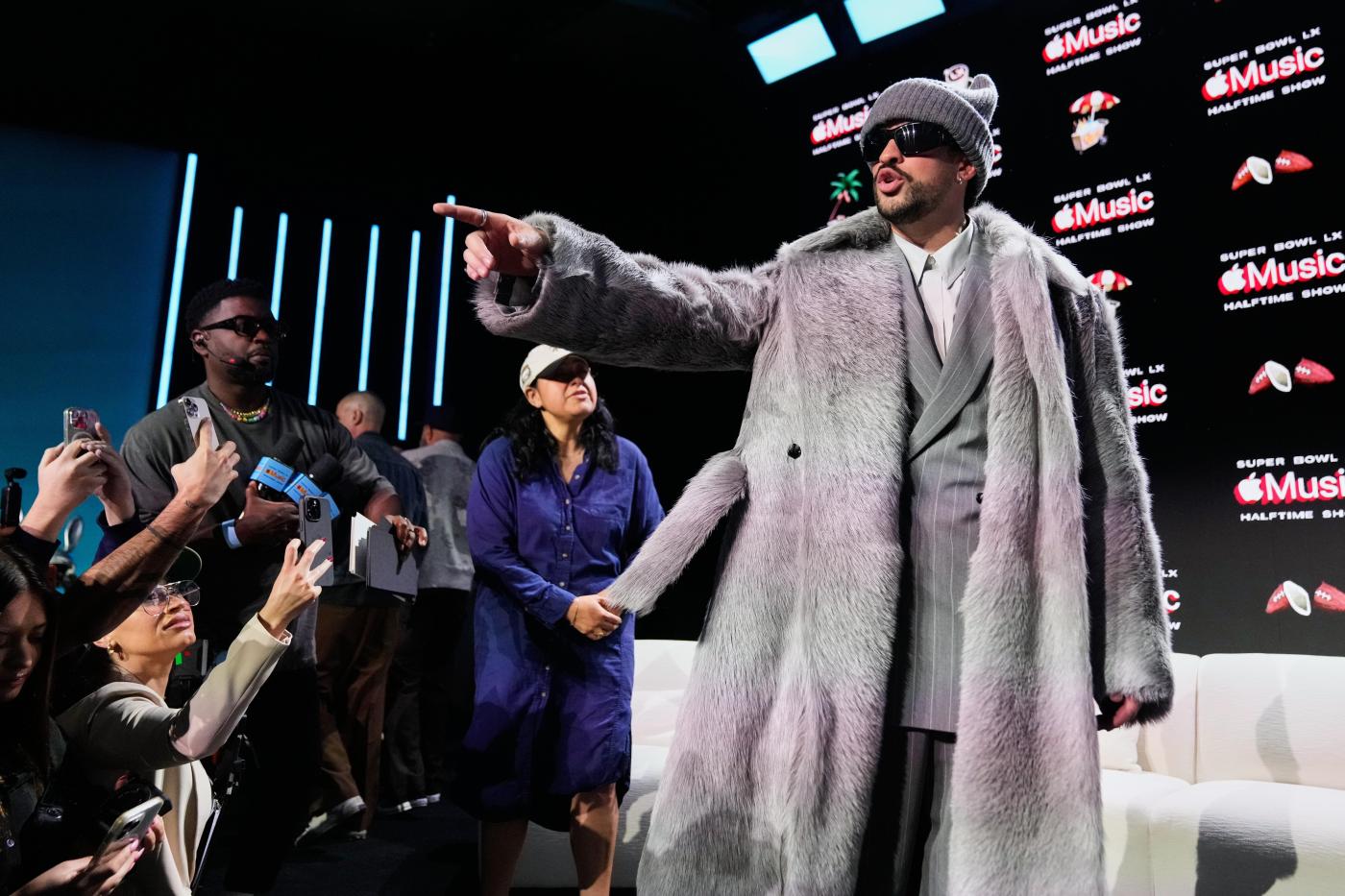
The recent attention surrounding Bad Bunny’s Super Bowl performance was never just about music or spectacle.
For Puerto Ricans, and for many across the broader Latin diaspora, it was a moment of recognition, affirmation, and long-delayed visibility on one of the most watched stages in the world.
For others, particularly in mainstream U.S. audiences, it offered a rare invitation to see Puerto Rican culture not as a backdrop or novelty, but as a central, unapologetic expression of history, politics, and identity.
Fans race to learn Spanish before Bad Bunny’s Super Bowl halftime show
Puerto Rico’s relationship with the United States is shaped by more than 500 years of colonial rule, first under Spain and then under U.S. governance. That history has produced profound economic, political, and cultural consequences, from imposed citizenship without full political representation to ongoing debates about sovereignty, statehood, and self-determination.
For decades, scholars, activists, and artists have worked to bring these realities into public consciousness. What is striking about Bad Bunny’s influence is how effectively he has carried these conversations beyond academic spaces and activist circles into global popular culture.
Bad Bunny does not speak about Puerto Rico quietly or cautiously. He centers the island’s struggles, celebrates its people, and challenges dominant narratives through Spanish language music, visual symbolism, fashion, and performance. His visibility destabilizes the idea that Latin artists must assimilate linguistically or culturally to be legible or successful in the U.S. mainstream.
In doing so, he reframes whose stories are allowed to be seen, heard, and valued. Bad Bunny also stands within a much longer Puerto Rican tradition of infusing both joy and protest into music, a tradition in which celebration itself becomes an act of resistance.

From “bomba” and “plena” to “salsa”, reggaetón, and contemporary fusions, Puerto Rican music has long carried grief, humor, rage, tenderness, and hope at the same time. These forms did not emerge in isolation, but out of daily practices of survival and defiance shaped by colonial domination, racial hierarchies, and economic dispossession.
That lineage reaches back to the Taíno people of Borikén, whose social organization, relationship to land, communal life, and expressive culture were documented, however imperfectly and through colonial lenses, by figures such as Christopher Columbus and Bartolomé de las Casas.
Even in those early accounts, we glimpse a society grounded in reciprocity, collective care, and joy and laughter in the face of precarity. The implications are unavoidable. This Indigenous worldview, though violently disrupted, was never erased. It lives on, transformed and carried forward through Indigenous, African, European, and diasporic influences, and remains deeply ingrained in what it means to be Puerto Rican today.
Bad Bunny won big at the 2026 Grammys. It’s a boost at a dark time for US Latinos
Bad Bunny’s work taps into this continuum, honoring the everyday forms of resistance that have sustained Puerto Rican life for centuries, from music and dance to language, humor, and mutual aid.
As Yarimar Bonilla observes, Bad Bunny “transforms grief and pride into a sonic archive of resistance.” The result is not merely entertainment, but a powerful meditation on the stakes of his artistry, his platform, and the future he dares us to imagine.
This cultural impact is now being taken seriously within higher education. Colleges and universities are teaching full courses dedicated to understanding Bad Bunny’s work as a site of critical inquiry.
At Wellesley College, a seminar titled “Bad Bunny: Race, Gender, and Empire in Reggaeton” examines his role in the 2019 Puerto Rican protests and what his artistry reveals about U.S. empire, race, gender, and queerness.
Similar courses and lecture series have appeared at Yale University and institutions in the Boston area, signaling a broader recognition that popular culture can be a powerful lens for understanding colonialism, resistance, and identity formation. These academic developments align closely with themes explored in Vanessa Díaz and Petra R. Rivera-Rideau’s book “PFKNR: How Bad Bunny Became the Global Voice of Puerto Rican Resistance,” which examines how Puerto Rican artists navigate visibility, representation, and racialized expectations within U.S. media industries. Díaz and Rivera-Rideau highlight the tension between authenticity and marketability, and the ways Puerto Rican performers are often celebrated while their political realities are ignored.
Bad Bunny disrupts this pattern by refusing separation between cultural celebration and political truth. His success suggests that mass audiences are capable of engaging with complexity, even when institutions have historically underestimated them.
For Southern Connecticut State University, as it continues its work toward becoming an Hispanic-Serving Institution (HSI), moments like this matter deeply. An HSI is not defined only by enrollment numbers, but by an institutional commitment to seeing Latin students, communities, and cultures as central rather than peripheral. Bad Bunny’s visibility mirrors the opportunity before institutions like Southern: to move beyond symbolic inclusion toward meaningful engagement with the histories, knowledge systems, and lived experiences of the communities they serve.
For Puerto Rican and other marginalized communities, this moment affirms that cultural pride and political consciousness are not liabilities. For mainstream audiences, it offers a chance to listen differently and learn more honestly. And for higher education, it is a reminder that some of the most important conversations about race, empire, gender, and belonging are already happening in public view.
The question is whether institutions are ready to meet them there.
Dr. Carlos Antonio Torre is a professor of Education (Curriculum & Learning) at Southern Connecticut State University who earned three graduate degrees from Harvard University and previously served as a fellow and assistant dean at Yale University.

A longtime civic leader, he spent 22 years on the New Haven Board of Education — 17 as president — and has held national and international roles advancing educational equity, including work focused on Hispanic, Latino, Native American, and African American studies.