
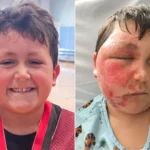
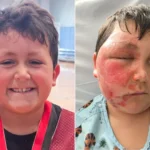
On a cold January morning, a 9-year-old boy was getting ready for school, doing what many kids do before the day begins — moving between breakfast, backpacks, and small routines that feel familiar and safe.
Within minutes, that ordinary moment turned into an emergency.
Caleb Chabolla was badly burned after trying a social media trend that involved heating a popular gel-filled sensory toy in the microwave. What followed was a painful lesson for one family — and a warning many parents are now grappling with.
A Trend Moves From Screen to Kitchen
On Jan. 20, Caleb placed a NeeDoh Nice Cube, a soft, gel-based “squishy” toy, into the microwave. The goal, he later explained, was to make it more pliable — something he had heard about from a friend, who mentioned seeing it online.
His mother, Whitney Grubb, was in the garage warming up the car. When she heard the microwave running, she assumed her son was heating breakfast.
Then she heard him scream.
When Caleb opened the microwave, the toy burst. Hot, gelatinous material sprayed across his face and hands, leaving him with immediate burns.
A Rush to the Hospital
Grubb tried rinsing the substance off in the shower, but it didn’t help. She rushed Caleb to the emergency room, where doctors quickly realized his injuries were serious.
He was transferred to Loyola Medicine’s Burn Center and evaluated by an eye specialist after one eye swelled shut. Doctors later confirmed his vision was not permanently damaged.
Caleb suffered second-degree burns on one side of his body and on both hands. After treatment, he was able to return home and is now recovering, with plans to go back to school soon.
Medical staff said he was fortunate the injuries weren’t worse.
Warnings That Go Unseen
The NeeDoh Nice Cube is marketed as a calming sensory toy meant to be stretched and squeezed. The manufacturer’s website clearly states that the product should not be heated, frozen, or microwaved, warning that doing so can cause injury.
But doctors say those warnings often don’t stand a chance against the speed and appeal of viral trends — especially for children.
Healthcare providers at Loyola Medicine said Caleb was the fourth child they had treated for injuries linked to the same trend. In other cases, children suffered burns after touching or puncturing the toy once it had been heated.
A Familiar Pattern in Pediatric Care
Burn specialists say this incident fits a larger pattern they see daily.
Roughly 30 percent of patients treated at the burn center are children. Many are injured not by unusual hazards, but by everyday household items — hot noodles from the microwave, spilled coffee, or objects that seem harmless until they’re not.
Social media adds a new layer. Trends can make risky behavior look playful, simple, or even scientific, without showing consequences.
Children, clinicians note, are especially vulnerable because they often lack the experience to judge danger — and because curiosity is part of growing up.
Why This Story Resonates
What makes Caleb’s story unsettling is how normal it feels.
A toy from a trusted brand. A kitchen appliance used every day. A school morning unfolding as usual. Nothing about the moment signaled danger until it was too late.
For many families, that’s what lingers — the realization that risk doesn’t always announce itself loudly. Sometimes it slips quietly into routine, carried by a trend that feels far away from real life until it isn’t.
Caleb is healing now. But his story is likely to stay with many parents and caregivers, long after the burns fade, as they think about how quickly the online world can spill into the home.
The post How a Social Media Trend Sent a Child to the Burn Center first appeared on Voxtrend News.