
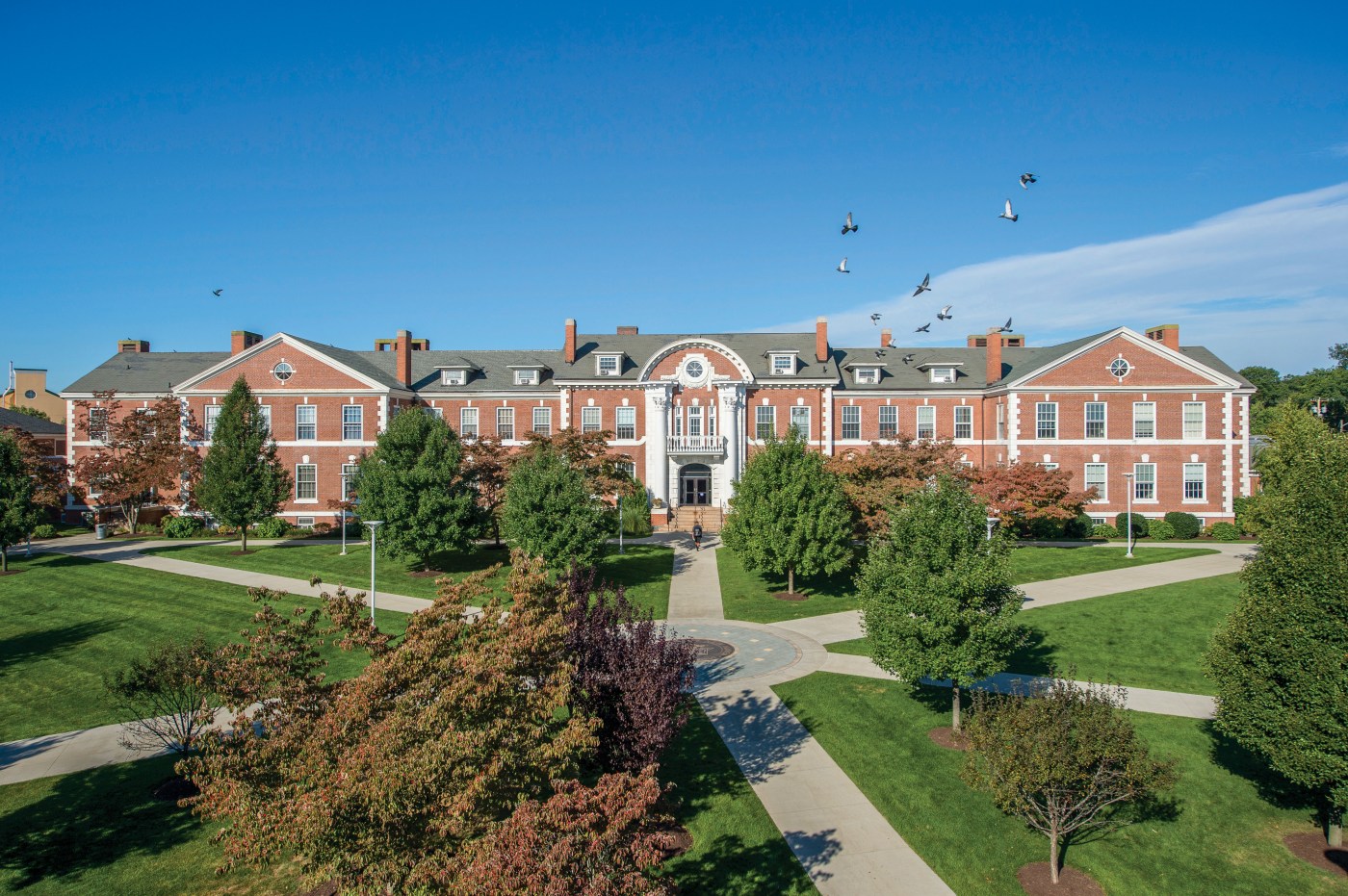
For Jens Frederiksen, president of the University of New Haven, there is “one variable outside our control that has literally cratered.”
The change in variable, that of international student enrollment, means the university has gone from a student body of over 9,000 students to now slightly above 6,000 students over the past two years.
The change means that, despite actions to realign operational expenses, the university “must adjust to the new reality of a steady state at 6,000 students and 16-17% reduction in overall revenue,” Frederiksen wrote in a memo to students and staff that was obtained by the Courant. The exact amount of revenue loss was not named.

“While these (expense) actions have been tremendously impactful, they have been completely outpaced by the ‘international cliff,’” Frederiksen wrote. “To this end, we are implementing measures to realign operational expenses with that new steady-state enrollment to effectively position the university for long-term success and sustainability.”
The reduction in the student body, “at a time when domestic interest in the university is at a record high, is the result of visa limitations that have barred international students from attending U.S. institutions,” Frederiksen wrote. “For an enrollment driven institution, the impact of this ‘international cliff’ simply cannot be overstated.”
He called it in his memo, “a devastation of its international graduate student body.”
According to NAFSA: Association of International Educators, international students contributed $43 billion to the U.S. economy in 2024-25, which dropped to $1 billion in fall 2025.
The U.S. Department of State posted on X on Jan. 13 that “The State Department has now revoked over 100,000 visas, including some 8,000 student visas and 2,500 specialized visas for individuals who had encounters with U.S. law enforcement for criminal activity.”
Frederiksen said in an interview that he could not yet speak to specific steps the university will take, as they must be shared internally first. This included not commenting when asked specifically about the possibility of layoffs at the school.
Frederiksen did note an area that could see savings is in supports services, as there will be fewer international students on campus who need them. “It is for me to decide next steps,” he said.
“For those of us who are enrollment driven, it is a matter of running a sustainable business,” he said.

He said part of the frustration is that not having international education be a key component at the university undermines having students prepare to be in a global workplace. “I believe it was creating a platform to brighter futures,” he said. ”It has obviously just cratered in the past … months.”
The university has been feeling the effects continuously over a period of about 24 to 30 months and momentum has been “incredible,” he said. “It’s a new normal of slightly over 6,000 students, rather than 9,000 … you are being completely outpaced by the drop off.
“Obviously, it’s something that is unfortunate,” he said. “Hopefully over time it will change.”
But Frederiksen, who took reins of the West Haven school in 2024, said he doesn’t “see it coming back” within the next four or five years.
He wrote in the memo that with many institutions, “particularly in New England — facing a ‘domestic demographic cliff,’ the University of New Haven has continued to defy this trend with record domestic undergraduate applications and selectivity. In fact, the university has experienced unprecedented momentum across the board, including domestic enrollment, retention and student outcomes. However, the sheer scale and pace of the unanticipated and continuous international decline have necessitated more immediate and comprehensive measures.”
“We’ve weathered every trend,” he said in the interview. “Once force just singularly had to be addressed.”
Asked about other aspects of the university, such as its planned campus in Riyadh, Saudi Arabia, Fredricksen said there should be no changes due to the funding sources for those initiatives.
The University of New Haven became the first in the nation to partner with Saudi Arabia to create a branch campus in Riyadh, the goal being to create a global workforce while continuing to strengthen relationships between the two countries.
The decision by the university to develop that program built on “excitement and enthusiasm generated” as it became the first institution in the world to receive approval to open an international branch campus in Riyadh to expose students to global experiences, according to the university.
The “Saudi project is latest installment” of a long process, Frederiksen said, noting it is moving forward “because it is a booming market” and students can “still take advantage of a UNH education and degree.”
“We are going to continue to very, very active, the way we have been,” he said.
The university also is in the process of creating a Research and Development Park, which will be 130,000-square-foot commercial space directly across the street from the UNH West Haven campus. It’s the former Railroad Salvage building at 1129 and 1131 Campbell Ave. The school bought the property in December 2024.

“I am confident that the actions that are being taken will position the university for financial sustainability and long-term success,” the president wrote in the memo. “In many ways, this is an organizational realignment and return to a steady state that existed prior to Covid and the surge of international graduate students. The current ‘international student cliff’ was clearly beyond our control, and I remain extremely bullish about the future of the University of New Haven. Our best days are still ahead. We must rally together to ensure a bright future for our students.”
UNH also played is first Division I basketball game in November.