
BOSTON, Mass. – This summer, Carlos Beltran, Andruw Jones, and Jeff Kent will take their place alongside immortality when they are inducted into the Baseball Hall of Fame.
Then, once they are formally enshrined, all eyes will once again look ahead to who could be next in line.
Over the next five years there are a handful of obvious first-ballot Hall of Famers who should cruise right into Cooperstown. There are also a number of fascinating candidates who might need a couple of tries, along with returning fixtures who have been gaining momentum and could at some point hit the 75% threshold needed for election.
Next winter’s election will tell us a lot about what the rest of the decade might hold, and it also could cement a trend that has steadily accelerated over the past few years.
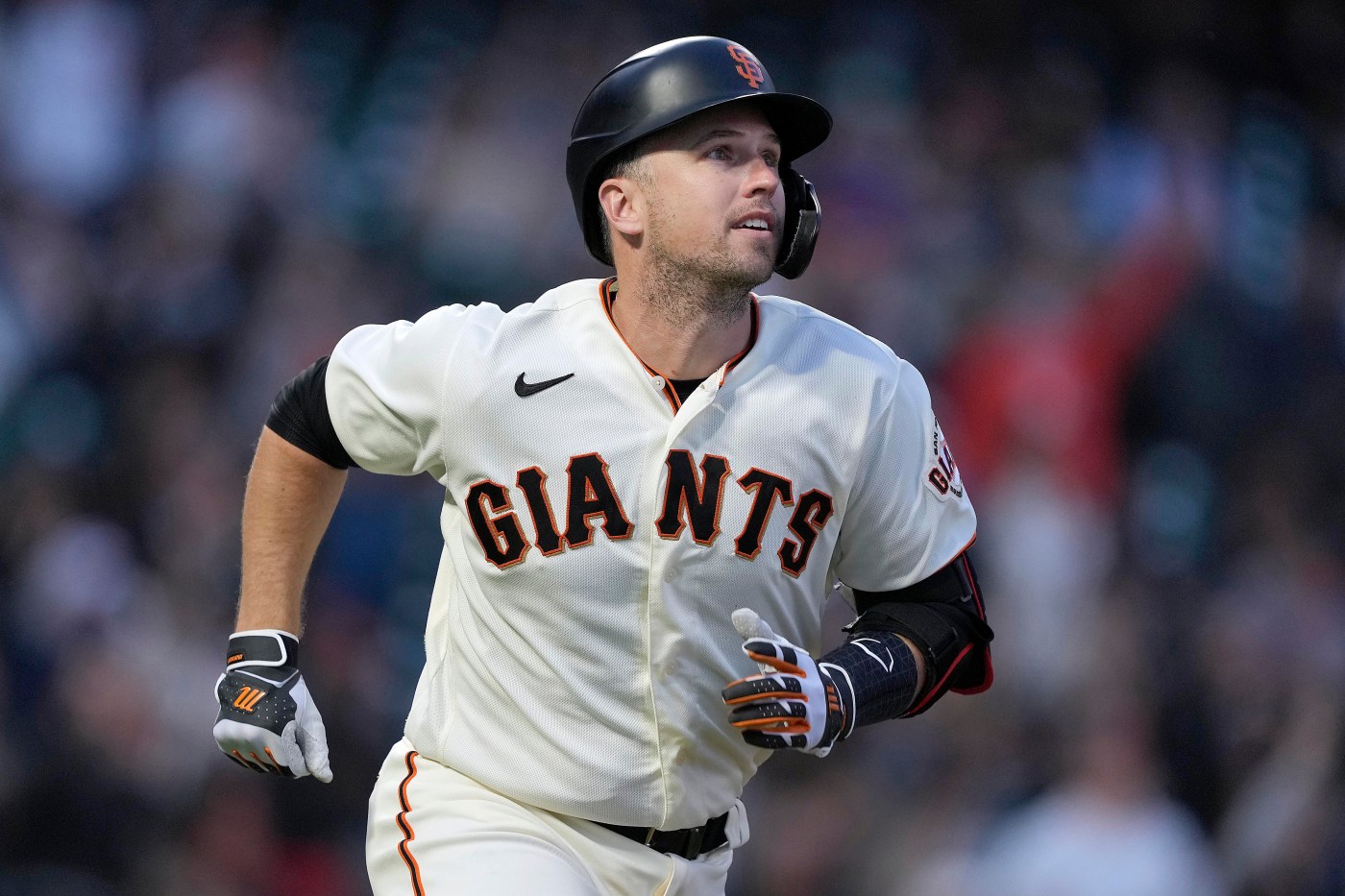
Buster Posey, who won MVP, Rookie of the Year and led the San Francisco Giants to three World Series titles, will be the big new name and should have a strong chance at becoming a first-ballot inductee. Yet for all of his accomplishments, Posey only played 12 seasons, and as a result his career numbers fall far short of what have traditionally been considered Hall of Fame benchmarks.
His 1,500 career hits, for example, would be the lowest total by any position player elected to the Hall of Fame by the BBWAA since Ralph Kiner (1,451) in 1975. Only one other player has been ever elected by the writers with 1,500 or fewer hits — Roy Campanella (1,422) in 1969 — and that total falls far short of the average career hit mark for all Hall of Fame batters, which is 2,330.
Yet odds are Posey will earn election anyway without any fuss, because over the past few years voters have begun placing a much heavier emphasis on players’ peak production, even if they lacked longevity.
Jones’ election this year marked an important first step.
It took the former Atlanta Braves star nine tries to earn his call, largely because he was essentially finished as a productive major leaguer by the time he was 31. But for the first decade of his career Jones was among the most dominant center fielders baseball had ever seen, and as time went on more voters opted to reward that greatness rather than punish him for his abrupt decline.
Others have benefited from that trend as well. Second baseman Chase Utley and right-hander Felix Hernandez both saw their vote shares increase by nearly 20%, and Red Sox great Dustin Pedroia’s share increased by nearly 10%. All three possess sub-par career totals but were defining players of their generation with extended runs of excellence.
You can bet each will have a plaque in Cooperstown eventually, and once Posey is elected their cases will only start looking better.

How will voters judge starters?
Hernandez in particular would be a fitting poster child for the change in voter philosophy. His 2010 Cy Young victory despite a 13-12 record marked a turning point where win-loss record went from being the most important pitcher stat to one that’s borderline meaningless.
Now he could help set a new standard for how modern starters are judged.
As baseball has evolved starting pitchers have seen their usage rate drop, meaning nobody is ever going to post the gaudy totals seen throughout the 20th century. In the coming years voters will have to grapple with those changes and determine new benchmarks, both for the lights-out aces whose arms couldn’t hold up and the steady workhorses who rarely missed a start.
One pitcher who falls into the latter category is Jon Lester, who won three World Series championships with the Red Sox and Cubs and who is the other notable newcomer joining Posey on next year’s ballot.
Lester does not have a slam dunk case. His 200 wins won’t impress traditionalists and his 43.5 wins above replacement won’t move the analytically-minded, but by virtually every metric he ranks among the most productive starters of the 21st century. His 2,488 strikeouts and 2,740 innings both rank inside the top 10 of all pitchers since 2000, and on top of that he was a five-time All-Star who finished top 10 in the Cy Young vote four times.
That’s to say nothing of his postseason resume, which ranks among the best in MLB history.
Lester won’t be the only hotly debated starter candidate hitting the ballot in the next few years. The winter of 2027 will also see the arrival of David Price and Stephen Strasburg, and the following election will welcome Madison Bumgarner and Adam Wainwright, along with Zack Grienke, who should be a pretty obvious first-ballot choice.
Clayton Kershaw, Justin Verlander and Max Scherzer are all first-ballot locks as well, but while they were unmistakably the defining starters of their generation, it could be their peers who determine what makes a modern day Hall of Fame starter, setting the bar for guys like Chris Sale, Jacob deGrom and Gerrit Cole in the years to come.

Have Yankees improved?
This has been a banner offseason for the AL East, which has seen numerous impact additions as clubs load up for what should be a highly competitive 2026 season.
The defending league champion Blue Jays have added Dylan Cease, Tyler Rogers and Cody Ponce to their pitching staff while signing Kazuma Okamoto to help offset the loss of Bo Bichette in free agency. The Orioles brought in Pete Alonso and Taylor Ward for their lineup while adding Shane Baz and Ryan Helsley to fortify their pitching staff. The Red Sox have acquired Ranger Suarez, Sonny Gray, Johan Oviedo and Willson Contreras, and they are still expected to add at least one more bat.
But the Yankees? They’ve been largely content to run things back.
Earlier this week the Yankees finally made their first big move of the offseason, re-signing outfielder Cody Bellinger on a five-year, $162.5 million contract. The deal ensures the Yankees lineup will return more or less intact, which on paper makes sense given that New York led all of MLB with 5.24 runs per game in 2025.
The Yankees are also expected to get Gerrit Cole back after the future Hall of Famer missed the entire season due to Tommy John surgery. He will join a rotation featuring Max Fried, Carlos Rodon, Luis Gil and playoff sensation Cam Schlittler.
But while the Yankees’ roster remains strong, the club has made few external additions. As of this writing the only outside big leaguers the club has added are lefty Ryan Weathers and Rule 5 pick Cade Winquest. The Yankees have also seen a number of relievers depart, further depleting a unit that already needed a lot of work.
That bullpen could be a real problem, and it will be interesting to see how the Yankees respond as every other club around them have actively worked to improve.