
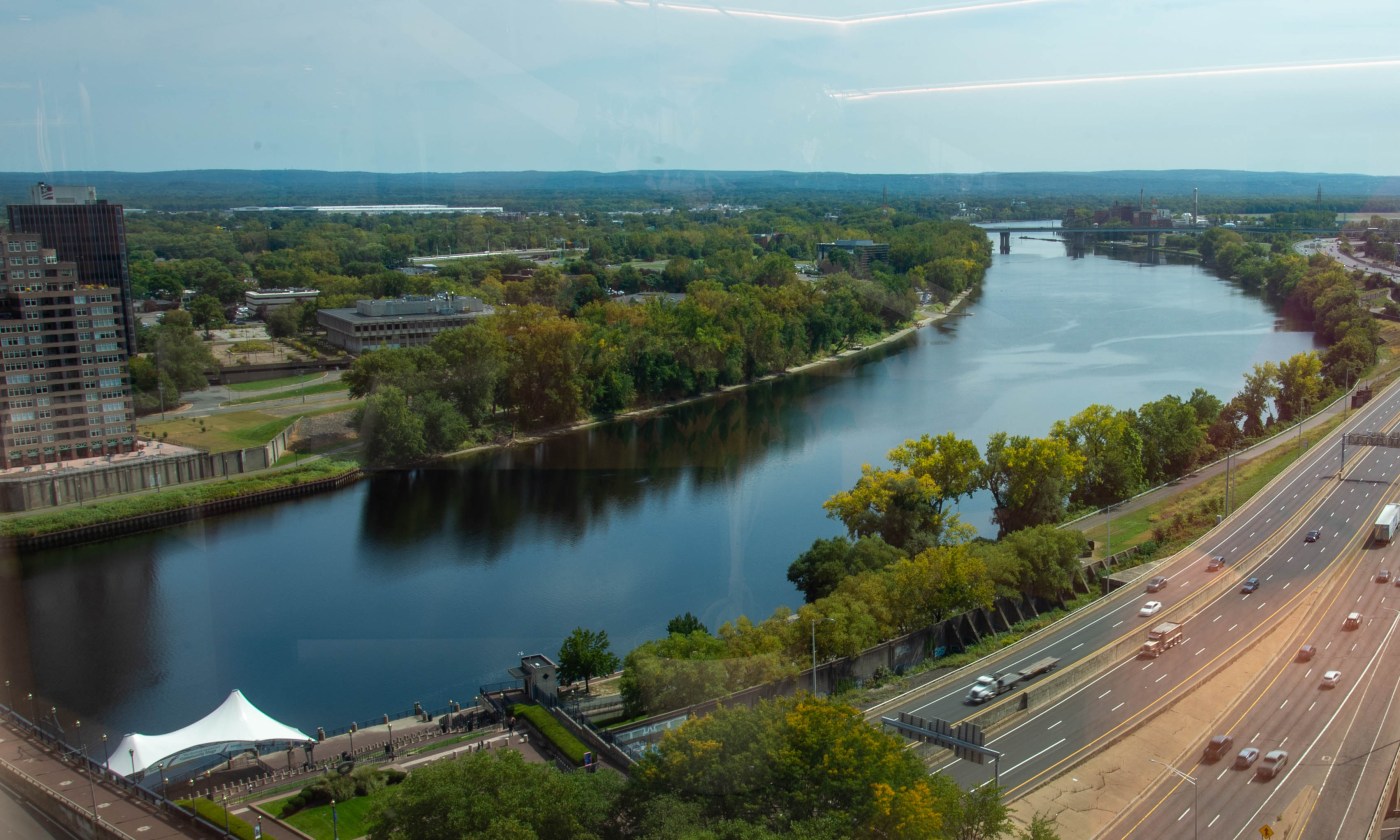
After millions of gallons of raw sewage leaked into the Connecticut River last year from Massachusetts, state lawmakers said they received a response from the Environmental Protection Agency after demanding more be done to address the issue.
Lawmakers claimed that several Massachusetts cities including Springfield, Chicopee and Holyoke have combined sewer overflows that frequently discharge sewage into the Connecticut River, where it goes downstream and impacts water quality. They noted that the issue is longstanding and has been a problem for decades. Last year, more than 23 million gallons of raw sewage reportedly entered into the river from Chicopee, 112 million gallons from Holyoke and 301 million gallons from Springfield, according to Massachusetts public records.
In a letter dated on Dec. 18, several Connecticut lawmakers including the Attorney General William Tong, sent a letter to EPA administrator Lee Zeldin seeking stronger enforcement from the agency on the issue. They said that combined sewer overflow (CSO) discharges present both a public health hazard and environmental challenges.
“Because the Environmental Protection Agency has primary oversight of these discharges in Massachusetts, we request that you intervene to rectify this issue. While we understand that combined sewage overflows are typically a result of heavy rainfall and outdated infrastructure, we ask that you work with these Massachusetts towns to swiftly establish a meaningful and immediate solution to protect our beloved river and constituents,” according to the letter.
Millions of gallons of sewage spill into CT river each year. Now, state officials seek help from EPA
In a response from the agency released last week, the EPA said that significant progress has been made on the issue over the last two decades. The nation’s top environmental agency said they will continue to address the issue with both the Massachusetts Department of Environmental Protection and local municipalities.
“Over the last decade, EPA has worked with municipalities across New England to help deliver critical water infrastructure improvements reducing the aggregate volume of CSO discharges from more than 20 billion gallons per year to less than five billion gallons per year. We continue to work with Massachusetts communities along the Connecticut River to reduce CSOs, and we and our state partners are also requiring systems to notify downstream communities when an overflow occurs,” said EPA New England regional administrator Mark Sanborn in the letter.
In Massachusetts, a 2021 law requires cities and towns to notify the public when untreated sewage is released into waterways. Connecticut has similar laws in place, according to a Department of Energy and Environmental Protection spokesperson. In 2012, Connecticut passed the first Sewage Right-to-Know law requiring DEEP to post the locations of combined sewer overflows and to begin posting unanticipated sewage spills on the agency’s website.
A combined sewer system collects rainwater runoff, domestic sewage and industrial wastewater into one pipe. Normally, it can transport all of the wastewater to a treatment plant. Sometimes the amount of runoff exceeds the capacity of the system. When that happens, untreated stormwater and wastewater flow into nearby waterbodies.
Over the decades, as more awareness spread on environmental issues, municipalities began to phase out combined sewer systems. However, several combined systems remain in densely populated areas including Hartford, New Haven, Norwich, Norwalk, Waterbury and Bridgeport, according to DEEP. Both Norwalk and Waterbury have isolated overflow systems at the treatment facilities, while the other four cities still have multiple overflow systems.
“We appreciate the EPA response and will continue to work with DEEP to ensure that the Connecticut River is protected. We expect that EPA will stay on top of these issues to ensure that pollution to the river is reduced and eliminated,” Tong said in a statement.
The EPA said it will continue to address combined sewer overflows through using permits and enforcement to “ensure timely progress” on long-term control plans and advancing green and gray infrastructure solutions to reduce stormwater inflow while increasing system capacity. Green and gray infrastructure combines city areas with green areas through parks, tree plantings, wetlands, gardens and fields.
The agency said it also will help communities leverage federal financing to expedite construction projects replacing combined sewer overflows and support real-time public notification and data sharing to protect Connecticut residents when leaks occur.
State Sen. Stephen Harding, R-Brookfield, ranking senator on the Environment Committee, said that he is disappointed with the agency’s response. The Republican minority leader said he was hoping for a more urgent and actionable response from the agency.
“The response from EPA is underwhelming, and frankly, very disappointing. Where is the urgency on their part to make this right? This is a decades-old problem. The amount of sewage being pumped into the river could fill a hundred Olympic-sized swimming pools. It’s absolutely disgusting. I am by no means satisfied with this response and will continue working on a bipartisan basis to shine a spotlight on this environmental malpractice,” Harding said.
The EPA said combined sewer overflows are subject to the National Pollutant Discharge Elimination System permitting program. Municipalities that still have combined sewer overflows must submit long-term control plans to actively reduce and eliminate overflows. The state’s Clean Water Fund contributes millions each year to help remediate combined sewer overflows. However, long-term problems persist as completely eliminating overflows will take decades, according to officials.
The agency has worked with several Massachusetts communities for decades on combined sewer overflow reduction. The EPA said they have been working with Springfield officials since 1996, Holyoke officials since 1995, and Chicopee officials since 2005.
“In 2014, the Springfield Water and Sewer Commission developed an Integrated Plan recommending capital improvements at the treatment plant and within its collection system. The plan proposes six phases, with a schedule through 2037, to reduce annual average CSO volumes from 441 million gallons to 59 millions gallons, a decrease of nearly 87%,” the EPA said in the letter.
In addition, the agency said that, in 2023, the U.S. Department of Justice and Massachusetts entered into a judicial consent decree with the city of Holyoke to address violations of the Clean Water Act. The agreement requires Holyoke to “take further actions to reduce ongoing sewage discharges into the Connecticut River” from its sewer collection and stormwater systems.
“Since then, Holyoke has reduced its discharges from roughly 517 million gallons per year in 2000 to approximately 189 million gallons per year,” according to the EPA. “Officials say they expect further reducing CSO discharges to approximately 84 million gallons per year by 2037, a reduction of approximately 84%.”
Chicopee, the last Massachusetts city mentioned in the letter, has reduced its discharges to roughly 94 million gallons per year, according to the EPA. The city’s previous combined sewer overflow discharges averaged an estimated 487 million gallons per year. The agency said that Chicopee is also currently implementing a combined sewer overflow separation project scheduled for completion in 2026. The project, costing over $3 million, is expected to remove an additional 18 million gallons of overflow from the Connecticut River.
Stephen Underwood can be reached at [email protected].