
A tiny Connecticut town that saw strong opposition to a plan for 96 apartments in a four-story building has granted the developer the approval for the special exception needed to create the new housing.
Records show the Woodbridge Town Plan and Zoning Commission recently approved the applications for the special exception to construct the multi-family development near the New Haven city line, to modify requirements for “a gable, hip, or gambrel roof on a building within a multifamily opportunity housing development, and for the excavation, removal, filling, grading” related to the construction.
The approval did contain multiple conditions and is subject to “conformance with the application materials” as may be modified by the commission and the approval, records show.

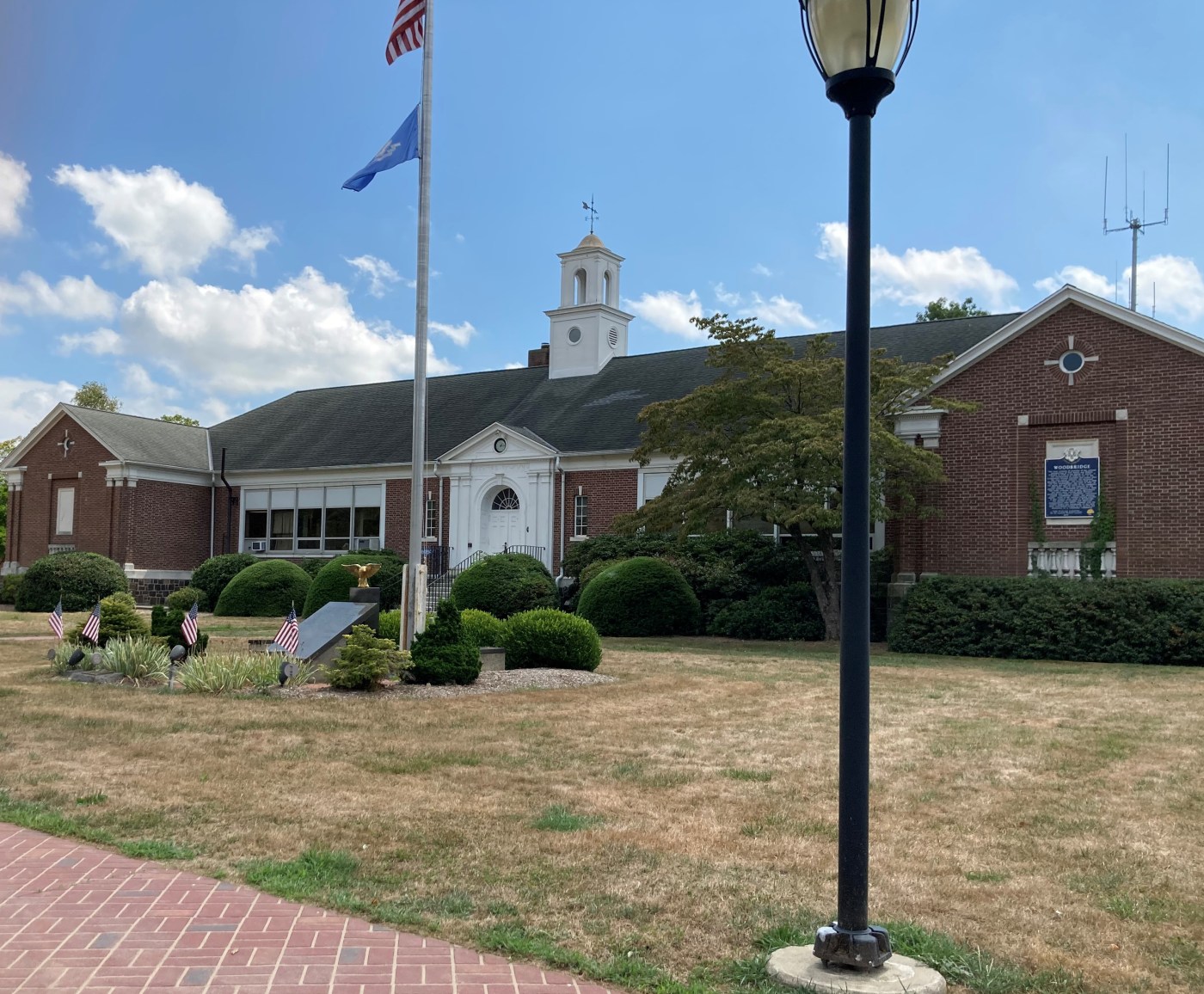
Woodbridge Town Hall, Aug. 30, 2022.
In a letter to the applicant’s attorney, the zoning commission noted, “There is not substantial evidence within the record to support that construction of this project is reasonably likely to have the effect of unreasonably polluting, impairing or destroying the public trust in the air, water or other natural resources of the state.”
“The proposed use, building size, design, height and overall site design are permissible in accordance with the Woodbridge Zoning Regulations,” the letter said.
Woodbridge, an affluent suburb, was already embroiled in a potentially landmark affordable housing lawsuit when it made the decision on the 804 Fountain St. site. Twelve of the units will be for lower-than-average-income tenants.
A large contingent of Woodbridge residents balked at Fountain Ridge LLC’s proposal to build the four-story apartment building near Bishop’s Pond and the Yale Nature Preserve.
The company had contended that its project would bring much-needed multifamily housing to a small, wealthy town where spacious, costly single-family houses dominate and there is a regional school district after sixth grade.
The company also noted it would improve Woodbridge’s remarkably low stock of affordable housing; the state government wants all towns to have at least 10% of its housing priced at so-called affordable levels, but Woodbridge has just 1.4%.
Relatively new zoning rules that reduced barriers to multifamily housing became a campaign issue in the first selectman’s race, which Democratic incumbent Mica Cardozo narrowly won. Some homeowners said those rules practically invited a flurry of apartment proposals, including a recent 8-30g housing application for 27 Beecher Road. The town’s only elementary school, Beecher Road School is located at 40 Beecher Road, a quiet, treed country-like street. The school is among the most high-performing elementary schools in the state, according to U.S. News & World Report.
The state’s 8-30g law gives developers wide discretion when they propose affordable housing in communities where less than 10% of houses and apartments qualify as affordable. Typically the communities most susceptible to 8-30g applications are rural, wealthy and small.
Democrats responded that Woodbridge’s long-standing reluctance to relax its strict rules brought this on, and said opponents who’ve repeatedly fought multifamily housing plans are to blame.
“A developer filed an 8-30g housing application for 27 Beecher Road this week. This is a state statute that allows developers to bypass local zoning when towns fail to meet state thresholds for affordable housing,” the Democratic Town Committee said.
“Let’s be clear: This filing is not the result of recent zoning changes. When towns don’t increase affordable housing, the state steps in. That’s exactly what 8-30g was designed to do, override local zoning and force towns to act. Responsible planning is how we protect Woodbridge.”
The proposal for 96 apartments on nearly 6 acres at 804 Fountain St. doesn’t qualify under 8-30g because the developer proposes to set aside under 13% of its apartments as affordable. Half of those would be leased to people making under 80% of the area’s average income, while the others would go to people with incomes of 60% or less of that average.

Some opponents near the site, which straddles the New Haven line, claimed allowing the biggest apartment building in town there would generate excessive traffic and risk driving up enrollment in public schools. Others said their opposition is based on potential danger to the environment, particularly through stormwater runoff.
Meanwhile, a lawsuit alleging Woodbridge has illegally blocked affordable housing in the past is in its third year in the court system. Housing advocates believe affordable housing plans would gain political leverage if a judge agrees that the town’s previous zoning rules were restrictive enough to violate the Fair Housing Act and the state Constitution.
Woodbridge also has grappled for years with what to do with a 150-acre property that contains the dilapidated, graffitied shell of a former elegant country club. It has now proposed that the former 155-acre Country Club of Woodbridge property be used for housing and more.
The town purchased that property on Woodfield Road — a golf course, pool and clubhouse — for $7 million in 2009 when the owners went bankrupt. The overgrown property also is a minute or two by car from the New Haven city line and not far from the site targeted for Fountain Street.
The Woodfield Road site is in a quiet residential neighborhood and across the street from Route 15, though it is not near an entrance or exit ramp, and, while virtually around the corner from New Haven, it abuts the quiet Westville area.
Previous reporting by Don Stacom is included in the story.