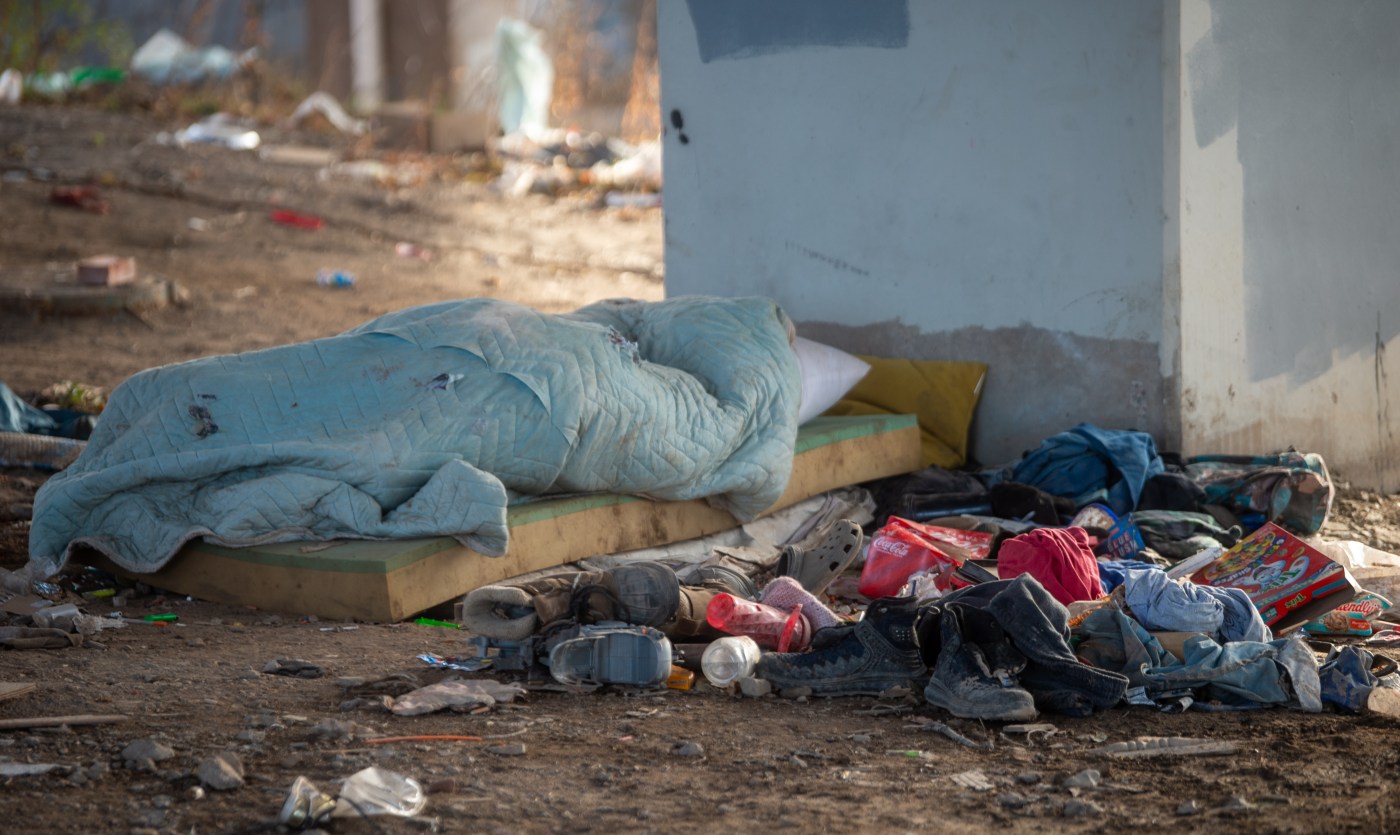
It happened again. The uncertainty and fear of life on the streets reared its ugly head once more into E’s life.
E, who asked that her real name not be used, sat uncomfortable at Hands on Hartford, wearing a hoodie and a look of devastation that enveloped her entire face. A look of hopelessness and loss for what the world could offer a graduate of Great Path Academy, a magnet school in Manchester, which this year received the Magnet School of Distinction Award from Magnet Schools of America.
First her father abandoned the 17-year old, she said, leaving her homeless, and now her mother did the same thing. Her boyfriend provided her a temporary solace and roof over her head but then he and his family also became unhoused. Another friend was also homeless but found shelter in Vernon. But that option was not possible for E because as a minor she would need permission and she did not want to contact her mother or invite DCF into her life either. The three were trying to make it in the world without shelter — a 17, 18 and a 20-year-old seeking to take on the world with few options. They wouldn’t leave E alone to fend for herself in the elements, her friend said.
“Can you imagine being homeless?” she asked, her eyes widening and then looking down.
In a conversation with the Courant, E shared the helplessness around many teens out on the street.
“This life is no joke,” she said, looking her listeners straight in the face. “Teens are out there that have nowhere to go and they just end up offing themselves and dying in the cold. I don’t want to get sick and end up getting worse.”

E’s story is one of many in the Hartford region as homelessness grows in the state and is expected to become more dire due to recent actions of the Trump administration. Homelessness in the state has increased by 10% in the past year, with hundreds of children living in homeless shelters, people living in tents and cars and more seniors going without shelter. There are 3,735 people recorded as unhoused in the state — referring to those who have sought help. The shelters and soup kitchen are full with the Coalition to End Homelessness stating that they have to turn away 1 in 5 people because there is so much need.
“People are being turned away across the state,” said Sarah Fox, CEO of the Connecticut Coalition to End Homelessness.
State Sen. Saud Anwar, co-chair of the Public Health Committee and award-winning photographer Phil Farnsworth who has captured the most vulnerable — from victims of the Rwandan genocide to those in war torn Bosnia, Chechnya, Haiti and Kosovo to homeless people in Hartford, have teamed up to document the humanity of those suffering on the streets and call attention to the need for more resources and funding to fight homelessness including providing more resources for 211. Farnsworth is documenting the unhoused, bringing a face to their stories and Anwar is posting his pictures on his Facebook to call attention to the issue.
Anwar and Farnsworth joined the Courant this week to visit the places where the unhoused live in Hartford to document some of their daily struggles in a system that needs more staffing and funding, according to the state senator.
“We are the richest country in the world,” Anwar said. “We are one of the richest states per capita in the United States. We are failing the people and the vulnerable people in our state.”
Invisibility
Farnsworth began documenting the unhoused four decades ago and said today the struggles are far worse for those on the street.
“They know in the back of their minds that the shelters are full and the soup kitchens are full,” he said. “They are under a tremendous amount of stress. It is desperate times and being in a war zone all over the world. I know desperation when you are in a war. We are in a war right here in Connecticut.”
He said he seeks to bring a human face to those who are left out in the cold.
“I know people want to help,” he said “They have to feel what these people are going through. They have emotions. They cry. They laugh. They have to try to find food in dumpsters. It is mind numbing to me how bad it is right now.”
Anwar said invisibility does not solve the problem, insisting suburban towns must change their mindset of pushing out or ignoring the homeless. Instead, he said, the burden and the unhoused individuals are pushed out into the cities, which cannot accommodate the growing need. Hartford Mayor Arunan Arulampalam has also pointedly called on suburbs to do their share in meeting the need.

Relying on your friends
Sitting with her boyfriend, known as K, and her friend who did not want to be identified at all, E sat paralyzed by her current situation.
“I have no rhythm in my head right now,” she said.
Asked what she sought to do with her life, E said she graduated early as she was recognized for being gifted. She said she aspires to be a music artist, a dream that now seems far from reachable.
She acknowledged that she had not spoken to her family in five months.
“DCF says there is nothing they can do because my mom wants nothing to do with me,” she said. “I don’t have a family.”
K interjected: “The only person she got is me.”
The hopelessness makes it hard to do much, E contended.
“I couldn’t even eat today,” she said.
Her friend weighed in on the stress, explaining that living unhoused is anything but easy.
“All we can do is remain positive and keep your head held high because negativity isn’t going to bring you nowhere,” he said. “The world can be a sad place. This is going to be my third time in this situation.”
K opened up about his own family’s struggles, sharing how he and E lived together with his mother until the family lost their home.
His mother had been in the hospital, he said, making things even more difficult.
Anwar offered to call the shelter in Vernon to see if E could join the two there but explained that she would need permission from her mother or DCF because she is a minor.
E was adamant that she did not want either DCF or her mother to help her.
She explained that her mother wanted nothing to do with her and that it would only get worse.
“How can I help you?” Anwar asked.
E sat facing Anwar, grief stricken across her face.
As of Thursday night, Anwar had requested that DCF expedite the request for E to stay in Vernon and had tried to reach her through her friend but did not hear back.

Four years unhoused
Chris C. was at Hands on Hartford nursing a cup of coffee Thursday. A slender man with dark hair, he appeared tired and beat up by life’s challenges. But he had a glimmer of hope — he was in the process of receiving an apartment after years unhoused.
Before becoming unhoused he worked as a truck driver for 20 years, he said. Then he encountered struggles at work and lost his job.
Living in abandoned buildings and out in the elements, C. who said he did not use drugs, said it became a life of survival and doing everything he could to make it through the day.
The only thing that kept him going, he said, was his mind.
“Stay positive and keep going,” he said.
David
Walking the streets of Hartford Thursday, the Courant with Farnsworth and Anwar saw firsthand the living situations for many of the unhoused.
Under one of the Capitol Avenue underpasses, David was passed out surrounded by blankets, needles, trash, clothes and a tire.
Waking him gently, Anwar sat down on a crate to face the man with the long beard and brown eyes who had a comforter wrapped around him.

David shared his story of relapsing and living on the streets using fentanyl and other drugs. He appeared half dazed.
“David wanted to go to rehab but there is no place for rehab to take him,” Anwar said. “We are failing him because there is no inpatient rehab. There are not enough beds.”
Anwar explained that the rehab allows people like David to get a fresh start.
“This guy is waiting to die from an overdose,” he said. “This is a symptom of a society not having a plan in place. It is easy to talk about everything else but the governance should be for everyone including the ones that are left behind. The barriers after barriers have resulted in individuals having no safety net and his exit ramp is dying in the cold or overdosing. He is clearly a capable individual.”
Another place where the unhoused sometimes stay down the street from Hands on Hartford was strewn with dressers and abandoned baby play pens. A few people slept in tents with no one seeking to come out and talk.
Picking up a wired notebook on the ground, Anwar flipped through it, finding that it was written in 2022 and included a list of statutes.
“This is somebody trying to find out laws and things that they have to look at,” Anwar said.

Many things needed to address crisis
Fox said now people are remaining in shelter much longer compared to previously when they were able to move them into housing.
She explained continued challenges including the U.S. Department of Housing and Urban Development proposing major changes to the agency’s Continuum of Care Program that serves 9,000 people in the state. The program helps keep people housed and reduces costly emergency system use.
Those proposed changes could “gut 50-70% of HUD funding, displacing 9,000 people and eliminating thousands of housing units, with older adults, people with disabilities and families most at risk,” according to the Connecticut Coalition to End Homelessness.
But Gov. Ned Lamont announced Monday that he is planning in the coming days to submit a plan to the bipartisan leadership of the General Assembly to use at least $5.2 million in funding from the recently “created Emergency State Response Reserve to support homeless prevention and response services throughout the state,” according to a release from the governor’s office.
The funds will be “used by providers in the state that receive funding through the U.S. Department of Housing and Urban Development’s Continuum of Care program,” according to the governor’s office.
“It is a shame that these funds are being withheld by the federal government and I urge HUD to continue this program immediately,” the governor said in a statement. “In the meantime, Connecticut will do everything we can to stand with our providers and ensure that these essential programs are able to continue.”
Anwar said immediate needs include funding for 211 that would allow staff to respond in a timely fashion. He said that the intake process, response time and coordination need to improve.
“We need more social workers within the CAN agencies and other facilities who can look at individual cases and identify solutions,” he said. “We need detox facilities and medical management and rehabilitation for individuals so people with substance use are not caught in the chicken and egg situation that they can’t get a place because they are using substances and then they can’t get rehab because they are homeless. They are caught in a checkmate situation which should not be the case. This is very easily done. Others have already done this.”


