
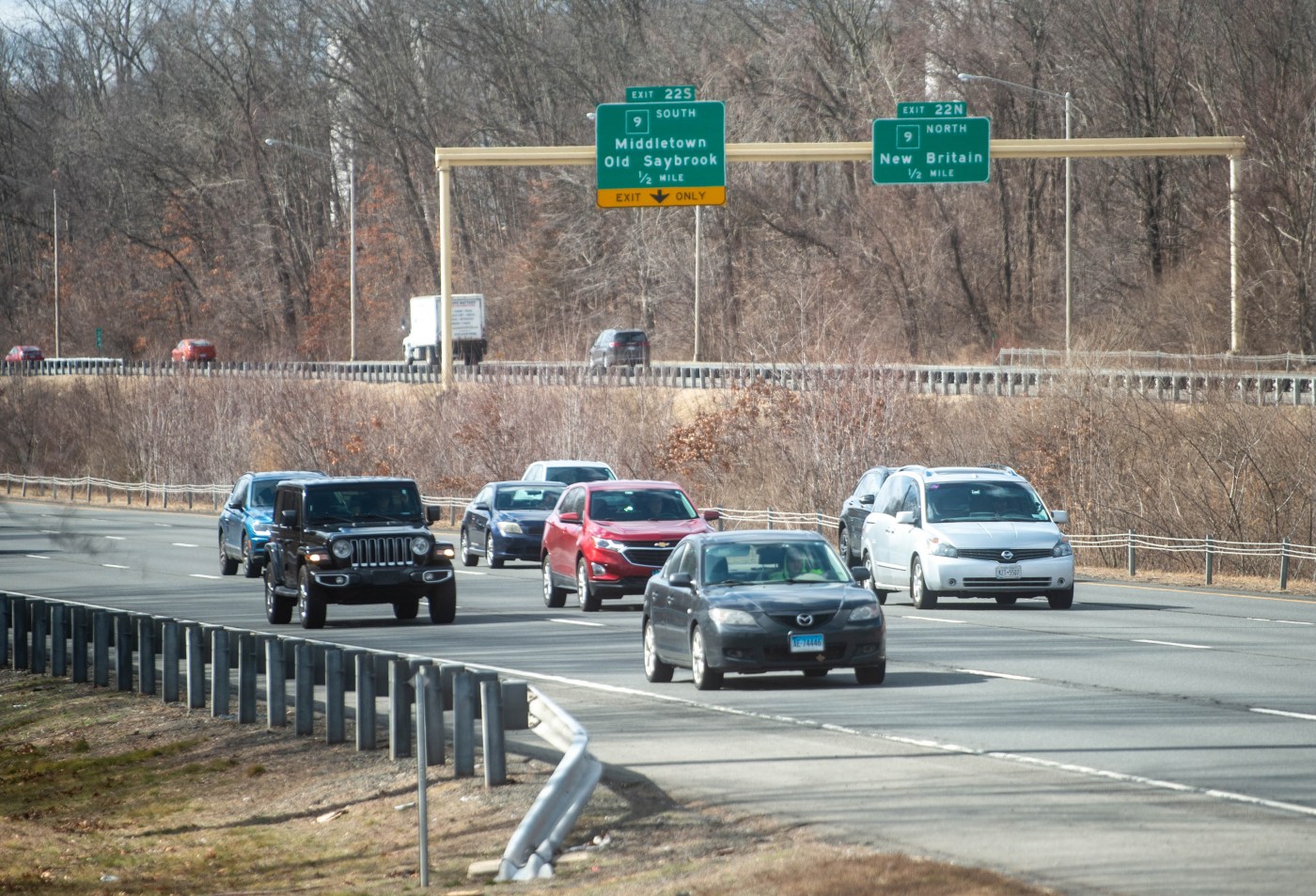
Environmental groups in Connecticut are sounding the alarm after the Environmental Protection Agency recently rescinded several longstanding environmental regulations, including gutting the 2009 endangerment finding and rolling back air quality standards for coal-burning power plants, which advocates say will cause irreparable harm.
The 2009 endangerment finding, a key regulatory practice that has been in place for nearly 20 years, helps regulate green emissions standards for motor vehicles and engines.
The landmark environmental regulation officially determined that greenhouse gases — carbon dioxide, methane, nitrous oxide, hydrofluorocarbons —threaten public health and welfare. The finding has been the basis of establishing the legal foundation for regulating emissions under the Clean Air Act.
But in a reversal of the long-held policy, the EPA said they are gutting emission regulations for any vehicle from 2012 onwards. The action also eliminates all off-cycle credits, including for the start-stop features on vehicle, according to the EPA.
“The Endangerment Finding has been the source of 16 years of consumer choice restrictions and trillions of dollars in hidden costs for Americans,” said Lee Zeldin, administrator of the Environmental Protection Agency. “Referred to by some as the ‘Holy Grail’ of the ‘climate change religion,’ the Endangerment Finding is now eliminated.
“The Trump EPA is strictly following the letter of the law, returning commonsense to policy, delivering consumer choice to Americans and advancing the American Dream,” Zeldin added. “As EPA Administrator, I am proud to deliver the single largest deregulatory action in U.S. history on behalf of American taxpayers and consumers. As an added bonus, the off-cycle credit for the almost universally despised start-stop feature on vehicles has been removed.”
Since the EPA decision on Feb. 12, several environmental groups have filed a federal lawsuit aimed at stopping the agency from reversing crows on emissions standards.
The American Public Health Association, American Lung Association, Alliance of Nurses for a Healthy Environment, Center for Community Action and Environmental Justice, Clean Air Council, Friends of the Earth, Physicians for Social Responsibility, Rio Grande International Study Center, the Union of Concerned Scientists represented by Earthjustice Center for Biological Diversity, Conservation Law Foundation, Environmental Defense Fund, Environmental Law & Policy Center, Natural Resources Defense Council, Public Citizen, and Sierra Club, are all named as defendants in the lawsuit.
In Connecticut, groups like Save the Sound and Sierra Club Connecticut have both expressed their disappointment in the decision.
“In taking this action, the Environmental Protection Agency ignores science, contravenes the law by arbitrarily and capriciously reversing its previous findings, and shirks its obligation to ensure a safe and healthy environment,” said Charles Rothenberger, Save the Sound’s in-house climate and energy attorney and director of Connecticut government relations.
“It’s estimated that 81 to 97 percent of the scientific community agrees that burning fossil fuels is the primary driver of climate change, and the Intergovernmental Panel on Climate Change has concluded that human activities emitting greenhouse gases have unequivocally caused global warming,” Rothenberger said. “Scientists are, by both temperament and training, prone to skepticism. It takes a lot to get them to use such definite language, and that’s a sign of just how strong the evidence is.”
According to a recent report, climate-related costs in the United States reached $955 billion between April 2024 and April 2025, Rothenberger said. He said the toll of climate change is only slated to get worse as warming accelerates.
Shortly after rescinding the endangerment finding, the EPA rolled back air quality standards for coal-burning power plants on Feb. 20. Advocates say the move will result in greater emissions of heavy metals such as mercury and other toxic pollutants. Mercury emissions can pose a significant public health and environmental issue, according to the state’s Department of Energy and Environmental Protection. Mercury is a common byproduct of coal combustion and can seep into soil, water and particulate can become airborne.
“This roll back will increase public exposure to mercury, and other hazardous air pollutants, posing a serious threat to public health and the environment,” DEEP commissioner Katie Dykes said.
“Connecticut unequivocally opposed EPA in taking this action when it was proposed last year. A primary responsibility of the EPA is to protect the environment and the health of its residents, and this recent announcement represents an abdication of that responsibility. Thankfully, Connecticut has strong protections in place at the state level and will continue to take all steps available to protect the health of Connecticut residents and our environment.”
The EPA announced it repealed the Biden administration’s 2024 amendments to the National Emission Standards for Hazardous Air Pollutants: Coal- and Oil-Fired Electric Utility Steam Generating Units — a rule commonly known as the Mercury and Air Toxics Standards for power plants.
“The Biden-Harris Administration’s anti-coal regulations sought to regulate out of existence this vital sector of our energy economy. If implemented, these actions would have destroyed reliable American energy,” Zeldin said. “The Trump EPA knows that we can grow the economy, enhance baseload power, and protect human health and the environment all at the same time. It is not a binary choice and never should have been.”
Connecticut’s Health and Human Services commissioner Manisha Juthani said that mercury is a toxic and dangerous heavy metal. If ingested into the body, it can cause various health issues including death. Communities around coal plants would be most impacted, she said.
“The Mercury and Air Toxics Standards are a critical public health safeguard that protect those most at risk — including babies, children and pregnant people,” said Juthani. “Mercury exposure is already a concern in the Northeast, and higher levels can harm child development and cause lasting neurological and reproductive health problems. Strong air quality standards are essential to prevent asthma and other lung diseases, control health care costs, and ensure that vulnerable populations and communities are not disproportionately burdened by toxic pollution.”
Connecticut and climate change
Former Gov. Dannel P. Malloy often referred to Connecticut as the “tailpipe of the nation” because of the large amount of air pollution drifting in from states to the west and south.
In a report by the Council on Environmental Quality, Connecticut faces several environmental challenges, including the rapid spread of invasive species and the scourge of climate change increasing severe weather patterns. The report outlined how climate change remains Connecticut’s most significant environmental and economic challenge over the next decade.
The precipitation for 2024 was 45 inches, which was 2.5% less than the annual average since 1960. The number of days in 2024 with rainfall greater than one inch was 7.6% less than the annual average since 1960, according to the report. Rainfall events are getting less common but more intense.
Temperatures are also rising in Connecticut, with the average temperature for 2024 above the average annual temperature of approximately 50 degrees Fahrenheit. Last year, 23 days saw temperatures greater than 90 degrees. The number of days with high temperatures was 52% greater than the average from 1960 to present.
Samantha Dynowsky, state director for Sierra Club Connecticut, said that the rulings are a devastating blow in the fight against climate change. She said as the federal government no longer makes climate change a priority, it will fall to states to regulate emissions.
“It’s going to be critically important that states take on the fight, which really involved reducing the use of fossil fuels and taking climate action,” Dynowsky said. “For Connecticut, that means really standing by the laws we already have in place because we have strong climate and clean energy laws. We know that the state needs to do a lot more to meet the mandates that we already have in state statute. So taking action will be necessary each and every year.”
Dynowsky noted that President Donald Trump did not mention climate change or any environmental challenges during last week’s State of the Union address. She said that the federal government no longer sees the environment as a critical component of public health.
Connecticut is running behind its goal of cutting greenhouse gas emissions by 2030 despite some progress, according to a report from the state’s Department of Energy and Environmental Protection. The agency’s latest Greenhouse Gas Emissions Inventory report shows that emissions from the state’s two largest sources decreased in 2023, but emissions still rose by 1.5% to reach 35 million metric tons. Despite the increase, emissions remain 9.5% below pre-pandemic levels in 2019, the report says.
Dynowsky said that despite the challenges, the state has more rigorous environmental emissions standards than other states. Those standards will remain in place despite the EPA’s gutting of federal standards, she said. Vehicles registered in Connecticut will still have to pass state mandated inspections.
“There is a number of things from vehicles to power plants that affect our air quality,” she said. “Regulating what comes out of the smoke stack and tailpipe has been critical to cleaning up our air in Connecticut. Without those standards in place, that can exacerbate asthma and other health consequences. Without emissions regulations, we will have dirtier air that will lead to more disease and respiratory illnesses.
“Then we have the issue of environmental challenges,” Dynowsky added. “There is a real threat from climate change to creating more dangerous storms and hotter than average temperatures. People can die from climate change impacts. We have a moral duty to protect our planet and people and our future, What the Trump administration did is decide none of that mattered and that climate denial is the law of the land.”
Stephen Underwood can be reached at [email protected].