
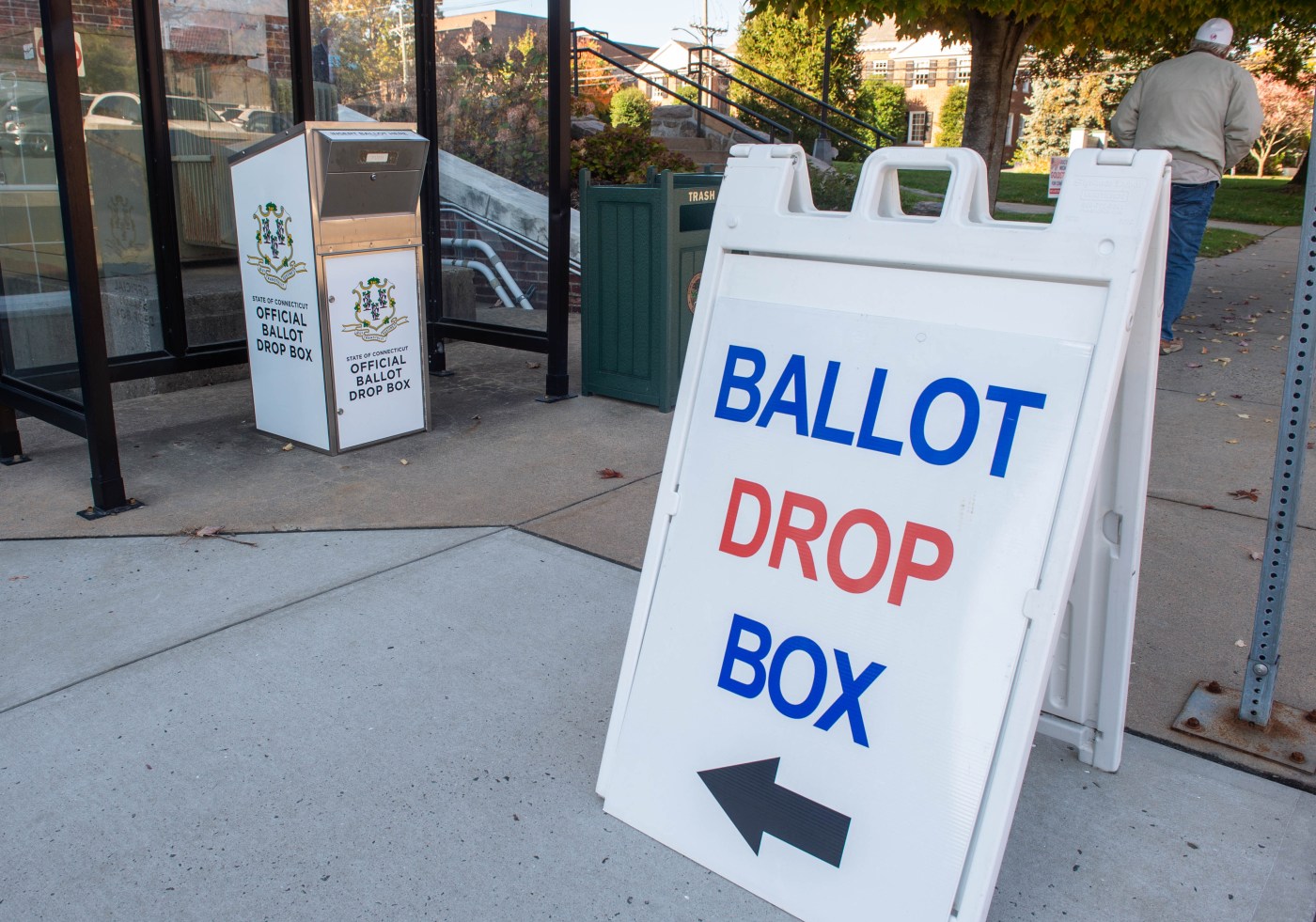
Voting is the cornerstone of a democracy – the mechanism by which citizens make their voices count and one of the key things in public life that should transcend party lines. Yet last week, when Connecticut legislators introduced a bill that would bar ICE agents from operating near polling places, Republicans in Hartford cried foul.
The goal of the bill is straightforward: to ensure that every eligible voter in our state can cast a ballot without fear or intimidation. If you expected this to be uncontroversial and non-partisan, you would be wrong. State Sen. Robert Sampson came out of the gates swinging, accusing Democrats of manufacturing a distraction. As if we should dismiss what is happening in our country in plain sight and how it impacts all of us, including residents of Connecticut.
Lawmakers who oppose state Rep. Matt Blumenthal’s bill barring ICE from polling sites are willfully ignoring the agency’s role in the Trump administration’s pursuit of authoritarian power. Over the past year, ICE has been responsible for many of the worst excesses of this administration, taking a hatchet to due process and other civil protections, and visiting violence upon our communities.
Minnesota is a glaring example. The Trump administration’s deployment of 3,000 immigration enforcement agents to the state for more than two months kept residents inside their homes or other places of refuge. People were detained on the basis of their appearance or accent, and the violent encounters on the streets made many residents afraid to go out even to purchase groceries or other basic necessities. Two U.S. citizens were killed exercising their constitutionally protected rights to free speech.
This is the context in which this bill was introduced. The question for our state representatives isn’t whether ICE has disrupted a Connecticut election yet. It is whether the conditions exist for it to happen, and whether we are willing to act before they do. If U.S. citizens are too afraid of ICE to purchase groceries, it isn’t hard to imagine they would be afraid to go vote.
The Trump administration is already doing everything it can to make it difficult for people to vote. It is pushing to require proof of citizenship (passport or birth certificate) to register to vote under the proposed Save Act. Yet according to the State Department, barely half of the population of 350 million Americans have a passport. For working class voters with inflexible work schedules, limited transportation and scarce childcare, adding a document requirement is not a neutral inconvenience. It is a serious barrier with a predictable and unjust impact.
The administration has also sought to exclude mail-in ballots received after Election Day, and federal agents recently descended on Fulton County, Georgia, to seize ballots as part of ongoing claims – rejected repeatedly by the courts – of fraud in the 2020 elections. Meanwhile, the Department of Justice has sued states, including Connecticut, that have declined to hand over sensitive voter data to federal authorities.
These are not isolated incidents. Instead, they suggest a pattern of federal action aimed at intentionally shaping who votes and how. Republican State Rep. Gale Mastrofrancesco calls some of these facts “fear-mongering” and “a solution in search of a problem.” I call it facing reality and preparing to meet the moment. This preemptive legislation is an effort to protect our democracy and in line with existing voting rights laws built on the premise that the right to vote must be both defended and protected.
The urgency of the moment appears to be lost on some Democrats as well. State Rep. Geraldo Reyes of Waterbury has questioned whether the bill can survive the legislature’s compressed (63-day) session, citing “deep” divisions on both sides of the aisle. With all due respect to Rep. Reyes, this is exactly the wrong way to think about this. The difficulty of passing this bill is not an argument against passing it – it is an argument for mobilizing political will. If protecting every eligible voter’s right to cast a ballot without intimidation is too controversial for a short session, we should be asking ourselves what that says about our priorities, not shrugging our shoulders and moving on.
It is in our collective best interest to make sure that people can vote. Period. Without any level of intimidation directed at them. This should be the floor and not the ceiling of our commitment to democracy. Those who are alleging that “there’s nothing to see here” owe their constituents a clearer answer. Because the evidence says otherwise, and in Connecticut, we should act accordingly.
Kica Matos, of Connecticut, is president of the National Immigration Law Center and NILC Immigrant Justice Fund.