
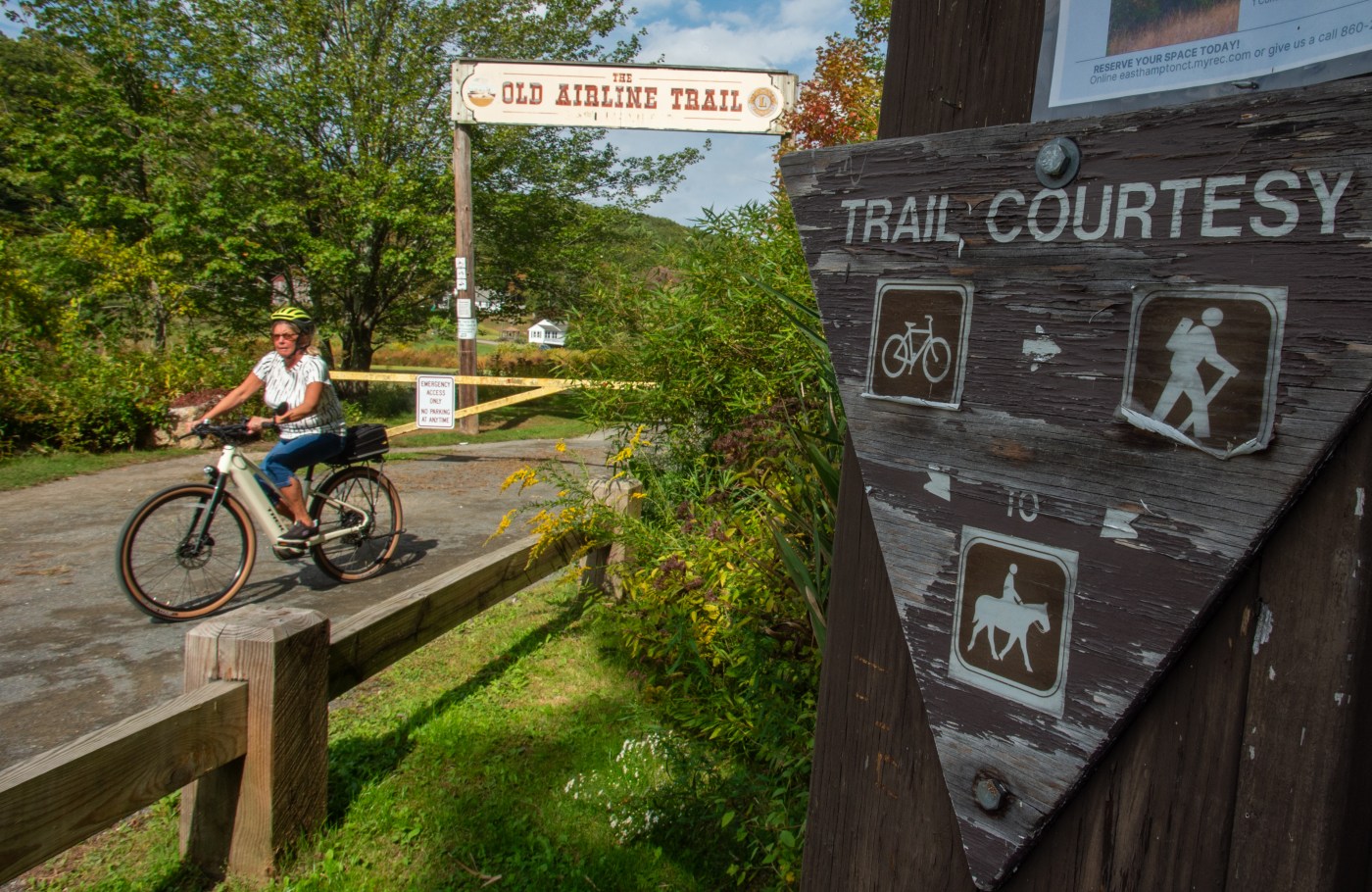
Connecticut may only be the third largest state in the country by land area, beating out Rhode Island and Delaware, but it boasts a network of state land composed of public parks, forests and wildlife areas, as the state rapidly seeks to purchase land to meet an ambitious goal set more than a decade ago.
The state consists of about 3.5 million acres in total, with about 87% of those acres made up by land, according to the Connecticut Department of Energy and Environmental Protection. Of total land area, DEEP reports it owns about 263,000 acres in total land across Connecticut, made up by state parks, forests and wildlife management areas.
The agency also reported that its partner organizations, such as municipalities, water companies and nonprofit land conservation organizations, own another 252,000 acres statewide.
Connecticut state law sets an ambitious goal to protect 21% of the state’s land, with 10% or around 320,576 acres to be held by DEEP, and 11% by partners or about 352,000 acres. As of late 2024, DEEP held around 82% of its target land goal, and is still working toward full acquisition, while partners held about 72.4% of the state’s goal, according to DEEP’s most recent land acquisition report.

The Meshomasic State Forest. (Peter Marteka/Hartford Courant)
While the state is behind on its land goal, which was originally set to be met by 2023, officials said that the state continues to rapidly acquire parcels of land per month through grant programs. The Open Space and Watershed Land Acquisition Grant Program provides grants to municipalities and private nonprofit land conservation organizations. The state receives a conservation and public access easement on property acquired to ensure that the property will be protected and available to residents of Connecticut as open space.
According to open space reports to the state bond commission, the state is rapidly acquiring land each month under the land acquisition grant program. In December of last year, the state acquired three parcels of land with nearly 300 acres in Warren, Prospect and Cheshire.
Open space reports also show that the state acquired small land parcels nearly every month last year. In November, the state acquired around 20 acres in the towns of Franklin and Hamden. In September 2025, it acquired over 500 acres in Winchester through a partner nonprofit land conservation organization.
The Winchester site, called the Laurel Ridge Property, is a long, forested ridge with streams that feed into Highland Lake and east to the Still River, “eventually feeding into the National Wild and Scenic Farmington River,” according to DEEP.

The property contains 426 acres of “core forest, part of an 860-acre core forest block, near other protected lands, including two state parks and two previously funded OSWA projects. The terrain is varied and supports abundant wildlife and plants, with rare species being documented on or near the property. The property contains historical remnants of a demolished flour mill dating back to the 1700s,” according to DEEP.
All of this is aimed at a goal set by Gov. Ned Lamont in 2024 to purchase and protect more than 2,626 acres of land through the land acquisition grant program. Lamont set aside nearly $14.5 million that year to get the state closer to meeting its total land preservation goal of 21% of total land.
“Since the Open Space and Watershed Land Acquisition program began in 1998, more than $161 million in state funding has been awarded to municipalities, nonprofit land conservation organizations and water companies to assist in the purchase of more than 43,000 acres of publicly accessible land,” DEEP commissioner Katie Dykes said.
“Open space preservation is more important now than ever. These lands provide critical natural climate mitigation solutions, protect our important wildlife habitat and species, maintain healthy air and clean water and provide outdoor recreational opportunities for Connecticut residents.”
What is still needed
While the state said it’s committed to protecting public land and meeting its open land goal, it is still far away from meeting its General Assembly-mandated target. An additional 156,000 acres are needed to meet the 21% open space goal, according to DEEP.
This is despite the state in late 2024 and early 2025 securing large parcels for conservation, including a 643-acre property in Killingly for a new wildlife management area. With the state’s acquisition of the 643 acres in Killingly, officials said that Connecticut now has approximately 35,000 total acres of state-owned wildlife management areas.
Wildlife management areas are undeveloped natural areas managed primarily by the Department of Energy and Environmental Protection’s wildlife division for the conservation of both aquatic and non-aquatic wildlife, according to the agency.
Wildlife management areas feature unique habitats and are intended to sustain or improve biodiversity, as opposed to state parks, which are mostly aimed at human recreation, according to DEEP.
Stephen Underwood can be reached at [email protected].