
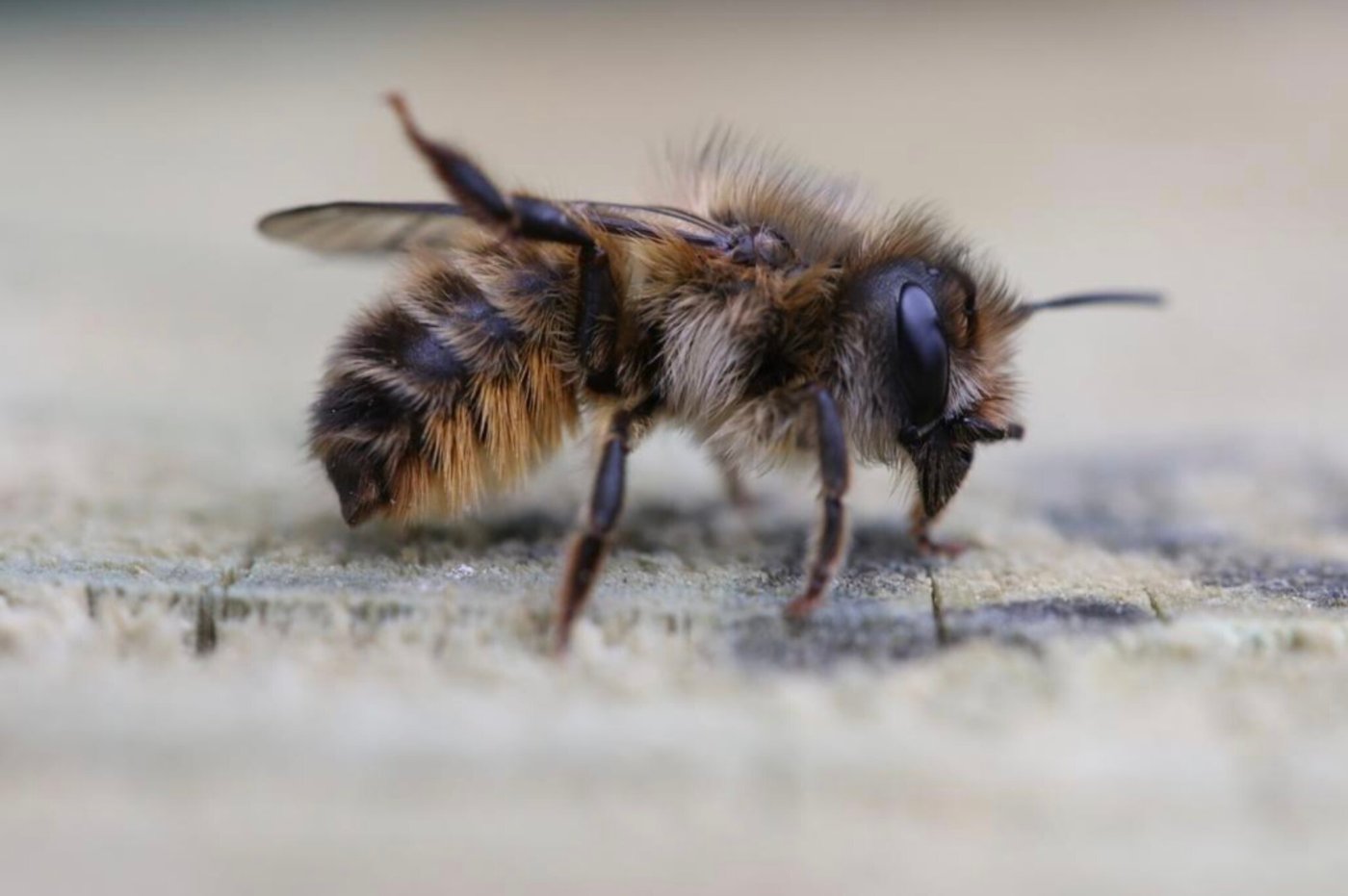
Amid a years-long decline in the bee population that has startled scientists, experts are now warning that a growing industry is hurting native habitats and potentially leading to further die-offs.
Spencer Hardy, a bee biologist with the Vermont Center for Ecostudies, said that he was surprised to see a growing number of websites offering bees for sale online to anyone with a credit card.
Many of these websites offer around 20 bees for around $25 with the promise that buying and releasing bees in your backyard will help restore populations. Varying quantities — all the way up to 100 bees for $89.99 — can be purchased.
Hardy said this practice is not beneficial and actually could be harming native bee habitats. He said that while it may seem rather innocent to buy and release bees, it could cause widespread damage. Mail-order bees are sold as cocoons, either loose or in the cavity nest where they were born. He said it’s impossible to tell if those bee cocoons have been infected with fungi or parasites.
“There are several places popping up selling bees and shipping them across the country, I found five or six places with just a quick Google search.” Hardy said. “The main concern is that these bees could be potentially spreading diseases or parasites. It’s possible you’re also buying fungal diseases and parasitic wasps that could spread and impact native populations. There is a lot of potential for ecological harm.”
While bees are frequently purchased online by professional beekeepers, these bees are meant for average consumers who may not know they are doing more harm than good, Hardy said. Some of the bees for sale are also non-native and, when introduced, could cause ecological harm.
“More often than not, I suspect than when you buy these bees they fly off and you never see them again,” Hardy said. “It’s unlikely they will stick around and do what you expect them to. So they’re mixing in with local bee populations. You’re much better off helping already native bee populations that are in the area already.”
He said the majority of the bees being sold online are Mason bees, which are easy to harvest from the wild and relatively cheap, making them a favorite for sellers. After browsing several online seller websites, Hardy said he saw many were selling non-native Horn-faced Mason bees, which have been known to be destructive to native bees.
Connecticut has a law on bringing in any insect
Bill Hesbach, president of the Connecticut Beekeepers Association, said that mail-order bees can be harmful to local pollinators.
“This has been going on for a long time, these bees can certainly spread diseases,” Hesbach said. “Mail-order bees are not inspected and you cannot control the health of the bees. As a beekeeper, it’s very different. All of our bees must pass inspection. We have the inspector at the agriculture station making sure there are no issues with our bees. If an issue is identified, they must conduct testing on that bee. So the issue is these bees are not inspected and then released into the wild.”
Hesbach said that bumble bees are often frequently bought online to pollinate fruit crops, but that their population dies each winter. Some bees can overwinter and survive cold temperatures. Mason bee cocoons are known to remain dormant in a cool, sheltered spot, living off stored energy and can overwinter for long periods.
Connecticut law explicitly requires a permit for the importation or release of insects, according to the Connecticut Agricultural Experiment Station.
“But to the best of my knowledge, no one has applied for a permit despite many companies apparently offering to ship bees to the state,” Hardy said. “I went ahead and put in a Connecticut zip code and purchased some of these bees and was able to checkout with no problem. Clearly these sellers aren’t following state laws.”
Tracy Zarrillo, an entomologist and bee expert with the Connecticut Agricultural Experiment Station, said that helping native bees means creating backyard habitats that will help them flourish. Creating a bee habitat involves providing food, water and shelter, primarily focusing on supporting native bees. Planting native pollinators provides critical nectar for bees, she said.
“One of the five things we suggest is that homeowners should focus on creating habitat for wild bees instead purchasing and releasing managed bees into the wild. The same holds true for monarchs. In Connecticut, there is a statute that prohibits the release of invertebrates into the wild, so in addition to there being so many problems with doing so, it is also illegal to release them in the state,” Zarrillo said.
“A lot of people think that they are helping to ‘save the bees’ by buying bees and releasing them, but in most cases that is doing the opposite,” she said.
Hesbach said that helping native bee populations also means refraining from spraying insecticides on property and letting dandelions bloom in yards as they create an important source of nectar and pollen for bees. He also said that getting involved with the Connecticut Pollinator Pathway initiative can be a great way to protect native bees.
The group is working to establish pollinator-friendly habitat and food sources for bees, butterflies, hummingbirds and other pollinating insects and wildlife along a series of continuous corridors. The first pollinator pathway project began in 2017 in Wilton. Since then, pollinator pathways have been established in over 300 towns in 24 states, according to the group.
Stephen Underwood can be reached at [email protected].