
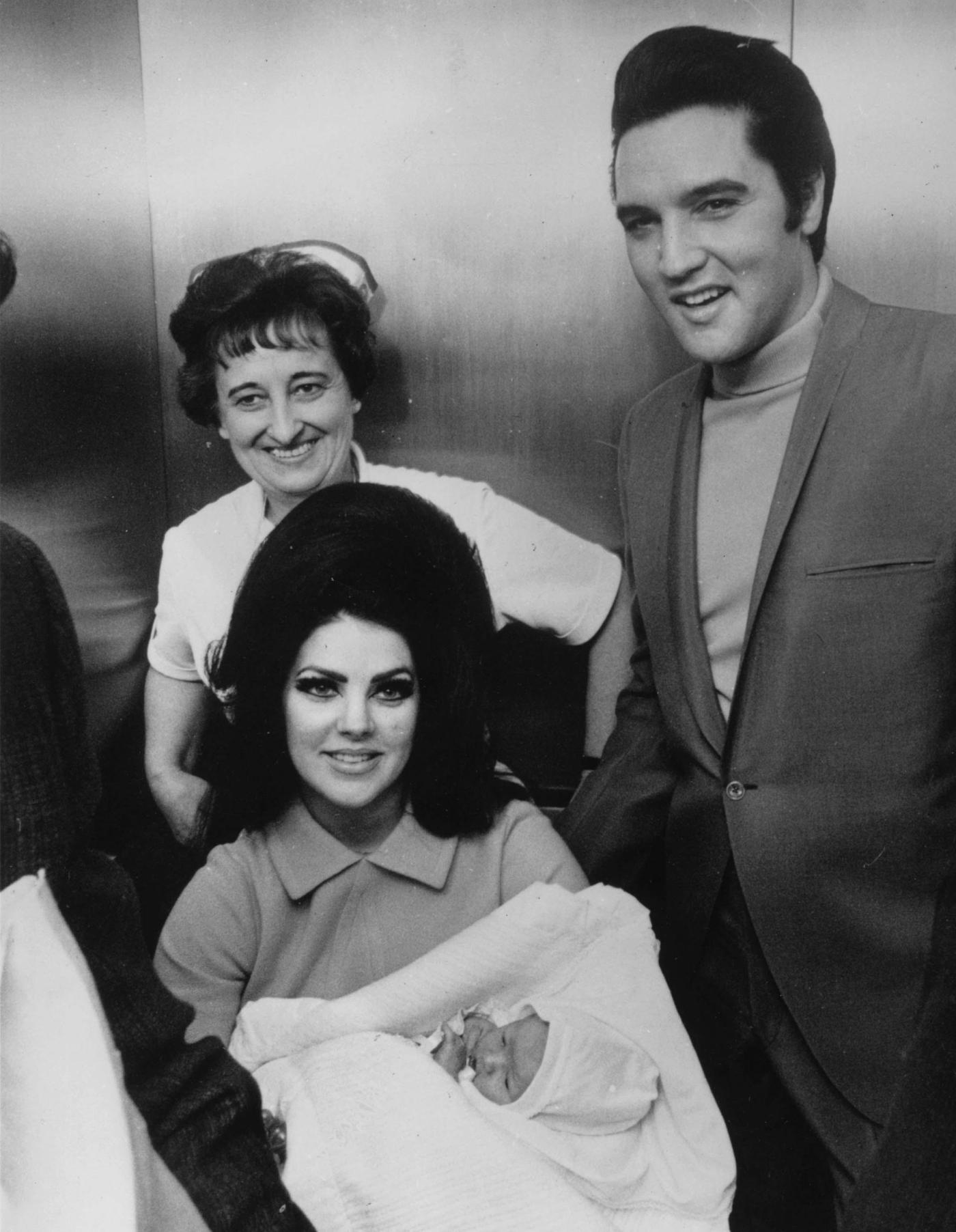
What will we see this time? That’s the question that floats across my laptop screen this morning as I think about what our friend Baz Luhrmann has in store for all of us.
To this point, we may not think of the flamboyant Australian film director and now, archivist, as our friend, but we should. Not only did he give us what I think is the most enjoyable and exciting movie on our first rock star with “Elvis” — and a sensational, Oscar-worthy performance by Austin Butler as the King — soon, he’s bringing us the real thing. Almost.
“EPIC – Elvis Presley In Concert” will hit theaters later this month and maybe, just maybe, it will be the third or fourth recent film to make us reconsider what we think we know and love about some of our rock icons. We may think we know the whole story but we really don’t. Maybe especially with Elvis Presley.

First, there was “Elvis,” Luhrmann’s showy recent retelling of the Presley saga, then a wonderfully crafted look at young Bob Dylan in “A Complete Unknown” and more recently, a courageous glimpse of a troubled mid-period Bruce Springsteen in “Deliver Me From Nowhere.” Whatever their fans imagined about the lives of these icons, these films may have broadened their — and our — horizons just a bit. Hearing a song is one thing. Seeing where and when and maybe why it came about is another.
To me, Luhrmann’s “Elvis” almost miraculously captured just how out-of-your-gourd, hot-damn exciting it had to be to see the young Elvis Presley in the flesh. There simply never had been anyone to that point to light up an audience in quite the same way.
I love this quote from Peter Guralnick’s superb book “Lost Highway,” where he finds a quote from country singer Bob Luman, who told writer Paul Hemphill exactly what it was like to see the young Elvis.
“This cat came out in red pants and a green coat and a pink shirt and socks and he had this sneer on his face and he stood before the mike for five minutes, I’ll bet before he made a move. Then he hit his guitar a lick, and he broke two strings. I’d been playing 10 years and I hadn’t broken a total of two strings.
“So, there he was, these two strings dangling, and he hadn’t done anything yet and these high school girls were screaming and fainting and running up to the stage, and then he started to move his hips real slow like he had a thing for his guitar. That was Elvis Presley when he was about nineteen, playing Kilgore, Texas.
“He made chills run up my back. Man, like when your hair starts grabbing at your collar. For the next nine days he played one-nighters around Kilgore, and after school every day me and my girl would get in the car and go wherever he was playing that night. That’s the last time I tried to sing like Webb Pierce and Lefty Frizzell.”
That was Elvis.
And once he hit TV screens across America, after a rousing, hip-shaking performance of “Hound Dog” on the Milton Berle Show, the networks decided they would only film the guy from the waist up. Really.
So now, nearly half a century after we lost him at 42, Luhrmann has uncovered a whole bunch of Elvis nobody has seen. He went through the MGM archive in Kansas City, enlisted Peter Jackson’s help (who had brilliantly restored the Beatles’ films) and came up with “EPIC” which could be epic indeed. Luhrmann’s search found 69 reels of film; 35mm film of him in Las Vegas, 16mm of him touring and 8mm home movies.
As Luhrmann explained in an interview, “As we go through the material, we recognize we have him in his prime… singing like never before seen. We found 40 minutes of (footage) of him actually talking about his life, himself.”

Thanks in large part to Elvis’s manager “Colonel” Tom Parker, Presley was steered away from personal interviews and reflections on his life. He didn’t write songs or talk much to the press so this could be revelatory. Luhrmann has been fascinated by the response to the screenings so far.
“ I was a bit surprised by the level of (audience members) relating to the screen like it’s alive… they couldn’t get over (how) goofy he is and how funny he is,” he said, “And you get the sense of his vulnerability, that he’s particularly empathetic.”
What, to me, Luhrmann’s film “Elvis” captured was just how shy, withdrawn and maybe even inferior, the young Elvis felt. Remember, he was a quiet, modest kid driving a truck for Crown Electric making $18 a week before becoming an international sensation overnight. How could you prepare for that?
Sun Records owner Sam Phillips remembered the first Elvis he met was “painfully timid” and maybe “the most introverted person to ever walk into Sun Records.” Actually, Presley was just about to blow his audition at Sun Records on the evening of July 5, 1954, fruitlessly running through song after song when he started fiddling around with an old Arthur Crudup tune, “That’s All Right, Mama” late in the session. Phillips heard something in that tune, his voice, recorded it and the next thing you knew, his world was upside down. So was ours.
Luhrmann suggests you can sense that transformation from this previously unseen footage.
“I think he always felt less than, and then he turns into almost godlike,” he said. “ So to feel less than on the inside, but godlike on the outside is what makes such a remarkable person – who can then convert that into song.”
With a handful of exceptions after those ground-breaking early recordings, it didn’t seem as if there were a lot of great albums from Elvis Presley, not like a “Blonde On Blonde” or a “Born To Run.” Which is probably true. When you don’t write your own material, you’re at the mercy of what songs come your way. He never really had anyone to steer him, nudge him or challenge him. Looking back, he could have used that.
Yet lately, driving around in my car, I find myself clicking Channel 76 more and more often — “Elvis Radio” from Graceland. The hits, the obscurities, the outtakes, songs I never heard of, there’s something magisterial about that voice that still comes across. I remember talking with a friend of mine about Sirius a few years ago and all the different available stations and types of music.
“I don’t care about any of that,” he said, dismissing me with a wave of his hand. “I keep mine on Elvis Radio all the time.”
What Elvis will we see this time? I can’t wait.
John Nogowski is a former Connecticut resident, author and sports writer. His book, “Bob Dylan: A Descriptive, Critical Discography and Filmography 1961-2022” is available online at Amazon.