
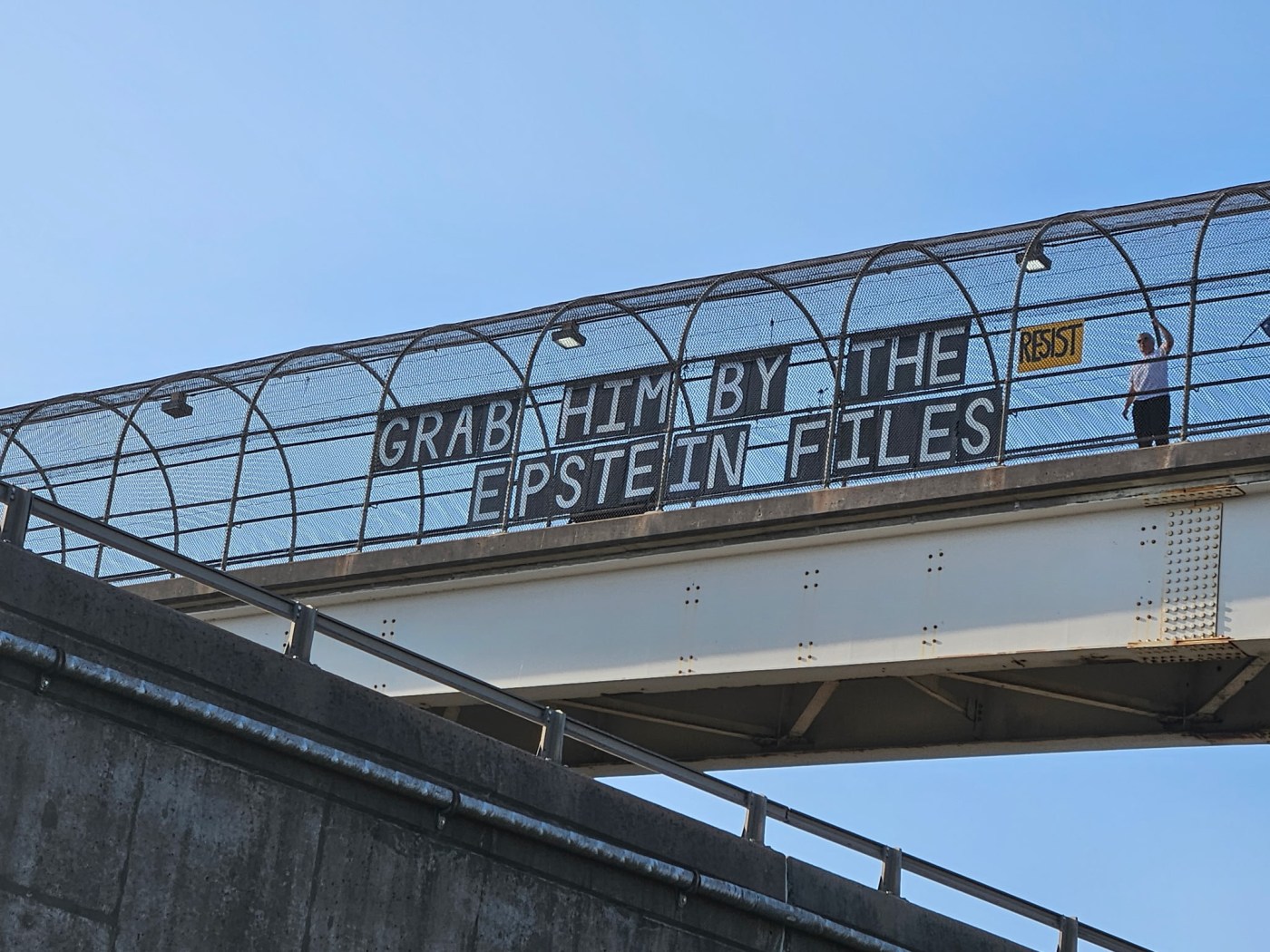
A settlement has been reached in a federal lawsuit alleging that the Connecticut State Police violated the First Amendment when troopers broke up multiple anti-Trump protests on highway overpasses and bridges last year.
The settlement was part of an agreement revealed between state police and the American Civil Liberties Union of Connecticut, which will see troopers receive new guidance on how to handle protests on highway overpasses. Part of the deal included state police agreeing to “stop breaking up highway overpass demonstrations,” the ACLU wrote in a statement.
“We are glad that the state police will now stop breaking up demonstrations based on claims of driver distraction,” Dan Barrett, legal director of the ACLU Foundation of Connecticut, said in a statement. “This is an important win for protest rights at a critical time when such freedoms are under increasing pressure across the country.”
Charges against CT activist that sparked debate on free speech dismissed in court
The agreement came at the behest of the federal judge overseeing the lawsuit, Stefan Underhill, who recognized that the positions of both sides “were not that far apart” and directed them to work together to finalize a deal, according to the ACLU. The agreement includes safeguards for protestors that prohibit state police from using trespassing, breach of peace, disorderly conduct or similar charges to disrupt a peaceful assembly taking place on a sidewalk. It also prohibits troopers from using the charges to identify, threaten or detain demonstrators.
The agreement does not protect protestors who incite “imminent unlawful action” or those who engage “in fighting words.” It also precludes protections to individuals who affix a sign to an overpass fence, those who drop an item from an overpass onto a highway or anyone who stands in a road, according to the ACLU.
“We will be issuing additional guidance to our state troopers so they can continue to (safely) and effectively do their jobs,” state police said in a statement following news of the agreement.
State police said the agreement will help keep motorists safe while protecting citizens’ First Amendment rights.
“We would like to thank the ACLU for working with us on these important issues,” the agency’s statement said.
The lawsuit was filed last September on behalf of Connecticut residents Erin Quinn and Robert Marra, who identified themselves as activists with Visibility Brigade, after protestors holding signs over Interstate 91 against President Donald Trump and Elon Musk — who headed up the president’s controversial Department of Government Efficiency — alleged that they were harassed by state troopers and threatened with prosecution. Visibility Brigade has more than a dozen local groups in towns and cities across Connecticut and hundreds across the country, according to its website.
ACLU files lawsuit after series of controversial arrests stemming from protests over CT highways
“We are very pleased with this outcome and hoping that this upholding of our First Amendment rights serves as an important precedent nationwide,” a spokesperson for Visibility Brigade said Friday.
The lawsuit, brought by lawyers for the ACLU, alleged that more than half a dozen protestors were ticketed by state troopers and told they were not allowed to hold signs over highway overpasses. State police, the lawsuit said, cited driver distraction concerns and insisted that demonstrators were trespassing on private property of the state, while protestors maintained that they used public sidewalks of the overpasses.
The civil action was brought against the Department of Emergency Services and Public Protection — which oversees state police — after the arrests of 72-year-old Katherine Hinds served as the “last straw” following months of rising tensions, the lawsuit states. Hinds was arrested in July and again at her home the following month for participating in protests.
The charges against her, including those of placing unauthorized signs on a highway, breach of peace and trespassing, were later dismissed in court.
“Relieved, excited, grateful,” Hinds said when reached for comment and asked for her reaction to the agreement.
“I’m mostly thrilled that, in the Constitution State, that a ruling came down where both sides agreed that our First Amendment rights are paramount,” Hinds said. “As the OG protester and on behalf of all the other brigades … we’re all relieved and happy and so grateful to the system. It’s a rare win, and we’ll take it.”
According to Hinds, her complaint remains pending against the trooper who arrested her.
Barrett added that the agreement helps ensure that state officials respect the “fundamental constitutional protections” that allow individuals to peacefully protest.
“This settlement is an important win for the right to protest at a time when we have witnessed that freedom comes under attack across the country,” David McGuire, executive director of the ACLU of Connecticut, said in a statement. “Our legal team moved swiftly to defend core First Amendment rights and make clear that people in Connecticut can speak out without fear of retaliation.”
State police have asked demonstrators to limit protests to sidewalk areas and to “stay safe” as they do.