
By Miriam Fauzia, The Dallas Morning News
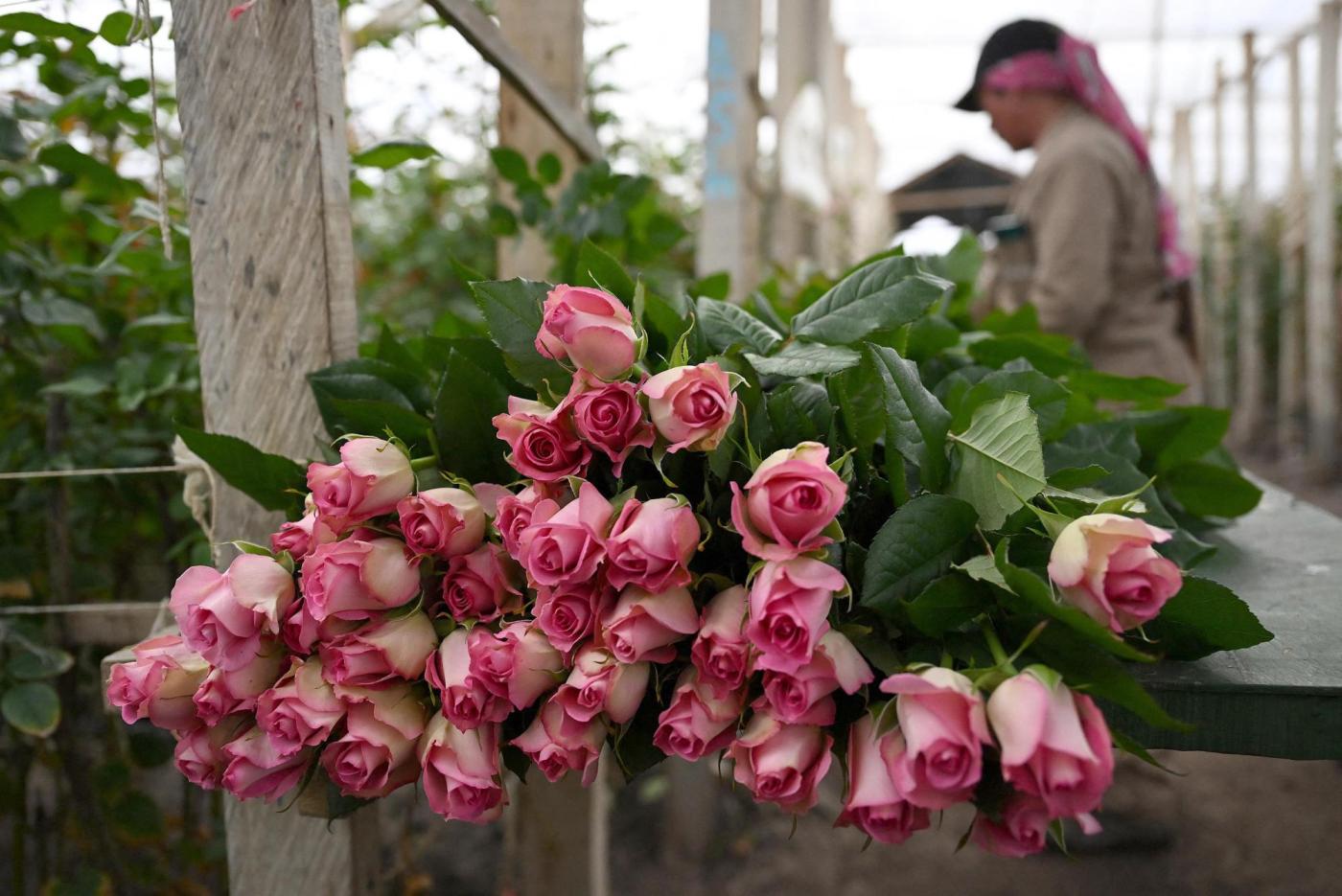
DALLAS — While Valentine’s Day is a time to celebrate love, for the 250 million roses and other floral bouquets produced for the holiday, it means a slow death.
That countdown is driven in part by ethylene, a natural plant hormone that speeds up aging in cut flowers. Researchers at the University of Texas at Arlington are testing new ways to blunt ethylene’s effects, with the goal of helping bouquets and fresh produce last longer. Here’s what to know.
What is ethylene?
Plants produce ethylene — an odorless, colorless gas — as they age, when damaged and in response to shifts in temperature, sunlight and other environmental stressors.
“Ethylene plays a vital role in nature, from fruit ripening to leaf drop to seed germination,” Rasika Dias, a professor of chemistry and biochemistry at UT Arlington leading the research, said in a news release. “For instance, fruits such as bananas, avocados and pears ripen because of ethylene. This ripening process transforms starch into sugars, which explains why ripe fruit tastes sweet.”
Because ethylene can drift through the air, it can affect nearby plants, which is why a ripe banana can speed the ripening of other fruit. Depending on how much ethylene is circulating, the gas can visibly age a plant, triggering the yellowing and dropping of leaves, and shortening how long a bouquet can last, according to the American Floral Endowment.
Shipping and storage can amplify those aging effects. Stress and mechanical damage can spur plants to release more ethylene, hastening deterioration unless growers and distributors intervene with anti-ethylene treatments.
Switching off ethylene
To slow ethylene’s effects, floral and produce industries often use 1-methylcyclopropene, or 1-MCP, a chemical discovered in the mid-1990s. It works like an ethylene decoy, attaching to the same places in plant cells that ethylene normally would. But unlike the gas, 1-MCP doesn’t trigger ripening or aging. Instead, it blocks ethylene’s signal from getting through, slowing a plant’s wilting or a fruit’s ripening.
But using 1-MCP has drawbacks. The chemical is highly reactive, can be tricky to handle and typically must be applied in sealed or enclosed spaces to work effectively, according to the American Floral Endowment. And because its effects can last for an extended period, 1-MCP may prevent some fruits from ripening.
With support from the American Floral Endowment and the United States Department of Agriculture, Dias and his lab at UT Arlington are testing alternatives to 1-MCP that aren’t volatile. Some of the most promising candidates include compounds built around metals such as copper. To see whether they slow the wilting process, the researchers take about 30 freshly cut flowers and divide them into three groups: untreated, treated with existing commercial products and treated with the new compounds.
“You monitor how long each group lasts — how fast petals drop, how quickly they wilt,” Dias said in the news release. “If the treated flowers last significantly longer than the untreated ones, that compound shows promise.”
In addition to helping with flowers, Dias hopes the research will reduce food waste. In 2019, 66.2 million tons of wasted food were generated in the food retail, food service and residential sectors, with about 60% ending up in landfills; another 40.1 million tons came from food and beverage manufacturing and processing, according to a 2019 report by the Environmental Protection Agency.
“Fruits and vegetables are thrown away when they over-ripen — bananas turn brown, tomatoes become too soft and people won’t buy them,” Dias said. “This is a major issue during shipping, since most food travels long distances. Without treatment, much of it deteriorates before reaching stores. That’s a huge economic and food-security problem.”
Miriam Fauzia is a science reporting fellow at The Dallas Morning News. Her fellowship is supported by the University of Texas at Dallas. The News makes all editorial decisions.
©2026 The Dallas Morning News. Distributed by Tribune Content Agency, LLC.