
The Supreme Court ruled over a decade ago that sentencing a child to life in prison without parole amounted to “cruel and unusual punishment” under the 8th Amendment.
In the years since, Connecticut lawmakers have grappled with where, exactly, to draw the line when sentencing youth convicted of crimes like murder, rape, kidnapping or major drug-trafficking.
In 2015, Connecticut eliminated sentences of life without parole for people convicted of crimes they committed at age 17 or younger and created new rules around parole eligibility for young people based on the length of their sentence.
In 2023, lawmakers raised the age to 21. But in order to get that legislation passed, supporters agreed to a compromise whereby parole eligibility would only be available for people sentenced before Oct. 1, 2005.
This year, several lawmakers and advocates want the legislature to revisit that sentencing cutoff date and raise the eligible age to 25. If successful, more than 230 incarcerated individuals in Connecticut could become eligible for early parole.
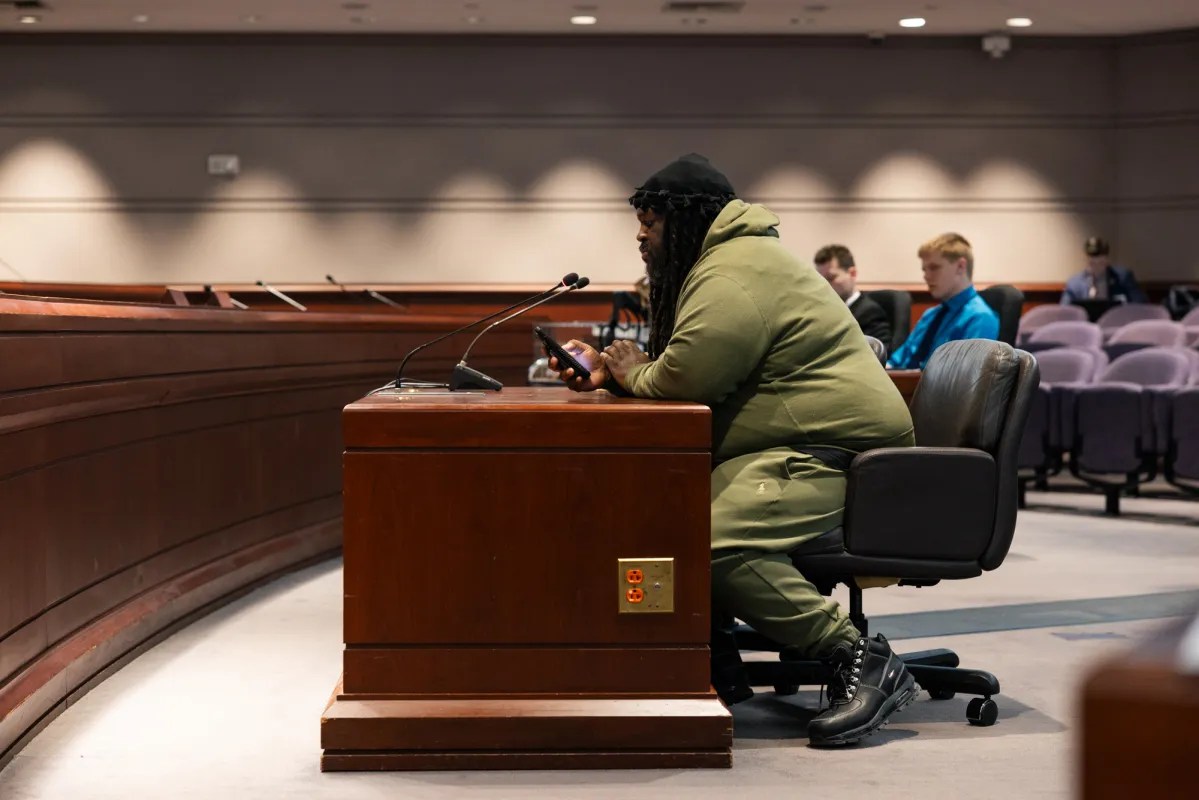
“ To me, fairness is not about being soft on crime. It’s about being smart. It’s about protecting the potential of our youth and acknowledging the science, the facts, and the humanity of each child,” Rep. Kadeem Roberts, D-Norwalk — who will be proposing the legislation — said during a forum at Yale University in October.
Roberts told the story of a personal friend who was convicted of murder and sentenced, at age 21, to 35 years to life. “We owe it to every young person in Connecticut, no matter the color of their skin, to believe their ability to grow beyond their worst mistakes,” he said.
But Roberts and other supporters of the proposal could be in for a contentious debate. Similar legislation was proposed last year. It passed through the legislature’s Judiciary Committee but wasn’t taken up by either chamber.
Rep. Craig Fishbein, a Wallingford Republican who serves as ranking member on the Judiciary Committee, declined to say whether or not he would support the proposal this year. He said he would wait to hear testimony during public hearings, but he expressed concern about the potential for “re-victimizing” people who were victims of crime.
Natasha Pierre, the state’s victim advocate, has said she supports eliminating the cutoff date. But she suggested that the state conduct a decade-long study on recidivism rates and other consequences of recent criminal justice reforms before further opening up parole options.
“Reform strategies should serve not only public safety and the interests of the accused; but must serve those personally harmed by crime,” she said in written testimony to the Judiciary Committee last year. “The ever-changing sentencing landscape in criminal cases has had and will continue to have a detrimental impact on victims of crime.”
Elizabeth Hinton, a professor of history and law at Yale, said the 2005 cutoff disproportionately affects incarcerated young people who are Black. Of the more than 200 people who are currently blocked from early parole because of the 2005 cutoff date, about 70% are Black, she said. And of the total population of young people under age 26 who could become eligible for early parole if the bill were to expand the age range, 88% are Black or Latino.
Hinton also cited data from a study currently underway at the University of Connecticut on recidivism. The study has found that of all the people who became eligible and were released following the passage of the 2015 law, only about 1 in 10 have returned to prison, Hinton said. By contrast, the broader recidivism rate for all people released from prison, Hinton said, citing 2020 annual data, was 40%.
James Jeter became eligible after the 2015 law passed and he was released in 2016 after spending nearly 20 years of a life sentence in prison for murder.
Speaking to the Juvenile Justice Policy Oversight Committee in January, Jeter said, “ We know the prefrontal cortex, the seat of judgment and impulse control, is not fully developed until around age 26. This isn’t an opinion. It is brain science. It tells us that youthful actions, even severe ones, are not the final measure of a person’s worth, makeup, or potential for redemption.”
Jeter, who now serves as the director of the advocacy organization Full Citizens Coalition, also took issue with the sentencing cutoff date lawmakers agreed to in the 2023 legislation. “ Where is the justice in the calendar date? This is not based in neurology or penology. It is a political line in the sand that leaves children behind,” he said.
The Juvenile Justice Policy Oversight Committee has recommended removing the Oct. 1, 2005 cutoff date and creating a working group “to develop a comprehensive plan for the responsible expansion of emerging adult protections up to age 26.” The plan would be submitted by January 2027 and effective as of October of that year.
Feeling afraid
Individuals who were sentenced as youth — and their family members — say coming of age in a carceral environment can be dangerous.
Antonio Inglis, who was convicted of double murder in 2009 and sentenced to life without parole at age 21, was sent to Northern Correctional Institution, a supermax prison that the state eventually shut down in 2021. ACLU-CT executive director David McGuire has referred to the prison as “a monument to cruelty and systemic racism.”
According to DOC records, Inglis was at Northern for most of 2009 and all of 2010. In messages with the Connecticut Mirror, Inglis recalled the fear he felt there.
“To be young in an adult prison you swiftly become the object for victimization where the older men prey on you and mislead you especially if they knew it’s your first time in prison,” Inglis said. “They tell you how you should do your bid or how to live in order for them to use you how they see fit because you’re so impressionable and don’t know any better.”
Inglis said he was placed in segregation at Northern. “The physical and psychological abuse in that institution was something I wasn’t prepared for nor can one my age be prepared for. I had to survive day to day through abuse, oppression and violence … not knowing who to trust,” he said.
The situation was also hard on Inglis’ parents, James and Vernessa. They described the experience of their son’s incarceration as a period of mourning.
“It feels like your child died. And you know that they didn’t die, but that’s how it felt. Because it’s like you’re never going to see them or touch them or nothing anymore. It stops,” Vernessa said.
Inglis was sentenced to life in prison, but he could be eligible for early parole if the bill proposed this year passes.
What’s lost
Individuals who were incarcerated in their youth say they want the opportunities early parole would offer — to turn their lives around and pursue a career.
Jahmal Fulcher was arrested for murder when he was 19 and, after extended trial proceedings, nearly three years later, he took a plea deal and was sentenced to 20 years in prison. Fulcher landed initially at Northern, where he said he was surrounded by people who were charged with serious crimes, and who frequently were given lengthy sentences.
He called the experience traumatic, but said it also made him realize that he wanted to take more control of his circumstances. “I knew I never wanted to live that way again. I never want to look over my shoulder or be in a situation where I could get caught up in anything simply because of the life I live,” he said.
Fulcher said at age 23 he decided he wasn’t going to let his time in prison be wasted. He purchased books and read up on business, real estate, finance and self-help. “I knew I wanted more than the average 9-to-5 life and I wanted to be an entrepreneur so I had to learn how they operate,” he said.
He received a GED, and he is pursuing an associate’s degree in business administration. He’s also taken correspondence courses in construction management. He talked about running a trucking company and rental car company, and he said he wants to start a nonprofit to teach at-risk young people financial education and entrepreneurship.
Fulcher has eight years left of his sentence, but he’d be eligible for parole much sooner if this year’s proposed legislation passes.
Maurice Blackwell knows how that feels: He became eligible for parole after the 2023 law passed. Blackwell was incarcerated and sentenced to 60 years in prison for a murder he committed at age 19.
“At my sentencing, the judge told me that I have irredeemable qualities and I have no choice of rehabilitation,” Blackwell said at the Yale forum in October.
Going into the prison system, he said, he felt hopeless. But he said his father sent him books to read and insisted he use his time wisely. After his father died, Blackwell said he began reevaluating his life.
He enrolled in educational programs, including the Yale Prison Education Initiative, and became a recovery coach — someone trained to support and guide people who are recovering from addiction.
In 2022, the Board of Pardons and Paroles commuted Blackwell’s sentence to 25 years. Then the 2023 law passed, making him eligible to immediately apply for parole. His parole was granted in November 2024.
But Blackwell said that many of the young men he spent time with in prison are still incarcerated and ineligible to apply for parole because they were sentenced after 2005. “ I get emotional just thinking about it, because it’s like knowing you have family, and you leave them and there’s nothing you can do about it,” he said.
Rebuilding family relationships
Many individuals who were incarcerated as youths describe how profoundly they miss being connected to their family.
Brian Ebron was found guilty of manslaughter at age 20 and sentenced to 35 years in prison in 2007. He claimed the shooting was in self defense, but he said he takes responsibility for his actions.
His young daughter inspired him to pursue a GED in prison, he said. “I realized that I (God willing) I would be leaving prison one day, and that I could do so better or worse than I came,” he said.
An early release from prison would mean a chance to rebuild his life, to build a career and to be with his family. Ebron has married since he was incarcerated, to a woman he knew from his childhood in Hartford. They reconnected in 2023. His wife, Melissa, said marrying Ebron was the “best decision I ever made.”
Early release would also mean the chance to spend time with his mother, Brenda, who he only got to know recently.
Ebron was brought to Connecticut at age 3 by the man he thought was his father, and then left with an aunt. As a child, Ebron was told his mother was dead. He learned, at age 12, that she was alive — and he was confused why he’d never known her. According to Ebron, that was when he began to get in trouble, spending time with the “wrong crowd” and ending up in juvenile detention.
When in prison, Ebron reconnected with his mother. As time passed, they developed a bond, and they now have a close relationship, his mother said.
“He’s a wonderful, wonderful kid. A very loving son. He loves me very much despite everything that he’s been through. And I just think it’s time for him to come home,” she said. When asked the first thing she would want to do with her son when he was released, Brenda said, “hug him.”
Emilia Otte is a reporter for the Connecticut Mirror. Copyright 2026 @ CT Mirror (ctmirror.org).