
By STAN CHOE, AP Business Writer
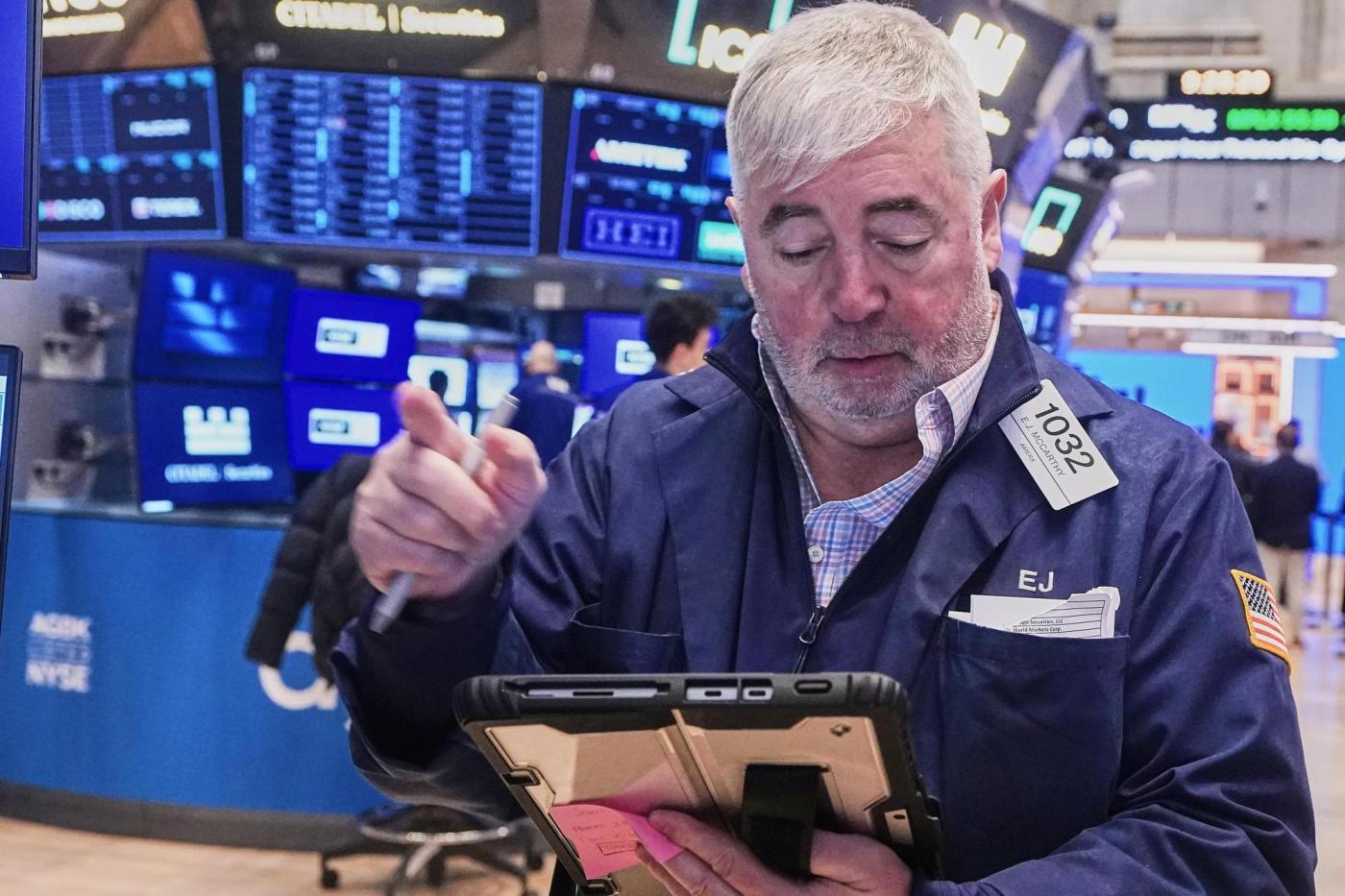
NEW YORK (AP) — U.S. stocks are under pressure Thursday as the market splits further between perceived winners and losers from the rush into artificial-intelligence technology.
The S&P 500 fell 0.6%, even though more stocks rose than fell in the index. The Dow Jones Industrial Average was down 53 points, or 0.1%, as of 11 a.m. Eastern time, and the Nasdaq composite was 1.1% lower.
AppLovin helped drag the market lower and fell 18.7% despite reporting a stronger profit for the latest quarter than analysts expected. Like other software companies, it’s come under pressure recently from worries that AI-powered competitors will steal customers.
AppLovin CEO Adam Foroughi pushed back on the worries, saying in a conference call with analysts that indicators show his company is doing well. “There’s a real disconnect between market sentiment and the reality of our business,” he said.
Its stock nevertheless worsened its loss for the young year so far, which came into the day at 32.2%.
Cisco Systems dropped 11.1% despite topping analysts’ expectations for profit and revenue last quarter. The tech giant indicated that it may make less profit off each $1 of revenue during the current quarter than it did in the past quarter.
Analysts said that could be an indicator of higher prices for computer memory that everyone is having to pay amid the rush driven by AI.
More broadly, questions are rising about whether businesses that are spending heavily on AI will end up seeing high-enough profits and productivity to make the investments worth it.
In the meantime, the companies serving customers with huge AI budgets are benefiting.
Equinix, for example, jumped 10.4% even though the digital infrastructure company’s results for the latest quarter fell short of analysts’ expectations. It gave financial forecasts for 2026 that topped analysts’ expectations, and CEO Adaire Fox-Martin said that “demand for our solutions has never been higher.”
The company’s data centers are helping to power the world’s move into AI.
Outside of tech, McDonald’s rose 2.2% after reporting a stronger profit for the latest quarter than analysts expected. The restaurant chain credited moves to improve its value and affordability, including cutting prices on some U.S. combo meals in September.
Walmart’s rally of 3.9%, meanwhile, was the strongest single force pushing upward on the S&P 500. It erased losses from earlier in the week after a report said spending at U.S. retailers overall stalled in December.
In the bond market, Treasury yields slipped after a report said slightly more U.S. workers filed for unemployment benefits last week than economists expected.
The number was nevertheless lower than the prior week’s, which is a signal that the pace of layoffs may be improving. It also followed a surprisingly strong report on the job market from Wednesday, which said the nation’s unemployment rate improved last month.
A strengthening job market could push the Federal Reserve to keep its cuts to interest rates on pause, even if President Donald Trump has been loudly and aggressively calling for lower rates. That’s because lower rates can worsen inflation at the same time that it gives the economy a boost.
It all raises the stakes for Friday’s upcoming report on inflation at the U.S. consumer level. Economists expect it to show inflation slowed to 2.5% last month from 2.7% in December.
A separate report on Thursday said that sales of previously occupied homes slumped last month by more than economists expected, which also weighed on yields.
The yield on the 10-year Treasury slipped to 4.14% from 4.18% late Wednesday.
In stock markets abroad, South Korea’s Kospi rushed 3.1% higher thanks to gains for Samsung Electronics, SK Hynix and other tech stocks. The moves were more modest in other Asian markets.
In Europe, Germany’s DAX returned 0.9%, and France’s CAC 40 rose 1% for two of the world’s bigger moves.
AP Business Writers Chan Ho-him and Matt Ott contributed.