
The measure was presented as a way to end confusion and provide enforcement standards while maintaining neighborhood aesthetics.
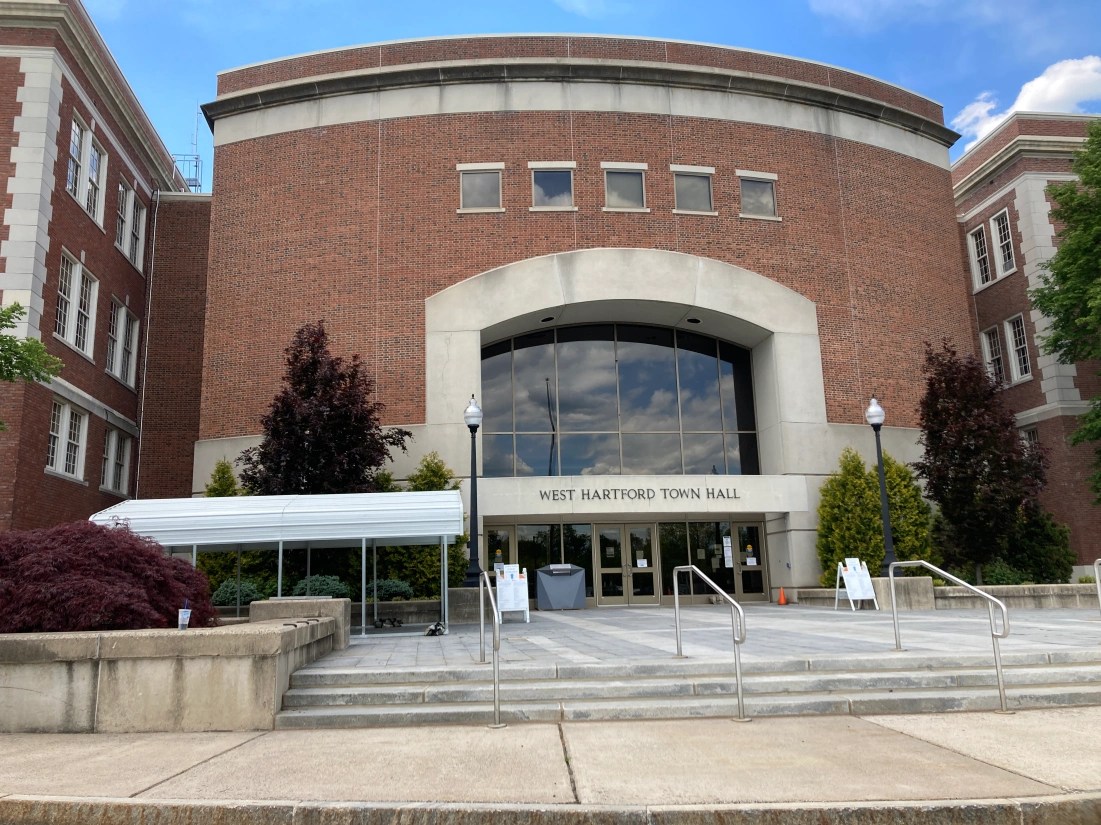
The West Hartford Town Council voted down the proposal by resident Michael Cervone to modify zoning regulations to allow recreational vehicle storage as an accessory use.
Cervone, during a recent hearing, proposed modifications to permit recreational vehicle storage as an accessory use in existing single-family residence districts. Specifically, he asked to modify Section 177-2 and Section 177-6 C (Schedule of Permitted Accessory Uses) of the West Hartford Zoning Ordinances.
Cervone’s measure failed in a 7-2 margin vote by the West Hartford Town Council.
“This is a target proposal intended to bring clarity, where there is currently ambiguity. Defining recreational vehicles by establishing clear, reasonable standards, for its limited outdoor storage as an accessory use in single family, residential districts,” Cervone said. “Today, the town’s zoning code is silent on recreational vehicles, among other registration types for vehicles recognized by the state of Connecticut.”
“That silence creates confusion for residents who own these assets, and for enforcement staff passed with applying the code,” he said. “The result is inconsistent enforcement, unnecessary disputes, and a lack of predictability for homeowners who are trying to comply in good faith. This proposal does not introduce new land use, provides structure and standards for a use that already exists throughout our community.”
Cervone said other surrounding communities in Connecticut have adopted similar measures to what he has proposed in regard to recreational vehicles.
“West Hartford is an outlier, and this proposal seeks to address that gap,” Cervone said. “The town does have an obligation to define how property is compliantly stored across all property classes it recognizes.”
More specifically about 177-2, Cervone said his proposed changes would provide clarity.
“As drafted, a recreational vehicle would be defined as any vehicle, motor vehicle, or trailer, with or without motor power, designed, or used for leisure, travel, or temporary accommodation. This includes, but is not limited to motor homes, campers, travel trailers, and other towable units, non-commercial utility trailers, boat trailers with boats, and all-terrain vehicles designed for off road use,” Cervone said. “Establishing this definition ensures that residents and enforcement officers are working from the same understanding.”
“The second proposed change is to Section 177-6C. The schedule of permitted uses. You explicitly list recreational vehicles as defined in Section 177-2,” he said, referring to regulations. “Importantly, this permitted use comes with clear and reasonable conditions, designed to protect neighbors and preserve community character. Under the proposal, a recreational vehicle may be parked or stored by its owner, and if stored outside of a garage, it shall be parked to the rear of the front of the main building on the lot.”
He said the intent is to prevent recreational vehicles from remaining in driveways or in prominent locations facing the street.
“The proposal also requires that any of the recreational vehicles stored outdoors are located at least 10 feet from the side or rear lot lines and not permitted in the front yard,” he said. “This ensures appropriate separation from neighboring properties and avoids visual or spatial impacts on adjacent lots. Additionally, the proposal makes clear that no recreational vehicle stored on a property may be used for sleeping, living, cooking, or carrying out a business.”
“It must be kept in good repair and in clean insanitary conditions at all times,” he added. “This provision ensures that recreation of vehicles are not used as dwellings. It prevents issues related to inoperability, junked or abandoned vehicles. The ordinance requires that recreational vehicles be buffered and adequately screened from street view and neighboring properties where necessary.”
Cervone urged the town council to accept his proposal.
“We have a problem in need of a fix. When we needed it was yesterday. This proposal is intentionally narrow and carefully designed to minimize impact on a neighbor’s and neighborhood character. It does not change residential density, alter housing use, or introduce new development of any kind. It simply clarifies accessory use on existing single-family properties,” Cervone said.
Town Council member Jason Wang asked why the measure didn’t pass through West Hartford Planning & Zoning.
West Hartford Town Planner Todd Dumais said West Hartford Planning & Zoning “had some concerns with the language of the ordinance was drafted” and it was “a bit ambiguous and could create an enforcement burden for the town.”
“There were also some inconsistencies in their opinion with the way the language was used for a placement of the RV, in front of a building or a front yard, they thought there was a little bit of ambiguity there. We also had some concerns that the definition provided of a recreational vehicle was perhaps too permissive, and in particular, they were concerned with the element of non-commercial utility trailers,” Dumais said.
Following the vote, Wang voiced his support for Cervone’s proposed changes.
“I just think it’s a free country, and you’re not hurting anybody by owning an RV. So, I guess I’m surprised that there’s opposition. I don’t think you’re hurting anybody. And I don’t know if that’s your tax bill, but that’s a heck of a big tax bill, so I think that’s a little bit unfair,” Wang said.
Town Council member Gayle Harris wanted confirmation that the vehicles are being taxed while residents are not allowed to have them on their property. She was told that is the case. She also asked if there were any other property that would fall into this category in West Hartford.
“There are instances where the assessment division will go out and assess a property, and in particular, there are a number of cases where they will count the number of dwelling units in a home, and they will assess it for the number they find, so you could have a number of multifamily properties that might be assessed at three or four, but the zoning only permits less,” Dumais said. “There’s quite a few instances where an assessment is different from what’s permitted through zoning or other building permitting processes.”
Harris and Wang were the two councilors who backed Cervone’s measure.
West Hartford Mayor Shari Cantor said the adoption of the proposed ordinance would have required a two-thirds of the vote in favor.
“I want to thank the applicant for your thoughtful and well-presented proposal. I believe the concerns raised are legitimate, and, personally, I think aspects of this issue warrant further consideration,” Cantor said. “However, as drafted, the ordinance is too broad, and I, myself, I’m not prepared to support it in its current form. I would prefer that this matter be studied further in committee, and to determine whether a more narrowly tailored ordinance can and should be considered.”