
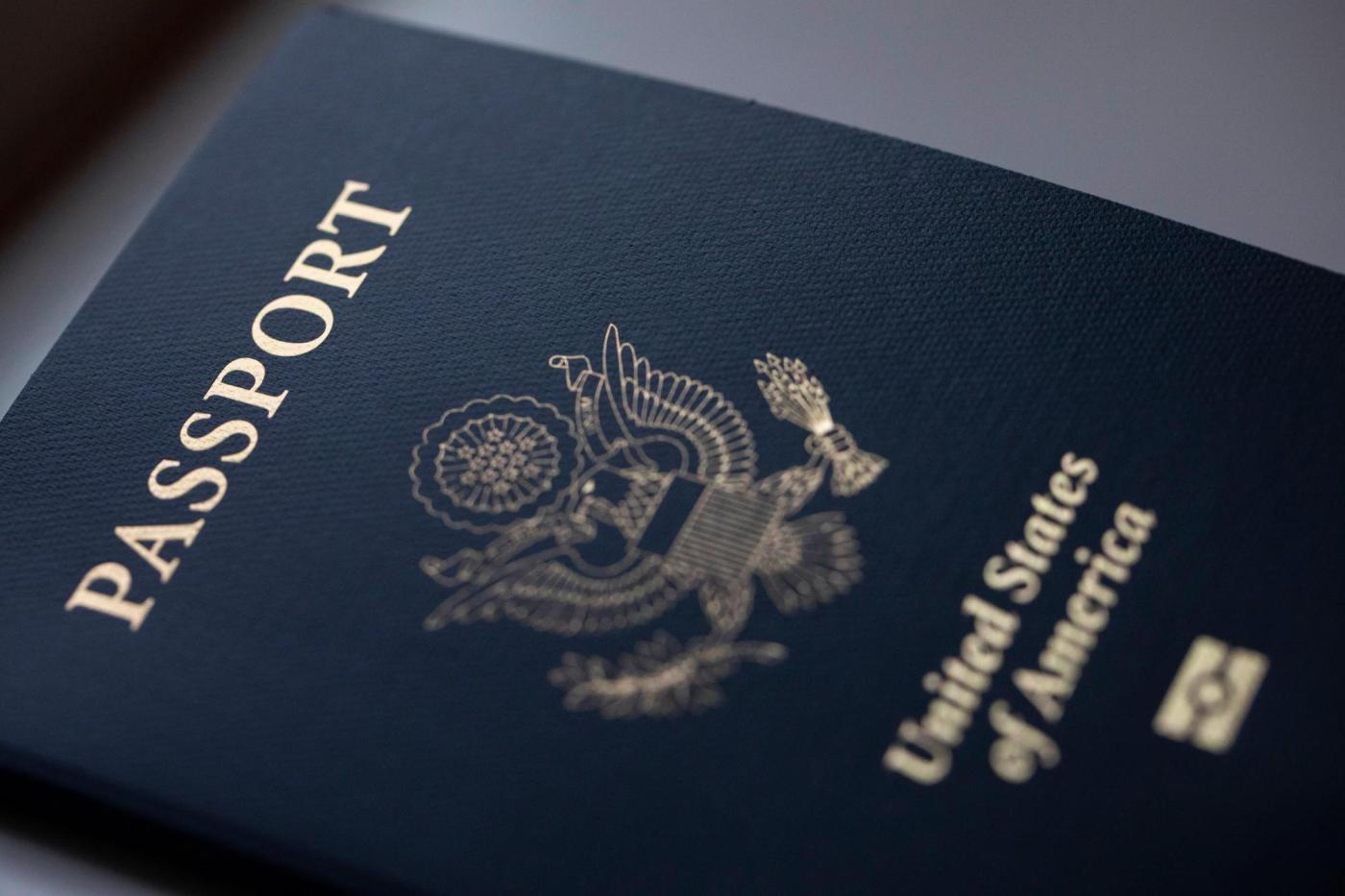
If you’re thinking about getting your passport at a local library, you may want to schedule your appointment as soon as possible.
Starting Feb. 13, nonprofit public libraries will no longer be able to offer passport services. This comes after a recent U.S. Department of State decision to enforce a long-forgotten 1920 statute that “federal law does not explicitly allow public libraries that are nonprofits to collect and retain execution fees for processing passport applications.”
Alice Knapp, president of the Ferguson Library in Stamford, said that she first found out her library can longer issue passports after a suspicious email she received back in early November.
“It looked like a phishing email, not an official email from the U.S. State Department,” Knapp said. “When I received the email, there was no last name attached to it. In the signature of the email, it said U with a period and then an S, but no period after that. The email header was just ‘passport office.’ So we really couldn’t tell if it was legitimate or not.”
Kanpp said after contacting the local passport agency in Stamford, they confirmed it was in fact a real email from the U.S. Department of State. She said libraries across the country were given no warning of the announcement ahead of time.
“It took us by surprise. There was really no heads up,” Kanpp said. “This is going to have a serious impact on a lot of libraries.”
The Ferguson Library has been issuing passports since 1999, according to Knapp. Last year, the library processed close to 8,000 passports taking in just under $200,000 to provide the service. The loss of revenue from passport processing fees will hurt nonprofit libraries, she said. Most 501(c3) libraries are funded through some local property taxes and municipal budgets, but additional funding is needed to ensure library services are uninterrupted, with passport fees making up a part of the library’s operating budget.
“Issuing passports is a great use of libraries, we can help expedite some government services,” Knapp said. “Often times, people that are getting passports are families, and they must come together. Libraries are naturally family friendly places. We put out educational games for the families to play together. We really make it family friendly for them. Secondly, our hours are more family friendly, we are open evenings and weekends. So if you work during the day and can’t take time off during the week, we offered extended hours over post offices.”
Knapp said that despite appealing to the city’s attorney, she was told the last day the library can issue passports is Feb. 13.
Ridgefield Library director Brenda McKinley said that the town’s library completed nearly 6,000 passport acceptance appointments since being certified by the federal government to be a passport acceptance facility in 2014. The town grants Ridgefield Library approximately 70% of the library’s annual operating budget, but like many other nonprofit libraries, the gap in funding is closed “through fundraising events, investment income and a small amount of operational income, such as the income generated by passport services,” according to McKinley.
“We are deeply concerned to lose this service,” McKinley said. “For well over a decade, the Ridgefield Library has provided efficient, accessible and supportive passport acceptance service for individuals and families in a welcoming and comfortable environment. The library is able to provide evening appointments for working people and families and to meet our community’s needs on their schedule.”
Other towns with nonprofit libraries, including Farmington and Norwich, have also confirmed they will stop accepting passport applications on Feb. 13.
Currently, a bill in the U.S. House of Representatives, is aimed at restoring passport processing for nonprofit libraries. Officials in Pennsylvania, where a majority of libraries in the state are nonprofit, said that losing income from passport processing could be disastrous for local libraries there. A handful of Pennsylvania lawmakers have introduced the Community Passport Services Access Act to restore passport processing at nonprofit libraries.
“I think my message is go to your Congressman and phone them up and tell them you want to see this changed,” Knapp said. “We have a great delegation here in Connecticut, and I will be working with them on this. But I think the more people speak out about this, the greater chance that something will be done.”
Stephen Underwood can be reached at [email protected].