
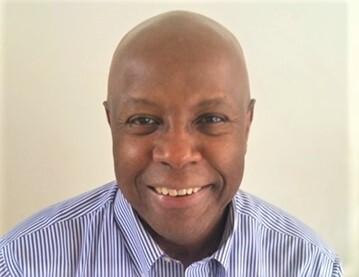
As we kick off Black History Month, I am going to take the liberty to salute my siblings, the city of Waterbury and the state of Connecticut. My story is an American story. And I am blessed to have come from a strong and loving two-parent household, a culture of hard work, and always putting God first with prayer and thanksgiving. That was our practice.
In our family, we looked in the mirror when we missed a beat or a step, not at others for someone to blame. We were determined to simply outwork our peers and naysayers while realizing every achievement was truly due to the grace of God.
This column is personal. Also, you will quickly see how I was the “black sheep” of the family as a politician.
My sister, Dr. Bonita Franks, was the first Black professor at the University of Tennessee. Keep in mind Black people were not welcomed as students at white colleges regardless of their abilities during the 1950s and 1960s, but Bonita’s grades were so high that Central Connecticut State University gave her a scholarship and honored her with an endowment scholarship in her name.
Black History Month centennial channels angst over anti-DEI climate into education, free resources
She graduated with a doctorate degree at an age that was the fastest of any person of color at Penn State at the time. One day, while she was a very young assistant professor, she was in front of the class erasing the teaching board when a white student asked her, “When will the professor be coming?” My sister turned and said, “I am the professor.” Nearly two-thirds of the class got up from their seats and left the class.
I have been told my brother, Colonel Richard Franks, is America’s oldest living Black retired Army Colonel (he is almost 90 years old). His congressman – John Monagan – who I would succeed decades later, encouraged my brother to join the Army instead of being drafted as Monagan thought Richard’s talents would be better served at a Veteran’s Hospital treating those in need of psychiatric care. Richard rose through the ranks and became a Colonel. Recently, he was recognized and honored by the Connecticut Congressional delegation, the state Legislature, and Connecticut Gov. Ned Lamont.
Dr. Joan Franks is over 90 years old and is an emeritus professor from the University of Virginia. One of her famous students is now a U.S. Senator, Shelley Moore Capito, from West Virginia. Joan also befriended and worked with Virginia Senator and Governor George Allen while he was a student at UVA. When I graduated from grade school, Joan took me on a trip to Washington, D.C. where I got my first glimpse of the halls of Congress where I would one day work.
I also had another sister, Ruth, who was an attorney and a brother, Marvin, who played and coached school sports teams and became a grade-school teacher.
Though my father could barely read or write, he and my high-school educated mother were strong parents who believed and practiced the Golden Rule.
As a child in the 1960s, I pulled out of our mailbox a dead possum wrapped in a sheet dripping with blood. Members of the Ku Klux Klan had sent it to us with a cryptic note attached, saying our family would be like this dead possum if we did not move somewhere else immediately.
This was all because my parents had decided to integrate into a previously all-white section of my hometown. They burned a huge cross on our yard, shot a dog on our lawn, and sent us death threats, along with threats to blow-up our house. This happened nightly for over three months.
The dead possum had been placed in our mailbox, making it a federal offense. Thankfully, the FBI caught the Klansmen in three days. Years later, I would win six elections from that same community to serve as alderman on the city council and as a Congressman, both doing what had never been done before – winning in a 92% white area (city and congressional district back in the 1980s and 1990s.)
The mold had been set and other Black and Hispanic leaders dared to do what had been previously thought impossible – getting elected as minorities by majorities of white people.
Today, most of the new members of Congress who are people of color have been elected in majority-white districts. And we have and have had several Black and Hispanic candidates who were elected to the Senate, among both Democrats and Republicans, as well as three Black governors – mostly in the 21 st Century.
Back in the day, however, I fought members of the Congressional Black Caucus who demanded racially gerrymandered districts in order to get Black candidates elected to Congress. They were both wrong and obstinate in their belief. I was thrown out of the CBC temporarily after testifying before a U.S. Appeals court on the pitfalls of creating race-based districts. The court agreed with me.
However, while I was walking down the steps of the courthouse in Savannah, Georgia, I was attacked by the father of Georgia Rep. Cynthia McKinney. Her father was arrested for assaulting a congressman (it was also in front of numerous television cameras).
So, this week I pay tribute to the people of Connecticut and the citizens of Waterbury for proving about 40 years ago that white people are not innately racists. They would not vote for an inferior candidate to represent them in the halls of Congress, House or Senate.
I was a joke to many party leaders and political pundits. They constantly told me I was going to lose. I would ask, “Why?” They would say, “It was pretty obvious – you are Black and white people are not going to vote for you.”
“Oh, OK, I know I am Black,” I would respond.
Well, they would chuckle, “It is even worse for you because you are a Republican and Black people are not going to vote for you either. So… good luck.” This kind of laughter from others was constant.
Well, I won six elections and lost three. In every election I won I uniquely carried the Black and White vote. And in every election I lost, I lost the Black and White vote – and I was good with that.
Yes, I have been blessed. My siblings were my role models, tutors in grade school, confidantes, and my sources of inspiration. We all must pass on what we know and experience to others along the way. And that is what Black History Month should encourage us to do. Godspeed.
Gary Franks served three terms as a congressman from Connecticut’s 5th District. He was the first Black conservative elected to Congress and first Black Republican elected to the House in nearly 60 years. Host: Podcast “We Speak Frankly” www.garyfranksphilanthropy.org. (C)2026 Gary Franks. Distributed by Tribune Content Agency, LLC.