
Connecticut homeowners are still feeling the effects of the massive snowfall that fell on the state over a week ago.
With snow melting and refreezing, ice dams are forming on the edge of roofs and on top of gutters causing damage across the state. Water is getting into homes because of the damage and raising concern for mold.
State Farm insurance spokesperson Dave Phillips said there have been about 200 claims for ice dams in Connecticut stemming from the most recent snowstorm as of Monday evening. Nationwide, he said there have been 16,000 claims. Phillips said he expects the Connecticut number of claims to rise because the state “hasn’t had a thaw yet.”
According to State Farm, the prime conditions for ice dams is temperatures in the low 20s for several days and several inches of snow on the roof, something Connecticut residents have been experiencing since Jan. 25.
Phillips said the latest State Farm data, which was released last month, showed the average claim cost for ice dams or frozen pipes exceeded $30,000. The data is from 2024 through June 2025 and “in Connecticut claims related to frozen pipe, ice dams and winter water damage totaled $5.6 million, ranking the state 31st in the nation.”
Nationwide during that time span, there were more than 20,000 claims related to frozen pipes with a total paid losses exceeding $628 million,” according to State Farm.

Residents should be on the lookout for too much snow and ice that has accumulated on the roof or has too much condensation in the attic. Also, to watch for sagging ridgelines, drooping ceilings, water leaks on interior walls and ceilings, jammed doors, cracked interior walls near the center of the home and creaking sounds, according to State Farm.
Phillips warned those experiencing ice dams to be careful when chipping away the ice because it could lead to shingle damage. He also said homeowners should not to install large mechanical equipment or water heaters in the attic in cold climates because they can present a fire hazard and increase the temperature in the attics. Also, he said not to use salt or calcium chloride to melt snow on a roof. The corrosive chemicals can shorten the life of metal gutters, downspouts and flashings.
Phillips offered some tips for those experiencing ice dams. “Use a box fan in the attic aimed at the roof’s underside where leaking occurs, carefully remove snow with a long-handled aluminum roof rake from the ground (and) never climb on the roof,” he said.
As far as insurance coverage, Phillips said, “In most cases, ice dams would be covered under a homeowner’s policy,” but added to “contact your insurance company to check.”
“Always reach out to your agent for help, but in short, it is covered in your homeowner’s policy. Frozen pipes and these types of water dams are considered something you would have coverage on in a standard homeowner’s policy. Even if you rent and your personal belongings are damaged, that type of loss, it’s covered,” Phillips said.
He also said to consult licensed contractor to make the repairs.

Roofers and contractors around Connecticut said they have seen more ice dam damage calls in the last week than they have in the last several winters.
“The calls have been nonstop for the last week and a half,” said Ed Herr, general manager of the Connecticut locations of The Exterior Company.
“I will say we’ve been specifically targeting to try and help ice dams because obviously there are a lot of people who are suffering from it right now and it ends up causing some pretty extreme damage from leaking,” Herr said. “The calls have just been nonstop.”
Herr said the company has had about 50 calls for ice damming in the last week, which he said is the highest number the company has received for ice dams “in years.”
“Many people are finding us organically for this problem,” Herr said. “I think a lot of companies don’t want to deal with it because it’s not a very glamorous part of roofing and it’s not a very profitable part of roofing either. So, most people turn that work away like all the work we’re doing on ice dam removal is not profitable for us. We are literally doing it to try to save some homes, keep the guys busy and get our name out there a little bit.”
The initial inspection is about 15-20 minutes. Herr said typical calls for snow and ice dam removals take about an hour, but the cost and the amount of time spent depends on the roof and its size.
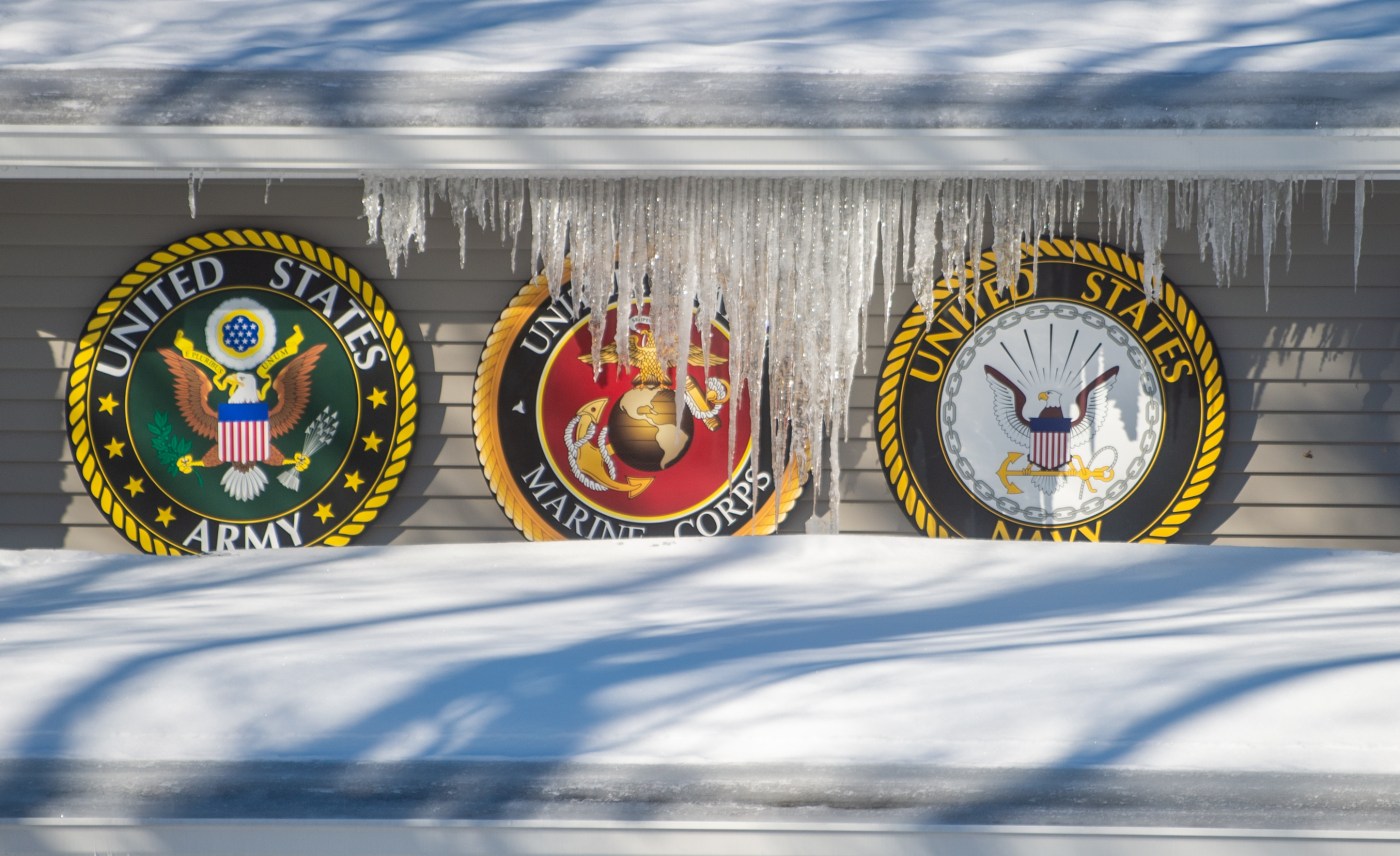
Herr said homes with lower-pitched roofs or flatter roofs are more susceptible to ice dams. Large icicles are a sign of ice dams on a home.
“We’ve seen two-story raised ranches that have icicles going all the way down to the ground,” Herr said.
Herr said the heat from inside of the house will warm part of the roof and the snow starts melting. The water will run down to a colder edge of the roof and will refreeze. More water melts behind it forming a dam, as water gets trapped.
“If you walk outside and you see a couple inches of ice in your gutter and large icicles coming down your gutters that is your first sign,” Herr said.
Herr said to look for water stains on ceilings and walls inside of homes.
“We know people are in trouble right now. This is one of the worst cases of ice dams we’ve seen in years,” Herr said. “It’s because we got so much snow and the weather has stayed cold for so long. We haven’t had a day where it has melted at all. The calls have been constant, and we are seeing one of the worst winters in years for ice dams.
“Almost every home I drive by I see some form of an ice dam, and we usually don’t see it that bad,” he added. “I expect more calls. We can’t even keep up with the number of calls we are getting.”
Herr said ice dams are “somewhat unpreventable” depending on the style of roof.
“People think that ice dams can be a result of bad roofing or bad installation,” Herr said. “A lot of the homes we’ve been to in the past week are newer roofs that are three to five years old.”
“A lot of people are upset with their original roofer and that’s why they’re calling somebody else. In a lot of cases, it’s not that the installer did a bad job, it’s just the nature of the roof and how parts of the roof run into one another or the type of ventilation they have.”

Ryan Buchanan, general manager of Artisan Building & Remodeling in Berlin and Westbrook, said his company has also faced nonstop calls in the last week.
“The recent stretch of snowfall and the temperatures we’ve had created ideal conditions for ice dam formation,” he said.
Buchanan said the company has had crews at homes from sunup to sunset for several days in a row. The workers shovel back the snow and remove the ice from near the gutter.
“It’s definitely been the worst year I’ve ever seen for ice dams since we’ve been in business,” Buchanan said. “Compared to recent winters, this season has been about 65% higher for ice dam calls.”
Buchanan said the entire state has been affected but, in his experience, inland Connecticut has had more ice dam issues compared to the shoreline.
Buchanan said most ice dam jobs are between 90 minutes and up to four hours depending on the roof. His company is about a day out for appointments but if there is an emergency, they have people available around the clock “to get out there and get it done.”
Buchanan noted that homeowners should be proactive in maintenance of their roof before the snow comes.
“It’s just important to stay on top of it like any other part of your household but especially in New England where the weather is unpredictable. Making sure that your gutters are ready for it and making sure that you have all of the necessary things to keep the water flowing down and not into your house is important,” Buchanan said.
Wesley Vercosa, the owner of Plow & Property Projects in Newington, said he’s seen a 500% increase in calls due to ice dams. He said the business has been open for 10 years and his family has worked in this field for 40. He said the business has fielded hundreds of calls and has serviced more than 100 clients. His biggest concern for interior damage is mold.
“If a homeowner sees water damage in their home, it is in their best interest to call us immediately and make sure you get back to pre-loss conditions,” Vercosa said. “We’ve seen a massive influx of water damage throughout the entire state in Connecticut.”
Vercosa said the ice dams are causing water to enter the home behind the siding and affecting the insulation, interior walls, ceilings and flooring. According to Vercosa, his company uses thermal imaging cameras as well as moisture detectors to access the damaged areas.
“If someone sees water in their home, they should call a professional or someone versed in water damage immediately,” Vercosa said. “Mold and asbestos are two of our top concerns.”
Phillips said that customers may have insurance coverage for indoor damage from burst pipes or ice dams.
“If damage is caused by a covered loss, like a burst pipe or a suddenly melting ice dam, you may have coverage for the cost of water remediation, removal or repair immediately following the loss. Customers with a loss are encouraged to make temporary repairs and take steps to prevent mold from forming. Mold forming over a period of time or resulting from poor maintenance or neglect is not covered by standard homeowners’ insurance policies,” Phillips said.
The best tip to avoid ice dams, according to State Farm, include:
- Keep the attic air temperature below freezing when the outside air temperature is in the low 20s to reduce the occurrence of ice dams as well as ventilate eaves and ridges to circulate cold air under the roof.
- Seal attic hatches and whole-house fans to keep heat inside.
- Add insulation to the attic floor.
- Replace recessed lights with sealed “IC” fixtures to safely insulate.
- Properly flash chimneys with steel and fire-stop sealant and avoid spray foam.
- Seal and insulate HVAC ducts with mastic and foil-faced fiberglass.
- Caulk around cables, vents, and any spots letting air escape.