
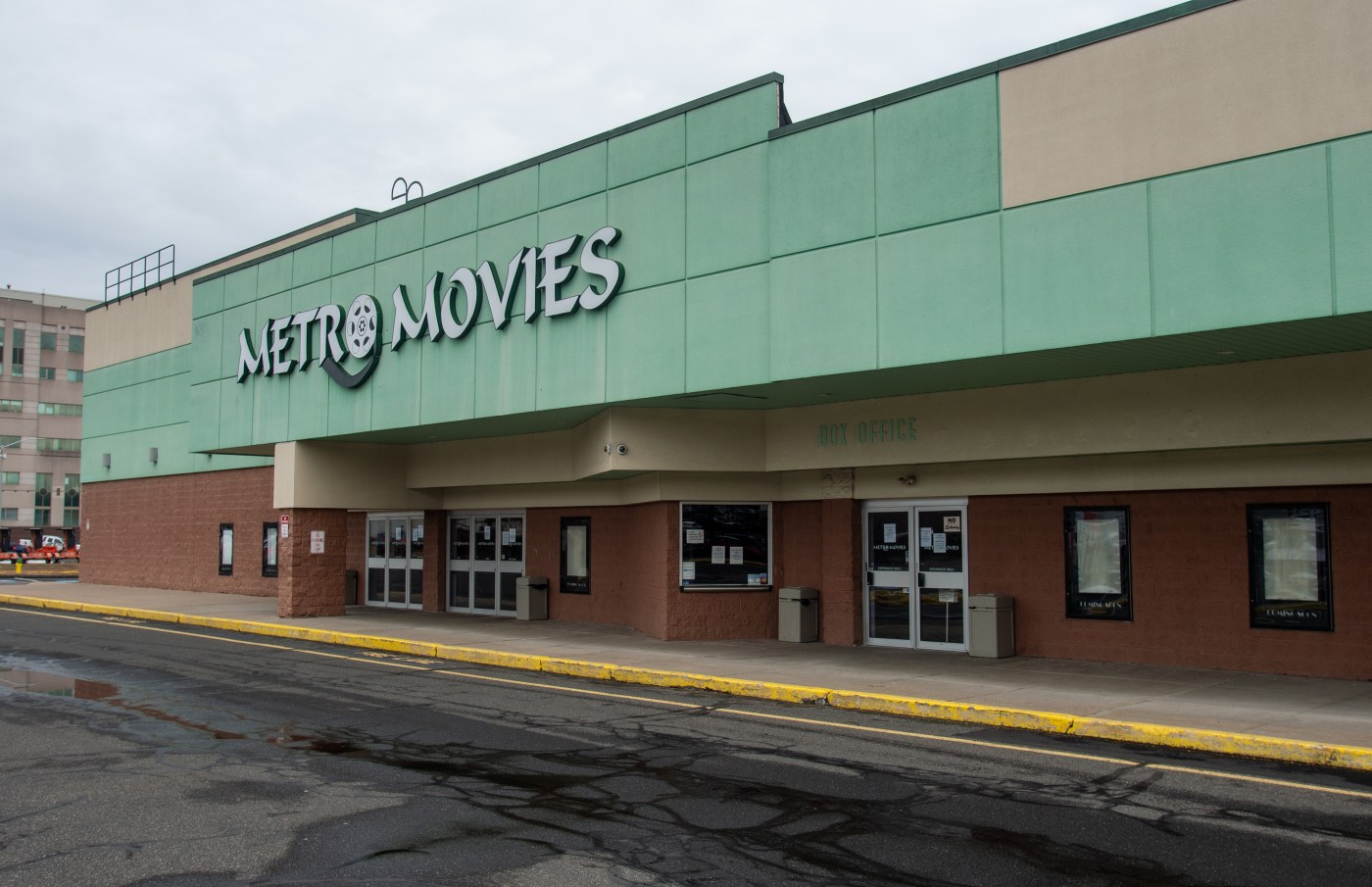
Following the COVID-19 pandemic, there was about a 10% drop in movie theater screens nationwide, according to Cinemark spokesperson Caitlin Piper. That impact has been felt here in Connecticut. Eleven multiplex movie theaters have closed in the state since 2022, including two this month in Hartford and Middletown.
Apple Cinemas Xtreme in Hartford closed its doors at 330 New Park Avenue on Jan. 19, leaving Hartford without a multiplex theater. Just two weeks earlier, Metro Movies 12 in Middletown shut down on Jan. 5 at 140 Main Street, a space the theater has occupied since 1999.
Other theaters that have recently closed throughout the state include Cinemark Enfield Square 12, Apple Cinemas in Barkhamsted and New Haven’s Bow Tie Criterion Cinemas in 2023. In 2022, Regal Cinemas in Waterbury, Branford and Stonington all closed, as well as Niantic Cinema 5, Cine4 in New Haven and Cineworld in Westbrook.
According to cinematreasures.org, there are currently 25 theaters with five or more screens in the state.
AMC is the biggest movie theater proprietor in the state with nine locations. There are two locations in Norwalk and Stamford and single locations in Danbury, Lisbon, Plainville, Southington and Trumbull. Cinemark has three Connecticut locations in Manchester, Milford and North Haven. Apple Cinemas has three remaining locations in Simsbury, Waterbury and Torrington.
According to Piper, the 2023 Hollywood strikes limited the number of movies released over the last few years, upgraded home entertainment systems enticing consumers to stay home more often and higher prices are among the reasons experts cite for the decline over the last five years.
She said the challenges after the pandemic had more to do with the lack of new content on screen and numbers are bouncing back with more content.
Dr. Brian Marks from the University of New Haven’s Pompea College of Business said this is a national trend in movie theater closings and Connecticut is a microcosm of that trend. He said there is still a “COVID hangover.”
“There’s about a 25 percent drop in movie theaters in Connecticut over the last six years,” Marks said. “We’re starting with a relatively small number in one sense, but we have a pretty large population,” Marks said.
Marks said looking at supply and demand, COVID was a demand-side shock and resulted in theaters closing. That shock was compounded by the “continued transformation of the demand side of the paradigm shift in consumer preferences.”
“There was a resistance to go back to the theater. People are now returning to the theater but not at the levels that we saw pre-COVID and that has to do with how streaming has made it more accessible for home viewing along with the exclusivity period declining at theaters,” Marks said. “People can be patient for those marginal movies. The blockbusters may still draw attention, but people are shifting their preferences with respect to their dollars.”

Apple Cinemas Xtreme in Hartford closed it doors on Jan. 19. (Brad Horrigan/Hartford Courant file)
Marks added that inflation has played a part in the minds of consumers in weighing going to a theater compared to streaming at home.
“Compounding that, of late, with economic pressures which existed with COVID and the competition with streaming and the issue of real estate, which also brings up another issue, the cost to rent the facility may not be matching the new environment given the length of leases. The cost of carry, or debt, is greater and outpacing, to some extent, the demand side,” Marks said.
Marks added that many movie theaters are connected to malls and both have suffered the same struggles in recent years.
“At malls, people may take in a movie because it’s a positive externality associated with shopping or it’s a destination. That’s also impacting demand. On the supply side, operating costs are increasing due to inflation, and you have a mismatch,” Marks said.
Kelly Herd, an associate professor of marketing at the UConn School of Business, said theaters are still adjusting to competing with the convenience of watching and streaming movies from home.
“I sense there is a shift and it depends on how theaters adapt to the shift,” Herd said. “We’ve seen this huge change in the industry. People now have all kinds of other options when it comes to having an immersive experience, building communities, seeing new and unique content. Most of us go online for this now.”
Herd said consumers are not getting the same benefits for going to the movies as they used to.
“It’s just not adding the same type of value to their lives,” Herd said. “If not as many people are going to the movies anymore, it could be that as a country or a community, we need less movie theaters.
“My guess is that this trend will continue,” Herd added. “I would be surprised if there was a time when movie theaters didn’t exist. It seems the big chains are holding up a bit better.”
Herd also made some similarities to the trouble many malls are having in recent years.
“The cost to consumers feels high, but the benefits just aren’t that much more than what we find online. And I think it’s kind of the same thing with movies right now. Some movies are being released directly to these online platforms. It feels like a movie ticket doesn’t have the same value as they used to for many,” Herd said.
“I think people are spending much of their entertainment budget each month on Disney or Netflix and maybe that eats into the money they would spend on in-person movies,” she added.
Tim Stevens, an adjunct professor at Connecticut College, member of the Critics’ Choice Awards and a critic for Rotten Tomatoes, said the state had been holding pretty steady in 2024 and 2025 after many of the closings occurred in 2022 and 2023 in the wake of COVID.
“Connecticut survived and was relatively intact the last couple years, but I guess the piper comes for everybody at a certain point. I’m not surprised that it was Metro 12 in particular, because it’s an independent movie theater with a lot less capital behind it,” Stevens said.
He said COVID was a “punch to the gut” but added that he saw signs of trouble for movie theaters before the pandemic.
“I live in Central Connecticut, I can go to AMC in Plainville, one of the two theaters in Manchester, or the one in West Hartford,” Stevens said. “We’re under 5,000 square miles and you don’t tend to see that kind of density and in some ways, we can afford to lose some more movie theaters but that’s me living in central Connecticut.”
Stevens said in the coming decades he suspects the movie experience will become more exciting and equated it to what minor league baseball teams are doing to keep fans interested.
He cited the popularity of last year’s “KPop Demon Hunters A Sing-Along Event” at many theaters. Stevens suggested that theaters go back to renting out theaters for parties like they did during COVID for extra revenue.
He also suggested more theaters provide dine-in eating or even bars on premises to create “an easy one-stop date night in the theater.”
“You are going to start to see a more packaged experience to lure people in to help compete with things like streaming, that has really cut into the movie industry. It’s kind of their worst enemy right now,” Stevens said.
“I think you’ll see theaters giving people all the reasons, besides what’s on your screen, to lure them in,” he added.
Stevens added that would like to see second-run theaters return to the state.
“Get back to the model that not everything is first run,” Stevens said. “You have Showcase Cinemas run movies the first weekend and then there would be second-run theaters and movies would still get movement, and the theaters would be in operation showing movies. A more tiered system keeps movies out there longer. If you go from a movie theater to streaming in two weeks, you lose a lot of revenue. It’s hard to put genie back in the bottle for streaming, but there is money to be made.”
Piper is optimistic for strong 2026 at the box office.
“There is a lot happening and this feels more reminiscent to pre-pandemic than we’ve seen since 2019,” Piper said. “Our studio partners continue to underscore the value of putting movies in theaters to help both financially and perception-wise. It is perceived that a movie that goes into a theater is higher quality than what goes straight to the consumer at home. We are really pleased in the direction this is going in, and time and time again consumers are showing they want to go to movie theaters.”
Piper cited Cinema United’s most recent report that there are several positive trends for movie theaters in the 2025 report.
- The number of habitual moviegoers (those who see at least six movies annually) grew by 8%.
- 77% of Americans aged 12-74 saw at least one movie, representing a total of more than 200 million Americans.
- Cinema loyalty programs in North America saw a 15% jump in new subscriptions from 2024 to 2025.
- Among all age groups, Gen Z went to the movies more frequently, averaging 6.1 visits, up from 4.9.
- 41% of Gen Z audiences went to the movies six times or more, up from 31% in 2022.
Piper said that movie theaters do not compete with streaming because “people who love content will watch content anywhere.”
“Studies show that the most avid streamers are the most active moviegoers,” Piper said. “We liken ourselves to a restaurant. Everyone has access to a grocery store, but you still want to go out to eat sometimes.”
Piper added that alternative content at theaters is a growing source of moviegoer interest for special occasion sporting events or concerts has been a growing source of revenue.
“There are a lot of opportunities to put different types of content on screen, and we’ve had success with that accounting for about 10 percent of our domestic box office compared to about two or three percent pre-pandemic. People love watching events on a big screen, not just movie content.”
Multiple interview requests to Apple Cinemas and AMC were not returned in time for this story.