
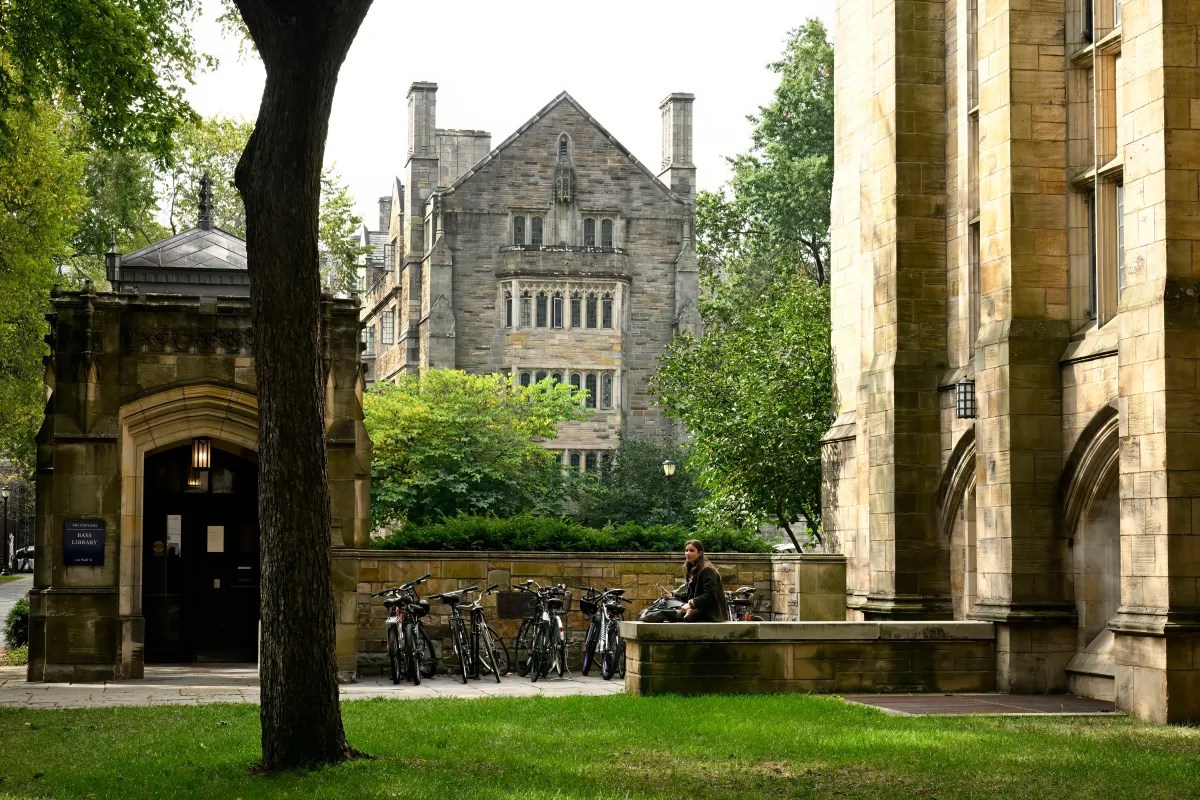
With a large increase in the federal tax on university endowments income beginning this year costing Yale University $300 million, the university is reducing the size of its Ph.D. programs by admitting fewer graduate students.
Lynn Cooley, dean of the Graduate School of Arts and Sciences, said in an email that the increase in the endowment tax comes at a time that the “historic partnership between universities and the federal government is shifting.
“Throughout the last year, the landscape of grant funding and proposed cuts to F&A rates, for example, have threatened critical university research and halted investigators’ progress,” she said. “The effects are detrimental to universities and to society at large, because it means fewer discoveries will emerge, and fewer curious, creative, motivated young people will have access to the education needed to carry out rigorous research that benefits lives across the region, country and globe.”
Enrollments in the humanities and social sciences will decrease by approximately 13% and enrollments in the sciences and engineering will also be reduced by an average of about 5%, Cooley said.
“This reflects the fact that a larger fraction of graduate student support for humanities and social sciences comes from endowment funds than in the sciences and engineering,” she said. “Students in the sciences and engineering receive the same level of financial support but are funded from a combination of university endowment funds and substantial external research grants (such as those from the NIH and NSF, for example), foundation fellowships, and training grants.”
The university is expected to pay $300 million per year due to the increase in the federal tax, the university administration said in a recent memo. The increase in the federal tax is the result of the Trump administration’s Big Beautiful Bill. Yale’s endowment is currently taxed at an annual rate of 1.4%. Beginning on July 1, that tax will increase to 8%, the university explained in its memo.
Changing the landscape of education
Daniel Martinez HoSang, the president of the Yale chapter of the American Association of University Professors and a professor of American studies, expressed concerns about potential layoffs to faculty, lecturers and said cuts have already affected admissions and graduate research programs.
He said the American studies department was authorized last year to make eight offers to graduate students and this year that number has been decreased to three.
“I think it signals to the field because Yale has more resources than 99% of institutions in higher education that the landscape of graduate education, which means higher education in general is changing significantly,” he said. “It is going to have longer term impacts about the role of academia and higher ed in this country.”
He said with fewer people going into graduate fields it could result in less research being conducted.
“It is part of a long-term process of reshaping the landscape of higher education,” he said.
He said non-tenure track faculty are waiting to see if their contracts are going to be renewed for next year.
The Ivy league university announced this past fall that its endowment’s value increased to $44.1 billion, with U.S. News & World Report reporting that it has the second highest endowment in the country.
HoSang has inquired why the university, like some other institutions, has not increased its endowment spending to mitigate further cuts.
University officials have stated in memos that about “one third of the annual budget comes from Yale’s endowment, a collection of thousands of funds, most of which have been designated to support specific aspects of the university’s core mission.
“Approximately 75% of the endowment is restricted,” Yale administration said in its memos. “The university is legally required to use these gifts only for their stated purposes.”
The administration said that each year the university aims to “spend 5.25% of the endowment’s value, the amount projected to be sustainable given reasonable long-term growth expectations in the endowment’s value, after adjusting for inflation.”
Yale University did not answer questions from the Courant concerning its endowment and whether it could adjust its endowment spending.
Graduate students’ impact
Cooley said graduate students are central to Yale’s mission.
“Our Ph.D. students work alongside faculty, pursuing long-term projects that can lead to practical breakthroughs with real-world applications based on years of hard work,” she said. “For example, Yale researchers are exploring life-saving treatments for cancer and Alzheimer’s disease, conducting cutting-edge research on quantum computing, and bringing new insights to historical archives.”
She said the research improves “health outcomes, supports a robust economy, contributes to national security and advances our understanding of the human condition.”
“The research we do at Yale—research that betters our nation and our world—simply would not be possible without Ph.D. students,” she said. “ Because of that, all Yale Ph.D. students receive full financial support—including tuition, healthcare, and a stipend—so they can focus on advancing knowledge.”