
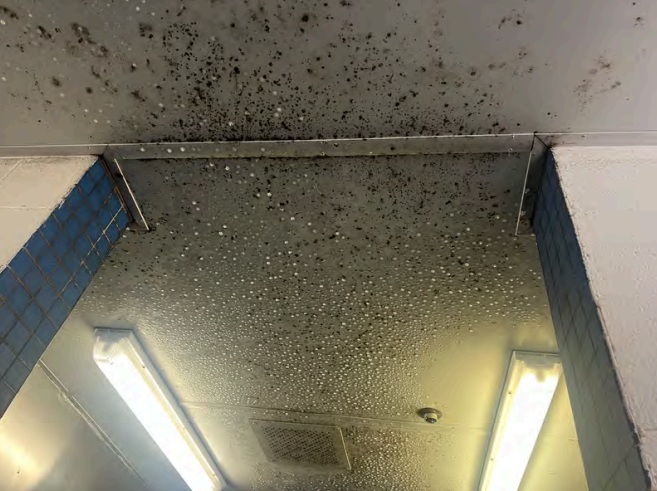
The Connecticut Office of Correction Ombudsman found “recurring failures” and “structural deficiencies” during an examination of the state’s correctional facilities that reportedly turned up unsanitary conditions, a lack of adequate medical care and staffing shortages that led to prolonged lockdowns, among other issues.
The findings were detailed in the first of what is expected to be an annual Conditions of Confinement Report, which was released Tuesday. The time period covered by the report spans from September 2024 when the OCO was established up until December 2025.
The report was authored by the ombudsman, DeVaughn L. Ward, a Hartford-based attorney who conducted site visits at the state’s correction facilities, reviewed records and interviewed staff and leadership. He noted that his findings were severely limited by being the only member of the office through most of the investigation, which he said lacked investigators, analysts, administrative staff and a health care consultant.

“This report reflects what the (OCO) consistently observed and documented across facilities over more than a year — recurring breakdowns in basic services that directly affect the health, safety and dignity of incarcerated individuals,” Ward said in a statement, adding that he recognizes the facility staff have to work under the same conditions.
“The purpose of this report is transparency and accountability,” Ward said. “It is not about blame, but about identifying systemic failures and what must change to ensure humane conditions of confinement for residents and more sustainable working conditions for staff.”
According to the report, Ward’s investigative efforts allegedly uncovered “recurring failures” across every area of the investigation, which looked at staffing and operations, hygiene and sanitation conditions, food services, legal access, communication and visitation and overall institutional safety.

“These are not isolated lapses or temporary disruptions,” Ward wrote. “They are structural deficiencies, embedded in daily operations. In many respects, DOC appears to be failing to fulfill its statutory mandates.”
A spokesperson for the state Department of Correction disputed many of the findings of the report and said the department “strongly objects” to the “grossly overstated and unsupported generalization” that the correctional system is operating in a state of “sustained institutional failure.” According to the DOC, the report failed to note that many of the documented issues were “proactively” brought to Ward’s attention.
“Additionally, the report cites several issues that are based solely on a singular occurrence, from which Attorney Ward has drawn unfounded and wide-ranging inferences,” a DOC spokesperson said.
“Any implication that the DOC has disregarded any of the concerns raised is simply not true,” the spokesperson said.
According to the report, inmates filing complaints with the OCO have complained about receiving food that was “old with fungus” or meals that had rodent feces in them. Complaints also alleged that rotten milk and moldy bread was served.

The family member of one inmate complained that the food was carbohydrate-heavy and incompatible with her father’s diabetes and documented food allergies, according to the report.
Other complaints included meals not meeting the necessary caloric intake requirements and inmates who alleged that the food led to them suffering from conditions like diabetes, hypertension and high cholesterol, the report said.
“During site visits conducted throughout the reporting period, OCO staff observed conditions related to food services that were consistent with issues raised in complaints,” Ward wrote. “These included visibly unclean kitchen equipment and food preparation areas and reports from incarcerated individuals regarding inconsistent meal quality and portion sizes.”

Ward also investigated multiple complaints from family members who said inmates reported being subjected to facility lockdowns due to inadequate staffing levels, which reportedly included a number of call-outs on days like Super Bowl Sunday, Mother’s Day and Easter weekend, according to the report. The lockdowns led to reduced or no recreation time and a disruption to visitations.
“Modified and full lockdowns were frequently used as a management response to insufficient staffing, resulting in the suspension of visitation, recreation, education, medical services, hygiene access and other core activities,” Ward said. “These conditions affected not only incarcerated individuals but also staff, who were required to work extended hours under increasingly strained conditions.”
Ward said his research found that Connecticut pays a “higher share of its payroll” in overtime costs for correction staff than neighboring states like New York, Massachusetts and New Jersey, the report said.
During inspections of a number of corrections facilities, Ward said he found gray or black mold present, particularly in shower areas, and ventilation ducts covered in dust and debris, according to the report.
During a site visit in August at Garner Correctional Institution, Ward reported a strong odor of urine in a unit for inmates with mental health and daily living support needs, according to the report. Staff members reported that inmates had not been released from their cells to shower for about three days, the report said.
In two separate tours of York Correctional Institution, women housed at the facility reported that only one or two working showers were available for about 25 inmates, according to the report. During a third site visit, inmates reported regular shortages of women’s hygiene and sanitation products, leading to some inmates resorting to using toilet tissue in their place, the report said.
Ward said he also received reports of rodent and mice problems across a number of DOC facilities, some of which were corroborated by staff. In one instance, the facility in Hartford reportedly had to close its kitchen for three to four weeks after rodents had chewed their way into the food supply, the report said.
According to the report, the 143 complaints Ward has received about health services in correctional facilities makes it the most common area where deficiencies are reported. The DOC reported 33 in-custody deaths in 2024, which included five deaths by suicide. That number was down to 22 in 2025, the report said.
“While lower than the prior year, the number of deaths reflect a need for continued oversight and evaluation of delivery of services,” Ward wrote.
According to the report, a family member filed a complaint with the OCO last April alleging that an inmate at Osborn Correctional Institution had been experiencing chest pain and had a palpable lump in their chest since December 2024. Despite “repeatedly” seeking medical attention, the inmate was allegedly prescribed ibuprofen and told they could just be experiencing heartburn.
A family member of an inmate at York Correctional Institution filed a complaint in October claiming the inmate needed two surgeries for a recurring ear condition, the report said. The complaint alleged that the inmate recognized the signs of the recurring issue and received “delayed treatment,” according to the report. A health specialist reportedly told the individual that earlier intervention could have prevented the need for surgery.
An inmate at MacDougall–Walker experiencing a gastrointestinal issue reported that an outside specialist recommended in November 2023 that he undergo a colonoscopy and that, a year later, he still had not been allowed to have the procedure done, according to the report. He also alleges he was denied a request for single-cell housing despite reporting chronic incontinence.
Ward’s investigation also looked at compliance issues under the Americans with Disabilities Act. In one instance, staff at Hartford Correctional Center relied on an “informal buddy system” with other inmates to communicate with a deaf inmate in a wheelchair who suffered from frequent urination and needed a colostomy bag, the report said. Attempts to use teletypewriter technology were “unsuccessful” and wi-fi limitations restricted the individual’s ability to use tablet-based interpreter services.
“The OCO has observed similar conditions at other facilities, including individuals who are blind or deaf not being adequately assessed at intake and left to rely on untrained incarcerated individuals for basic assistance,” Ward wrote.
Other inmates alleged that they were not given access to things as basic as prescription eyeglasses or contact lenses, the report said.
Ward said his office has also received numerous complaints about family members and friends being unable to communicate with inmates. Some complaints alleged that video visits were canceled without a valid reason, the report said.
Other complaints alleged that inmates often report “extended periods” of waiting to receive a tablet or that tablets are unavailable due to backorders, according to the report. Access to the devices reported to vary significantly by facility, housing unit and custody level, Ward wrote.

Osborn Correctional Institution. (Connecticut Office of Correction Ombudsman)
Ward also investigated allegations that some staff members have been known to show unprofessional behavior, including reports that they retaliate against inmates who voice concerns to his office or advocates, according to the report. During his investigation, Ward said he became aware that DOC staff had made several social media posts celebrating an in-custody death involving an inmate who died by suicide in November, the report said.
Ward documented multiple instances where correction staff displayed political flags or other symbols, including “Don’t Tread on Me” flags and “Blue Lives Matter” or thin blue line flags.
Other complaints involved inmates’ inability to access law libraries, legal forms and copying services.
“At present, four county correctional facilities and York Correctional Institution — the state’s only women’s correctional facility — do not have law libraries,” Ward wrote. “The absence of a law library at York raises particular concern regarding equitable access to legal resources and potential differential treatment.”

Correctional Institution. (Connecticut Office of Correction Ombudsman)
The findings of the report are expected to be discussed during a meeting on Jan. 29 before state legislators in Hartford. Ward said “impacted individuals,” family members, advocates and policymakers are expected to testify.
“We acknowledge that there is always room for improvement in any enterprise that houses, feeds, clothes, ministers to the physical, emotional, spiritual, medical and psychological needs, provides reentry and counseling and programming, addiction treatment services, educational services and vocational, and employment readiness training to approximately 11,000 incarcerated individuals on a 24-hour/365-days-a-year basis,” a DOC spokesperson said. “To that end, the DOC strives for continuous improvement.”
According to the DOC, the department’s administration “strongly believes” a collaborative approach with the correctional ombudsman is in the best interest of the incarcerated population.
The DOC is working on a “detailed response” to the report that is expected to be submitted to Ward by late February.