
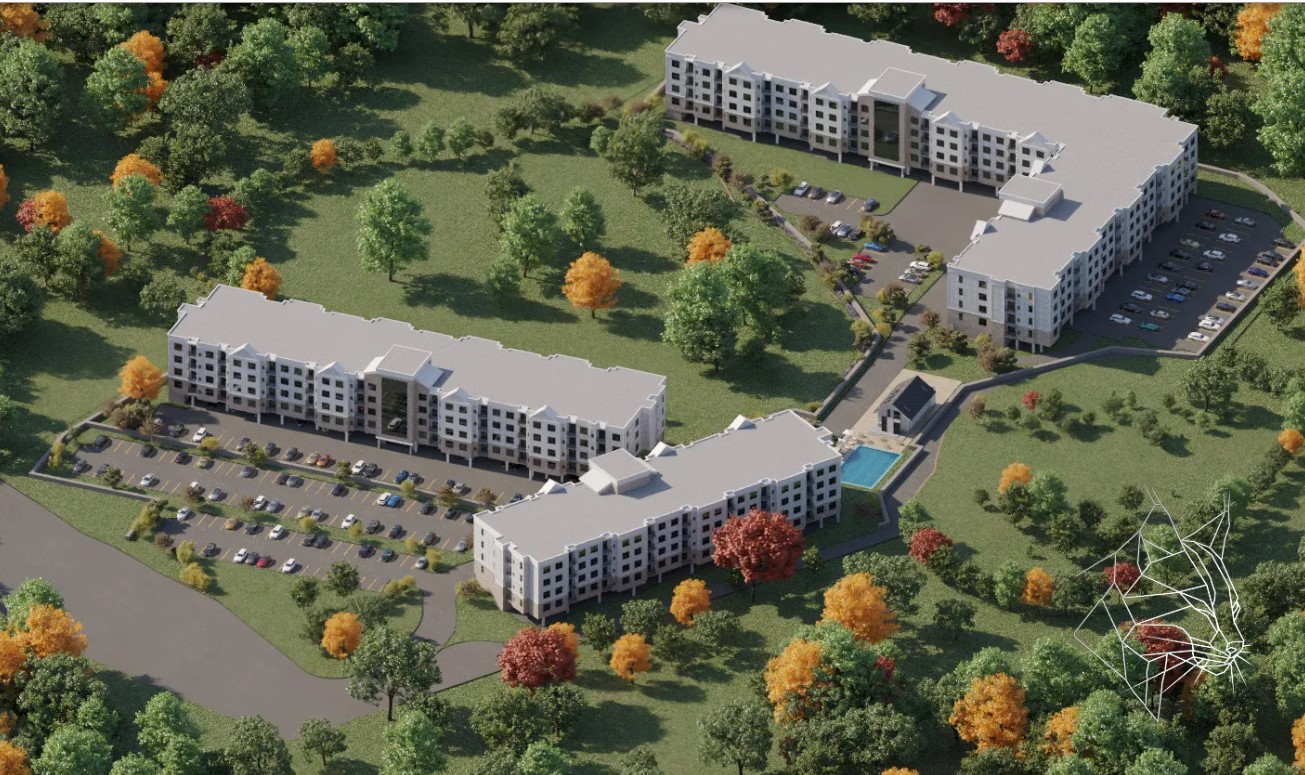
Apartment developers filed a flurry of lawsuits against Connecticut towns in the final months of 2025 and the first week of the new year, claiming the communities — largely in Fairfield County — violated the 8-30g law when they turned away affordable housing projects.
At issue are proposals totaling more than 550 apartments and townhouses that developers argue would ease housing shortages. If they ultimately get the go-ahead, the buildings would be constructed in Greenwich, Fairfield, Stonington, Shelton and Stratford.
In addition, Stephen Shapiro in December sued Bethel for turning down another 300 apartments along Route 6, a project he’d filed under the 8-30g law.
The towns’ zoning boards turned back the various proposals, and state courts will now have to determine if their reasons were solid enough to satisfy the 8-30g standards. The law was written to give additional power to developers who set aside at least 30% of their new apartments for affordable-level rents over the next 40 years.
Typically local zoning commissions have fairly wide latitude in deciding whether large residential projects go forward. But in communities with little affordable housing, the 8-30g law strips away most of that discretion and leaves essentially one way to enforce a “no” vote: The town must prove significant risks to public health or safety.
Increasingly in recent years, judges have been asked to settle disputes between builders that want to put up apartment complexes — typically high-density, multi-story buildings — and suburbs that claim they’d create hazards for the rest of the community.
But it’s not only rejected developers who are going to court. The tony suburb of Fairfield, for instance, was sued this winter by developers who plan two separate 8-30g projects with a total of 128 units.
But the same town also was sued in November by Stillson LLC, a company complaining because zoners approved an 8-30g project. Stillson, owner of a small office building next to a tract recently approved for 68 apartments, contends that town should have rebuffed it. Stillson’s lawsuit claims its property value will be threatened if construction goes through.
It’s unclear if the recently flurry of court actions signals a long-term trend that will continue through the new year. But it illustrates how the drive for affordable housing in Connecticut is intensifying — along with local pushback.
M-Slade Enterprises LLC is suing for permission to build 95 apartments on a roughly 2.2-acre Silver Lane property in Stratford. The company contends the town rejected the plan without citing any safety or health hazard.
As frequently happens, nearby homeowners waged a social media campaign against the project, with one posting a letter arguing that the neighborhood already has heavy traffic, insufficient parking and no sidewalks.
“Our town resources and schools are already operating near or above capacity. The addition of dozens of new families will further strain educational, emergency, and municipal services, all of which are vital to maintaining quality of life,” she wrote. “This large-scale, high-density development is incompatible with the surrounding single-family home neighborhood. It would alter the character and aesthetic of the area.
But M-Slade’s lawsuit notes the 8-30g statute has no provision for those concerns.

Shortly before Christmas, the same company sued Stratford for rejecting two proposals on Oronoque Lane. M-Slade first wanted to put up 145 apartments; when zoners rejected that, it went back in October with a proposal for 32 townhouses with a third of them set aside for moderate-income residents. When the downsized version failed, the company sued on the same grounds it cited in its Silver Lane case.
In Fairfield, two developers got approvals to build — but are suing over conditions they contend are illegal.
106 Biro LLC sued the town in early December for adding restrictions when it OK’ed the company’s bid to put up 83 apartments on a Biro Street property. Widening and expanding the parking area along with other requirements couldn’t be justified under 8-30g, the company claims.
Similarly, Piekarski Investments sued in late October, claiming Fairfield unfairly added a list of requirements when it approved plans for 45 apartments on Reef Road.
Fair Housing of Connecticut LLC filed suit against Stonington two days before New Year’s, saying the town wrongly rejected its bid to put up 83 townhouses under the 8-30g rules.
In mid-December, Eagleview Holdings sued Greenwich for adding what it calls onerous conditions to its approval for 170 apartments on a 16-acre King Street site near the New York border.
In Shelton, Mark Lauretti and B-Wizz LLC are suing the zoning board for turning down 56 apartments on about 5.2 acres on Shelton Avenue. Lauretti, the town’s mayor as well as the property owner, and B-Wizz, a developer, contend the board based its decision on arguments from neighbors that aren’t legally relevant under 8-30g.