
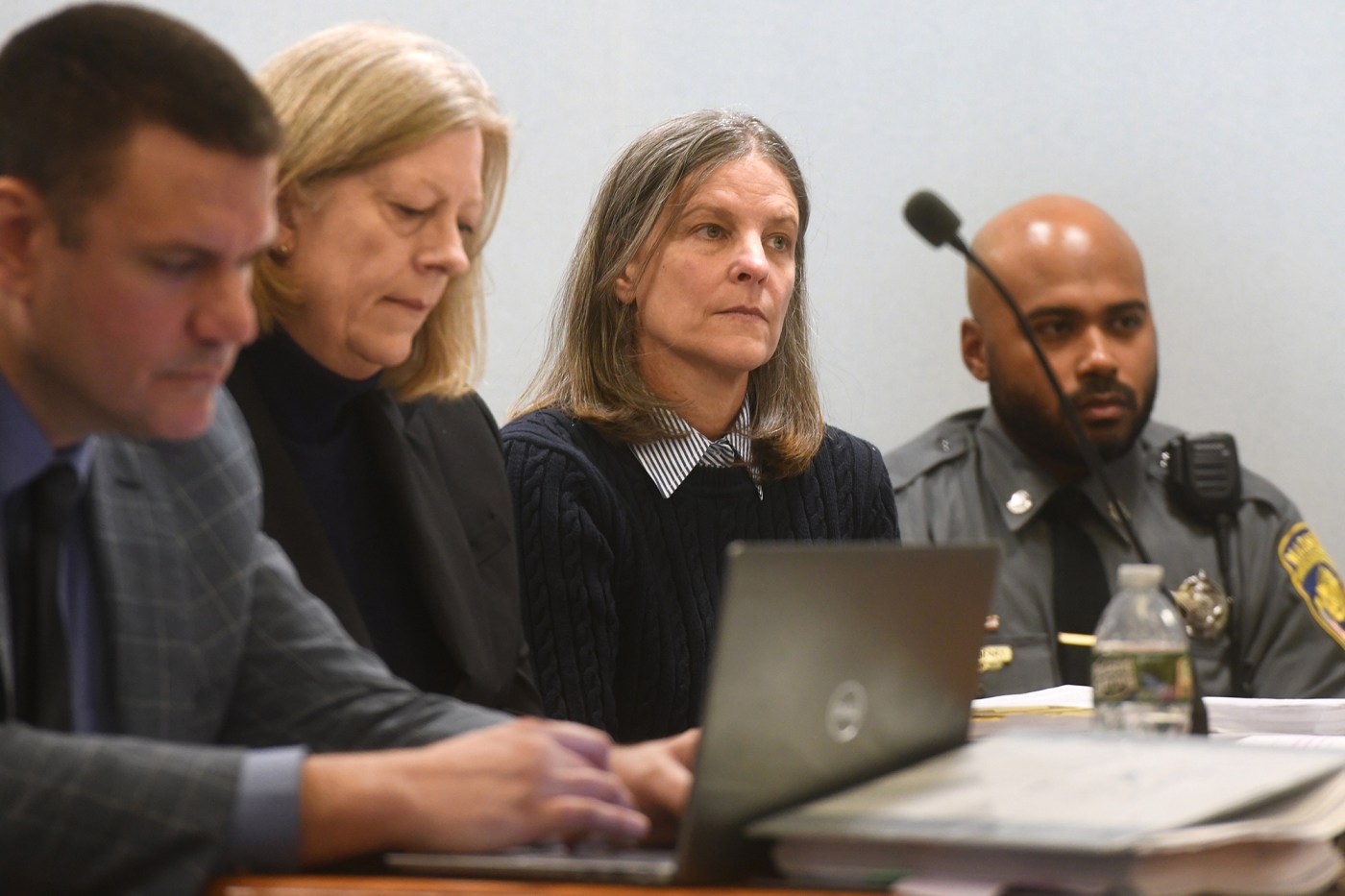
The second day of Michelle Troconis’ habeas petition trial to overturn her conviction in the death and disappearance of Jennifer Farber Dulos brought an expert witness to the stand who concluded that her attorney should not have allowed her to sit down and speak with police interrogators.
Michael Fitzpatrick took the stand Friday in Rockville Superior Court where he said he believed Andrew Bowman, the lawyer who represented Troconis for about eight months, provided her counsel that was “not reasonably competent” when he allowed her to speak to investigators on three separate occasions between June and August 2019 without any formal immunity agreement or protection.
Troconis’ petition to earn her release from prison argues that Bowman gave her “no meaningful advice” when she made the decision to talk to police without any protection from prosecution. Attorneys argued in the petition that she was deprived of her rights to effective counsel under the 6th and 14th Amendments.
Michelle Troconis’ bid to overturn her conviction begins with lawyer who OK’d police interrogations
Fitzpatrick — who successfully helped overturn the conviction in the high-profile case of Michael Skakel — focused part of his testimony on a phone call Bowman had with Richard Colangelo, then-State’s Attorney for the Stamford Judicial District, and the decision that went into her first interview with police. After Troconis was arrested on tampering with evidence and hindering prosecution charges, Bowman previously testified, Colangelo told him on the phone on June 2, 2019, that Troconis would be charged as an accessory to murder if investigators found the body of Farber Dulos.
Bowman testified that he took the phone call as a “threat” and that he felt an urgency to have Troconis speak with police to show her innocence before she could be arrested. He also said he did not ask Colangelo about an immunity deal because he knew investigators wanted to hear what she knew first and that it was premature to argue for such an agreement.
Fitzpatrick testified that he believes Bowman should have challenged Colangelo’s ability to charge Troconis as an accessory at that point, which was a little over a week after Farber Dulos dropped off her children for school on May 24, 2019, and was never seen again.
“The problem is he didn’t push back,” Fitzpatrick said. “He didn’t ask what’s that based on.”
Fitzpatrick testified that Bowman should have insisted that an accessory charge was “a stretch” and relayed what information Troconis had that police were after, which would have protected her from incriminating herself.
Fitzpatrick also said he believes Bowman should have pushed for an immunity agreement. Not fighting for one, he said, “falls below the standard” a lawyer should provide a client.
“It should have never taken place,” Fitzpatrick said of the first interview.

After examining the June 2, 2019, interview and the two subsequent interrogations, Fitzpatrick said Troconis did not appear to be a good candidate to speak with police based on a slew of factors, which included her exhaustion and lack of sleep at the time and her “emotionally distraught” state. He also said he saw issues with the interview being conducted in English, as Troconis’ first language is Spanish.
Fitzpatrick also testified that Bowman should have stopped the interview when it was clear that police believed she was not being truthful. He called it “silly” to believe that a client would go into an interview and prove their innocence and said that it was clear police were not after that.
Fitzpatrick said police made it clear they wanted to find out what happened to Farber Dulos and where her body was. They had no interest in helping establish Troconis was innocent, Fitzpatrick testified.
After each interview with police, investigators indicated they did not believe Troconis and thought she was lying, Bowman previously testified. During the first two interviews in June 2019, she told police her then-boyfriend Fotis Dulos was with her on the morning that Farber Dulos, his estranged wife, disappeared. Dulos and Farber Dulos were embroiled in a contentious divorce and a custody battle over their five children at the time.
Troconis told authorities Dulos showered with her in the morning hours despite police finding evidence suggesting he was actually lying in wait at Farber Dulos’ New Canaan home, where investigators believe she was attacked in the garage. Troconis also initially insisted to police that she saw Dulos at their home office later in the morning with Kent Mawhinney, an attorney who was a friend of Dulos. She later admitted that she had only seen Mawhinney and that she assumed Dulos was with him.
Fitzpatrick testified that he believes a “reasonably competent” attorney would not have agreed to another interview based on how the first one went. His testimony came after Colangelo briefly took the stand Friday and said he was not in a position to offer Troconis an immunity agreement until he knew what information she had.
“We wanted to try to get her to cooperate,” Colangelo said.

At the time of his initial phone call with Bowman, Colangelo said police had found bags of bloody clothes and other items that Dulos was seen throwing in trash bins on Albany Avenue in Hartford with Troconis. He said investigators also found that the two had gone to a Starbucks and that police had video where she appeared distraught and it looked as though Dulos was attempting to calm her down.
Colangelo testified that he and Bowman, during their initial call, did not discuss what evidence investigators had to charge her as an accessory. He said they also did not have any discussion about an immunity deal at that point.
“I would never do that without knowing what someone was going to say,” said Colangelo — who later became the Connecticut Chief State’s Attorney before retiring in early 2022 in the wake of an investigation into his decision to hire the daughter of a former state deputy budget director.
Colangelo testified that he told Bowman that Troconis should cooperate with police and that “now’s her time to get on the bus or get run over by the bus.”
Bowman previously testified that he wanted to establish that Troconis could serve as a cooperating witness while police zeroed in on Dulos as a suspect. He said he agreed to subsequent interviews to help rehabilitate her credibility and further establish her innocence.
During her third interview with police on Aug. 13, 2019, Troconis admitted to police Dulos was not actually with her the morning Farber Dulos disappeared.
“She destroyed his alibi,” Bowman said as he returned to the stand for a little over an hour on Friday.

During Bowman’s testimony, Senior State’s Attorney Russell Zentner asked him if Troconis’ “untruthful” answers would have presented any issues under an immunity agreement. Some of the issues that arose, Bowman testified, were the answers she gave when asked about “material matters.”
“She unequivocally said she showered with Fotis that morning and that she saw him in the office,” Bowman said.
Zentner also had Bowman read the standard paperwork that goes along with a cooperating witness agreement for the state, which states that a cooperator must give “complete truthful and accurate information.”
When asked hypothetically what would have happened even if he had been able to arrange for an immunity agreement for Troconis, Bowman testified that the information she gave to police could have led to it becoming “null and void” and that she could have faced obstruction of justice or related charges.
After her last interview with police, Bowman said he sent a letter to Colangelo detailing why Troconis could still be a valuable cooperator. He said he believed Dulos was manipulating her and had told her a “myriad of lies” leading up to the disappearance of Farber Dulos. He testified that he had multiple discussions with Colangelo prior to Troconis’ arrest in January 2020 on a conspiracy to commit murder charge and tried to convince him that she did not know what was in the bags Dulos was seen dumping in Hartford.
“It was always my position that she was innocent,” Bowman testified.
Troconis’ case for being a cooperating witness was shattered when Dulos died after attempting to commit suicide in January 2020, Bowman testified.
“Quite simply, she had no one left to cooperate against,” he said.
Troconis is serving a 14½ year prison sentence following a trial that ended with her conviction on charges of conspiracy to commit murder, tampering with evidence, hindering prosecution and additional conspiracy charges.
According to her habeas petition, the claims her attorneys have raised were not allowed to be heard during her trial. The petition is separate from an appeal Troconis has filed alleging there was insufficient evidence to convict her and that several errors were made during the trial.
The petition trial is expected to wrap up next week. Judge Carl Schuman, who is overseeing the petition, said the next hearing would take place next Tuesday or Friday depending on the availability of the involved parties.
Once the trial is over, Schuman will have 120 days to rule whether Troconis’ counsel was ineffective. Prosecutors could try her again if the conviction is overturned.