
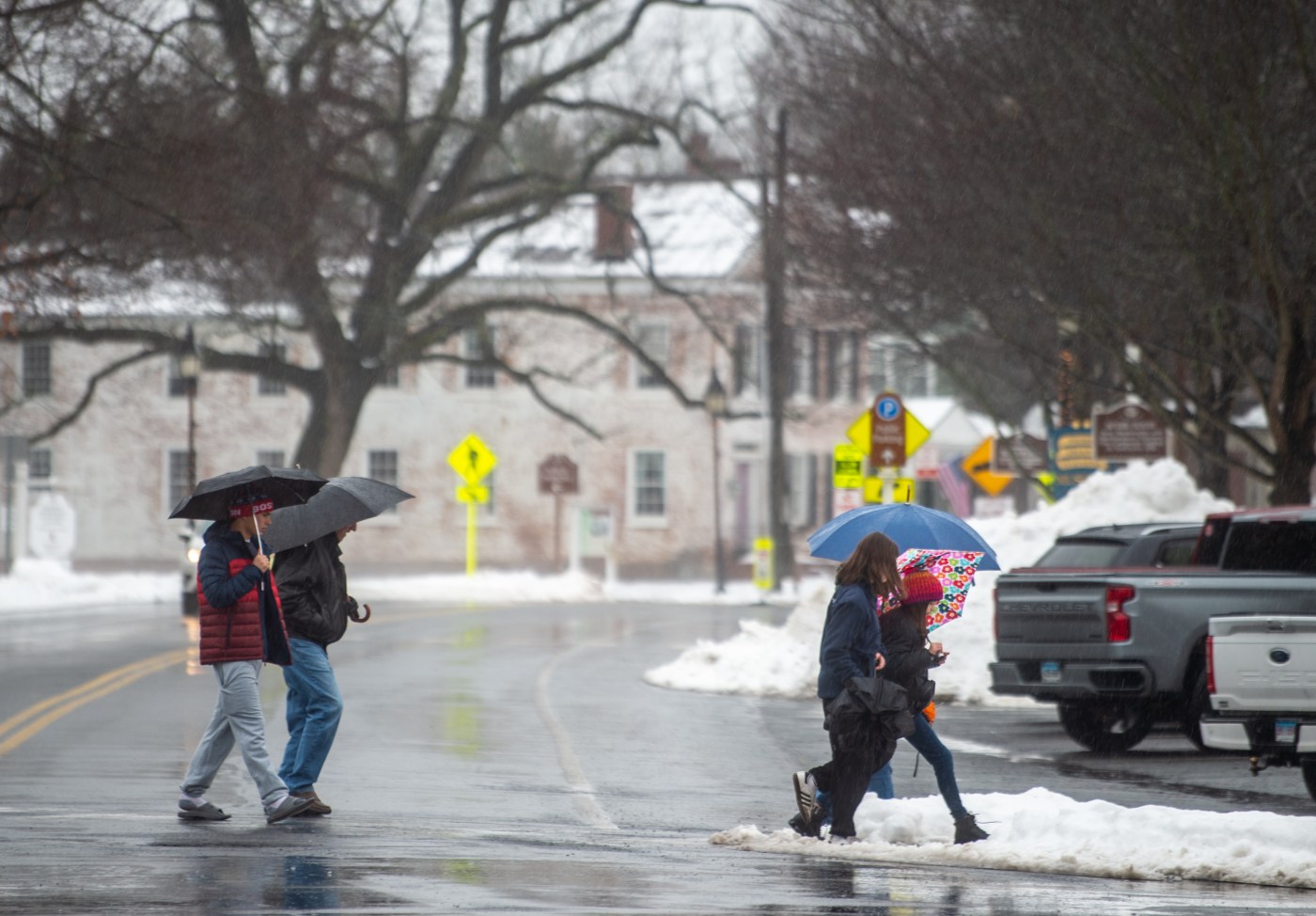
Winter is upon us in New England, and for those my age, winter is also within us. The sometimes cold, grey landscape outside my windows seems like a mirror of my soul.
Meanwhile, my body’s not doing so great either. I’m losing my vision, hearing, memory, and even my height thanks to my crumbling bones. Mercifully, the marvels of modern medicine and technology have greatly compensated for these losses. Yet, Time plows on.
Though winter is the season of loss and death, it also teaches the lesson of economy. The skeletal trees, stripped of their summer green and fiery autumn leaves, stand in a white shroud of snow like stoic models of resilience and grace. They have wisely turned their energy inwards to endure the cold before budding into spring.
Likewise, we elderly, too, retreat within the warm cocoon of our homes, hoping to emerge with spring flowers. Yet now, we know our springs are numbered. So, I guess I’m faced with the poet Robert Frost’s question: “What to make of a diminished thing.”
To this end, I’d gathered a winter store of indoor diversions to nourish my hibernating soul. But surveying the remains of these pursuits, I’m left with a book I don’t want to end; a jigsaw puzzle I don’t want to begin; a friend’s voicemail I’m not ready to return; another bread recipe I’m unwilling to start; and an unfinished canvas with no idea how to complete. In other words, like a closed system has its inertia, my winter’s comfort zone has its diminishing returns,
When I turn my attention outside, the cold, the snow, and the howling wind seem thrown out like a challenge. Searching for signs of life, I see swirls of paw prints around the bases of the trees. Were the creatures hunting for buried acorns, their winter store already low? Or maybe they’re feeling squirrelly, like me, and left their winter’s nest on a lark.
I guess I was of both minds because I decided to follow their lead in search of my own figurative acorns to satisfy my restless soul. But as far as having a “lark,” at my age it amounts to a walk around the block. Even “walk” may be hyperbolic as a quick glance at the snow-slicked sidewalks at the bottom of my front porch steps reminds me that I don’t move on squirrel feet. Even with my winter boots and sturdy soles, caution dictates a short stride, a shuffling gait end eyes riveted to the slippery ground.
Instantly, buffeting winds chill my cheeks and nose, bringing tears to my eyes as they did during my childhood days of sledding, snowball fights, and building carrot-nosed snowmen with neighborhood friends. But images of those youthful frolics amid chirping children quickly slips behind me, muted by my puffing, labored breaths and the blanket of snow.
As I shuffle forward, I notice few footprints reminding me that not only does winter discourage casual walkers, but Life’s winter has already buried acquaintances, friends, and relatives by the wayside. So, walking alone through the dusty snow feels a bit like a disappearing act. Indeed, should I slip and fall in a drift, nobody would notice.
I feel this same sense of increasing invisibility even in crowded places as the elderly seems to fade from our society’s consciousness. In a sense, we retire into obsolescence. So, despite our increasing physical fragility and dependence, we have only our inner resources and resilience to make more of our winter.
Midway through my walk, the wind seems to have run out of breath, and I stop on a rise, stock-still to catch my own. Though I’d not gone very far, I feel acclimated to the cold and even a runner’s high. I listen to the silence and watch the snowfall taper to an end. Sunlight suddenly breaks through the clouds like a bright lamp in Winter’s dark window. I turn my face like a flower to the sun and feel my soul kindled.
And just as quickly as they parted, the clouds close again, and the wind exhales a low whistle. Jeering bluejays and cawing crows break the silence, seemingly heckling my unwelcome presence. I take their hint and move forward.
Turning the final corner of the block, I glad to see I’d forgotten to turn off the lights glowing in the windows of my home, and I quicken my stride a bit until I stiffly climb the porch steps.
Stepping inside the front door, I feel winter’s cold breath at my back and the inner warmth rushing to greet me, mixing within me both relief and renewal. I suppose this same intimate proximity between death and life blends our greatest fear with our greatest desire. If death is life’s frame, then I hope old age, like the final strokes of a painting, may bring our lives greater perspective, purpose, and meaning.
In my case, it isn’t too long before I’m standing before my easel, paint brush in hand, ready to finish the painting with my answer to Frost’s query: “what to make of a diminished thing”? Make it…incandescent.
Thomas Cangelosi lives in Avon.