
I remember as a small child running my finger along a quarter-size disc on my mother’s arm. My father too had such a mark, but hers was more distinct and pronounced. High up, near her shoulder, was a flat circle that was oddly smooth and very different from the rest of her skin. It was her smallpox vaccination scar.
Smallpox was indeed going around her home in Eastern Penn., in the 1920s. But the most common strain in the U.S at the time was a less virulent form, Variola Minor. Variola Minor had a mortality rate of less than 1%. So it is unlikely that her vaccination saved her life or, consequently, a later form of her expression, me.
But 100 miles away and a century and a half earlier, it was a very different story. George Washington’s disease-ridden army at Valley Forge was suffering vast losses with something like 20% of his forces dying from disease, half being diseases for which vaccines would later be developed. But the primary potential killer the Continental Army faced was smallpox, and the Variola Major strain, with a 30% mortality rate, was the most prevalent form in the 18th century. It had crippled Continental forces at the Siege of Quebec two years earlier. As John Adams noted, “smallpox is ten times more terrible than the British, Canadians, and Indians together.” And it was the effect Variola Major had had on the Americans in Canada that led Washington to begin inoculating his troops against smallpox in 1777 using a primitive form of vaccination called variolation.
Soldiers at Valley Forge continued to die from various diseases, but Washington’s smallpox inoculation program had, as one historian noted, “turned smallpox from the greatest threat to the Continental Army into the least.” Other historians have determined that, without variolation, Washington’s army would have collapsed – ending the revolution there and then.
So while my mother’s vaccination may have done little to alter my personal status, Washington’s variolation likely did much to define my citizenry status. And it altered how global history would later unfold with that American victory – just as the absence of vaccinations had altered previous history through an uncountable number of wars won and lost because of now-vaccinable infectious diseases. Before the modern age, historians estimate that approximately 3/4 of all military deaths were disease related, with roughly 2/3 being from diseases now routinely vaccinated against.
But back to my mother’s arm and history’s most devastating disease, smallpox – which was both extremely lethal and extremely contagious. Smallpox is estimated to have killed 300 to 500 million people in the 20th century alone, more than died in all the wars then. And it is a disease now fully eradicated solely by vaccines.
Vaccines are not an individual thing and history itself has pivoted on their existence. And the world as we know it today is the direct result of their development. The total number of lives saved since the first vaccines is mindboggling, well over a billion globally and perhaps two billion or more. So to question how safe and how necessary vaccines are is to ignore both history and reality.
Yet today, sandwiched between Robert F. Kennedy Jr.’s unfathomable distaste for proven vaccines and the unending spewing of internet baloney, new and unjustifiable fears about them have arisen. Some fears are fueled by internet “bad actors” who are in the disinformation and public chaos business, but most are the result of a confused and ill-informed public looking for the truth in the post-truth age.
In a tumultuous year, US health policy has been dramatically reshaped under RFK Jr.
Often, these unjustifiable fears arise simply because people draw irrational conclusions from rational concerns. More often, people deem them unnecessary because they simply have no memory of a world before vaccinations – which is, ironically, a testament to their success.
So let us here address some of the most common claims, fears and worries the public holds about vaccines today.
“Our natural immunity is stronger if left alone.” Prior to measles vaccination programs in the 1960s, measles annually killed 2 to 2.5 million people globally. Today, it is closer to 100,000, with most of those deaths among the unvaccinated. To suggest this vaccine doesn’t work better than natural immunity is flat-earther stuff.
“Children today are over-vaccinated.” The immune system deals with millions of antigens each day in the air and in food – bacteria, viruses and the rest. The total childhood vaccine routine adds less than 200 more to those millions.
“Vaccines cause autism.” The Wakefield Study of 1998, which claimed this was later found fraudulent and was retracted. No legitimate study has found a connection.
“Vaccines cause autoimmune disorders.” Studies found equal or lower rates of autoimmune disorders among vaccinated children. And Sudden Infant Death Syndrome rates decreased among vaccinated infants in monitored programs.
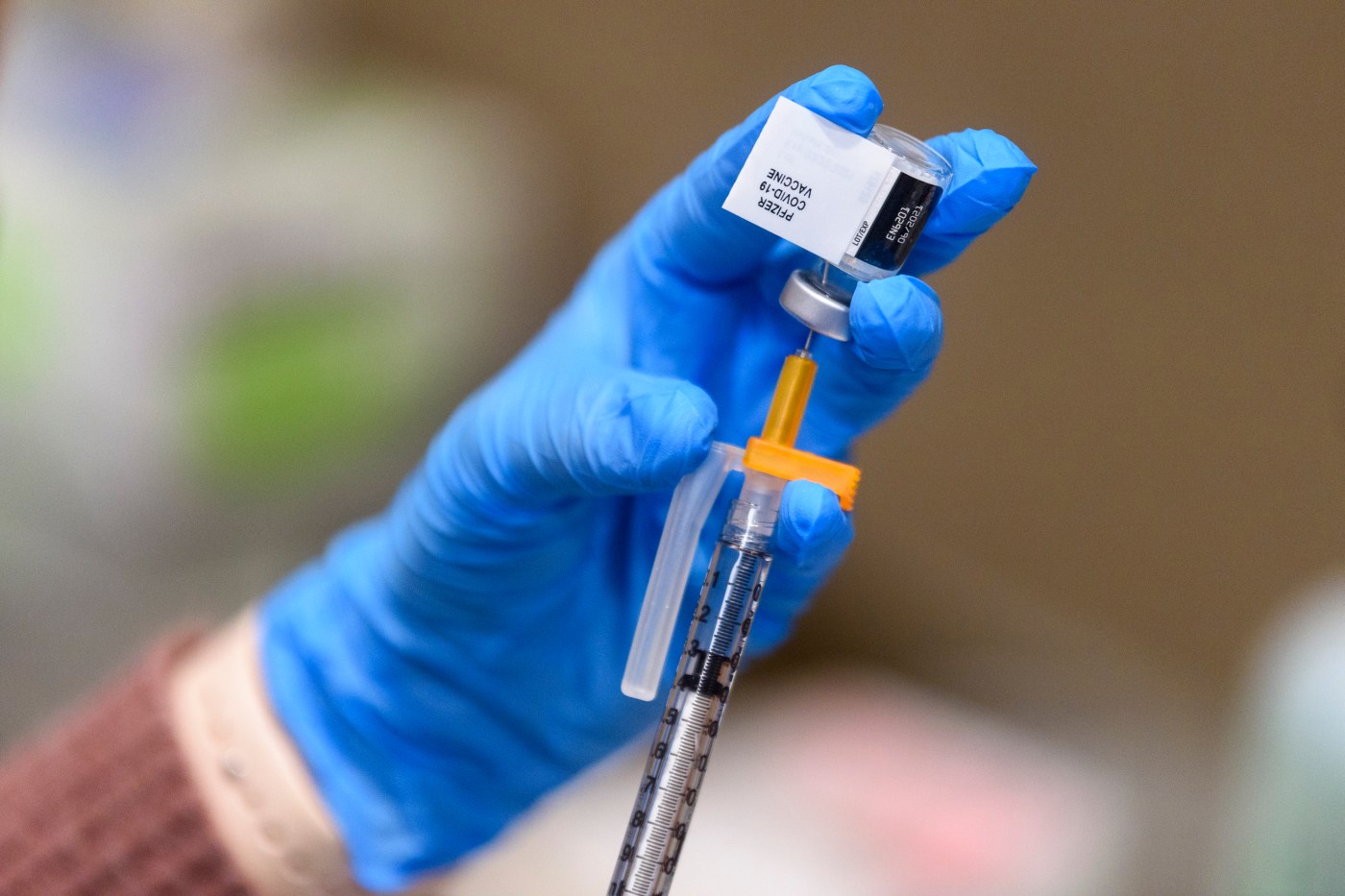
“mRNA vaccines are experimental.” Is one is allowed to call billions of doses given over several years “experimental?”
“I don’t know what I’m putting in my body.” Read the ingredients of many products before adopting this stance.
“I don’t trust big government or Big Pharma.” Without suggesting that either can be expected to always act honorably, we should note that while the EU bans many common U.S. food additives, it has repeatedly approved and administered U.S.-developed vaccines, such as those from Moderna and Pfizer. Over 800 million doses of their COVID vaccines were given in Europe, showing that the EU trusts U.S. vaccines far more than U.S. food additives.
“What about our individual rights.” There are no individual rights with infectious diseases. As with most rights, individual rights stop when they stop being individual. That is why other than a sometimes required shot for the often fatal and incurable tetanus toxin, vaccines are rarely required for non-communicable diseases, even if they are available.
“They contain Implanted microchips, tracking devices and DNA funny business.” Consider fashioning a tin foil hat for your mobile phone.
“I put my faith in the Lord.” At the time of Jesus, it is estimated that about 50% of children either died at birth or before age five. Eighteen centuries later in the US, it had only come down about five percent to 45% mortality before age five. That number was down to less than 20% by 1900 and today, it is under 1%. It is unclear how involved the Lord is in all this business but vaccinations are perhaps responsible for only 25% of childhood mortality reduction, antibiotics and other modern medicines, sanitation, clean water, and improved nutrition all played their role.
Vaccines have quite literally created the world we live in, and history has made dramatic shifts because they either were or were not yet available. The number of lives they have saved is vast and to suggest otherwise is foolishness. One estimate suggests that nearly 20% of all deaths in the U.S. in 1900 were from diseases for which vaccines would later be developed. Today in the U.S., that percentage is between 1% and 2%. Yet in some of the world’s poorest nations where much of the population remains unvaccinated, that 20% figure has not moved much. And for such impoverished nations, it would not be an unreasonable estimate to double that figure to 40% when considering mortality for children under the age of five.
Jody Mamone is a writer who grew up in Connecticut. He is at [email protected].