
As energy bills continue to provide sticker shock for many Connecticut residents, some are seeing solar credits being applied to their billing statements without even having any solar panels attached to their homes.
Connecticut’s Shared Clean Energy Facilities Program allows residents to reap the benefits of solar who are not eligible to install solar panels themselves, according to the state’s Department of Energy and Environmental Protection. The idea is to add 260 megawatts of locally generated, renewable and low carbon energy to the electric grid over the next eight years through large scale solar projects. Both of the state’s largest energy suppliers, Eversource and United Illuminating, participate in the program.
The SCEF program, which was created in 2018, is now starting to expand across the state. The program is administered by DEEP and overseen by the Public Utilities Regulatory Authority. The program utilizes a community solar model with subscribers receiving monthly bill credits for up to 20 years, reducing energy costs at no expense to participants. The program was started to help low-to-moderate income residents and businesses receive solar who may not be able to install panels for various reasons.
“Most eligible customers will automatically qualify for a subscription without needing to apply. We’ll let you know if you’re one of these customers and are selected to receive a SCEF subscription. A small number of subscriptions will be available for voluntary enrollment. Only customers that meet income requirements or who otherwise may not be able to install a clean energy generation at their home or business are eligible to apply,” an Eversource spokesperson said in a statement.
Eversource said that eligible customers under the program include one-person households with yearly income under $75,643, two-person households with yearly income under $99,180, and three-person households with yearly income under $122,516. The last income category is for eight-person households making under $201,277 per year.
“Customers who don’t meet income guidelines may still be eligible to apply as a residential customer who cannot install solar if you’re a renter or other customer that does not have control of their roof or a customer whose home is not suitable for solar (e.g. your roof is too shaded or structurally unsuitable),” Eversource said in a statement.
United Illuminating, which has a smaller share of customers in the state, said they plan on adding 65 megawatts of community solar to their grid under the SCEF program. Customers eligible to subscribe to the program must meet the same income requirements as Eversource, according to UI’s website. In addition, customers that do not meet income eligibility may still apply to the program if ineligible to install solar panels.
There is a cap and a waitlist for the program, according to PURA. The program has a cap that is legislatively mandated on the number of projects that can participate. In addition, PURA regulates that 90% of customers in the program are subscribed through an opt-out basis or automatically enrolled. Only around 10% can be subscribed based on voluntary sign up, according to PURA regulations.
“The 10% is filled for the project, and we already have a substantial wait list,” a spokesperson with Eversource said. “So that means that if folks sign up today thinking they can enroll immediately, they will most likely be disappointed because that will just put them on a waitlist. But as new projects come online, there is a lottery for folks on the waitlist to be able to enroll into the program. But it’s not as simple as signing up and immediately becoming a subscriber.”
Despite the program’s limitations, it has seen considerable growth since 2018, according to the state’s Department of Energy and Environmental Protection. Over the course of the first three years, the program contracted 71.848 megawatts of solar and fuel cell projects, enough to power nearly 16,000 homes. Beginning in 2023, the program capacity doubled from 25 megawatts to 50 megawatts annually. This year, the program has surpassed 50 megawatts, continuing to see growth toward its 260 megawatts goal.
According to the most recent program summary filed with the Public Utilities Regulatory Authority on Nov. 20, there are currently seven in-service SCEF projects in Eversource territory, all of which are solar. Two are in Enfield, two in East Windsor, one in Norfolk, one in Colchester and one in Glastonbury. Two projects have been completed in United Illuminating territory, one fuel cell in Derby and a solar project in Milford.
The seven in-service projects in Eversource territory total 22.984 megawatts and the two in United Illuminating territory total 4.3 megawatts, according to spokesperson with DEEP.
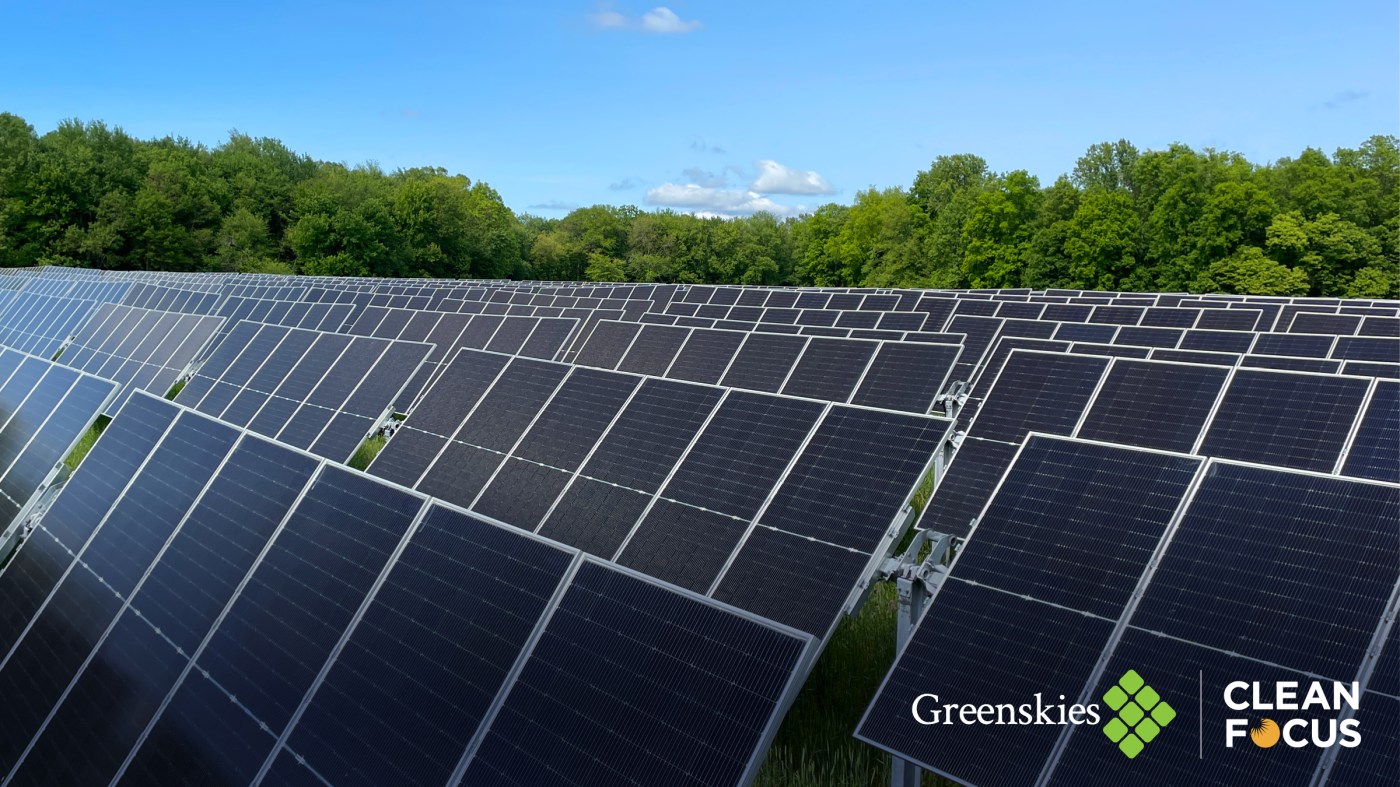
The most recent addition to the shared solar program includes a 10-acre solar project on Middlefield Road in Durham. Greenskies Clean Focus completed the 3.13 megawatt solar project with more than 5,800 tracker-mounted panels this month. The project will deliver solar energy to Eversource subscribers including low-to moderate-income residents, small businesses, and municipalities, according to the solar company.
The Durham solar array is expected to generate more than four million kilowatt-hours of electricity annually, offsetting over 3,000 metric tons of carbon dioxide, according to Greenskies. The solar company said they also installed agricultural fencing and planted 40 new trees at the project site.
“That’s equivalent to 350,000 gallons of gasoline burned, 1,000 tons of waste diverted from landfills or 52,000 trees planted,” the company said in a statement. Greenskies developed, financed and constructed the Durham project and will own, operate and maintain the system under a long-term lease with the property owner, according to DEEP.
“This project represents the best of what community solar can achieve,” said Ryan Linares, vice president of real estate at Greenskies Clean Focus. “By collaborating closely with our landowner partner, we’ve created a site that delivers clean energy to Connecticut residents, supports local agriculture and blends naturally into the surrounding community. It’s a great example of how responsible solar development can benefit everyone involved.”
Project sites are often on former brownfields or farmland, with both Greenskies and Very being the two large solar companies that own the sites.
Verogy, a West Hartford solar developer, has completed five solar projects generating 30 megawatts of power under the shared solar program, according to the company. The developer’s sixth shared solar project is currently underway, according to Verogy. Last year, the solar developer completed its largest solar project, Enfield Solar One, located at 110 North St. The project generates 5.96 megawatts and is the largest project to be completed in the shared solar program. Verogy said that the combined projects generate enough clean energy to power more than 3,600 average homes every year.
“Verogy is committed to ensuring the benefits of renewable energy are felt across all communities — not just those with access to on-site solar,” said William Herchel, CEO of Verogy. “The SCEF program makes it possible for more Connecticut consumers than ever to participate in and benefit from the solar economy.”
Stephen Underwood can be reached at [email protected].