
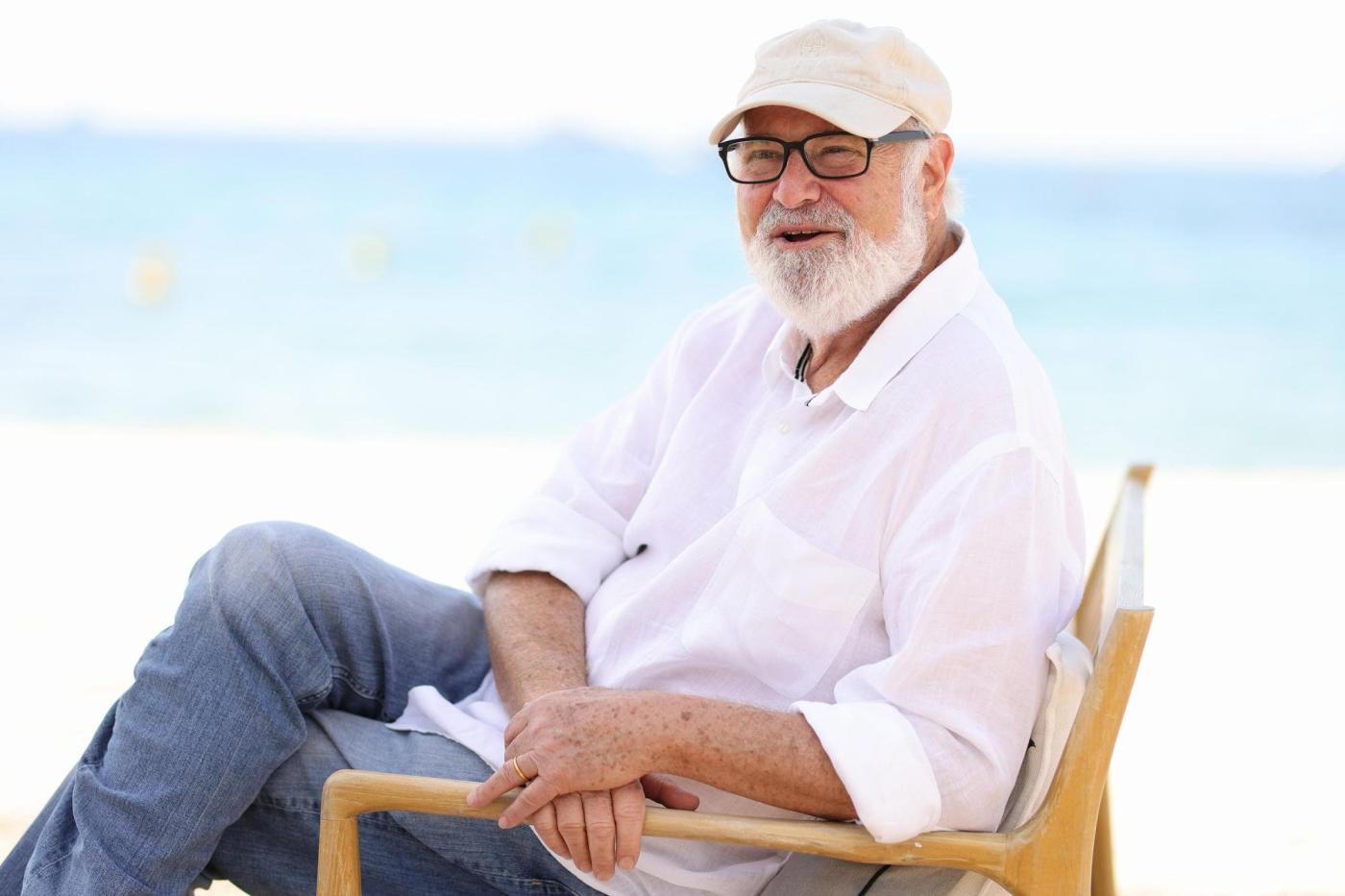
By Hailey Branson-Potts, Seema Mehta and Mark Olsen, Los Angeles Times
LOS ANGELES — In January 2018, conservative Fox News host Laura Ingraham was having dinner at Toscana, an Italian restaurant in Brentwood, when she spotted the renowned Hollywood director — and unabashed liberal — Rob Reiner.
She asked him to come on her show, “The Ingraham Angle.” He was on set the next day.
After introducing him as “a brilliant director,” who made her favorite movie, “This is Spinal Tap,” Ingraham said: “Last night, the first thing Reiner says is: ‘Are they gonna shut the government down?’’ I’m like, wow, I’m here in L.A.; I wanna talk about Hollywood stuff. But he wants to talk about politics.”
Ingraham and Reiner vehemently disagreed — about alleged Russian influence on the 2016 presidential election, about whether President Donald Trump is racist, about the treatment of conservatives in Hollywood.
But Reiner also called Ingraham “smart as hell.” And Ingraham said Reiner “should be lauded” for being willing to spar with her, unlike many politicians on both sides of the aisle.
It was the kind of blunt but ultimately respectful exchange that added to Reiner’s widespread appeal off-screen, both because of — and in spite of — his views.
Reiner and his wife, Michele, were killed at their Brentwood home last weekend, allegedly by their son, Nick, who has been charged with murder. The couple’s deaths have sent a thunderclap through Hollywood and beyond, partly because the Reiners had so many friends and connections in creative and political circles.
Rob Reiner — who, in the role of Michael “Meathead” Stivic in the groundbreaking sitcom “All in the Family,” played the liberal foil to his bigoted, conservative father-in-law, Archie Bunker — seemed to relish his real-life role as a progressive celebrity activist. That made him a hero to many in blue California but a villain to others, especially the reality-TV-show-star-turned-president, Donald Trump.
In a highly criticized social media post, Trump attributed the deaths to “the anger he caused others through his massive, unyielding, and incurable affliction with a mind crippling disease known as TRUMP DERANGEMENT SYNDROME.”
But while Reiner, a blistering critic of the president, disagreed with many conservatives on policy, he also worked to build relationships with them — in media and entertainment circles, the California State Capitol, and beyond.
Ingraham this week called him “a legend.”
Actor James Woods, a longtime Trump supporter, said in a Fox News interview this week that Reiner saved his career by casting him in the 1996 film “Ghosts of Mississippi” over studio objections. He called Reiner “a great patriot” with whom he shared a mutual respect despite myriad political disagreements.
Andrew Kolvet, a spokesman for conservative powerhouse Turning Point USA, wrote on X that he “shared approximately zero in common with Rob Reiner politically, but I am so saddened by this news” and praying that “justice would be swift and without conspiracies [sic] theories.”
Kolvet said Reiner “responded with grace and compassion” to the September killing of TPUSA founder Charlie Kirk — a violent end that Reiner said nobody deserved, regardless of their views.
Hard-right Republican Rep. Marjorie Taylor Greene, of Georgia, called the deaths “a family tragedy, not about politics or political enemies.” And GOP Sen. Ted Cruz, of Texas, wrote on X that “The Princess Bride” was his favorite film and called Reiner “a comedic and story-telling master.”
Off screen, Reiner had a unique ability to connect with people of all persuasions, in various mediums, at the top of their careers or just starting. He was very much influenced by Norman Lear, the creator of “All in the Family,” who blended his Hollywood career with progressive activism.
Similar to Lear, Reiner didn’t just dabble in social causes and campaigns. He launched them, led them and brought people aboard. “He wasn’t building an operation the way Hollywood typically does, making donations, hosting fundraisers,” said Ben Austin, a former aide to Reiner who worked in the White House during the Clinton administration.
And all the time, he did it while making movies, some of them deeply personal, intertwined with his life as a parent.
Reiner was the driving force behind the successful 1998 California ballot measure, Proposition 10, a landmark policy that put a tax on tobacco products and pumped billions of dollars into preschools, teacher training, and support for struggling families. He enlisted help in that effort from such beloved figures as Steven Spielberg, Robin Williams and his own father, comedy legend Carl Reiner.
After the initiative passed, Gov. Gray Davis, a Democrat, appointed the younger Reiner chairman of the First 5 commission overseeing disbursement of the funds.
And in 2009, Reiner co-founded the American Foundation for Equal Rights, which led the successful legal fight to overturn Proposition 8, the 2008 ballot measure that banned same-sex marriage in California. The group hired legal luminaries from opposite sides of the political spectrum to overturn the ballot measure: the conservative former U.S. Solicitor General Theodore Olson and litigator David Boies, a liberal who squared off against Olson in the U.S. Supreme Court ruling that gave George W. Bush the presidency in 2000.
Former Los Angeles Mayor Eric Garcetti, a Democrat, said in an interview Wednesday that Reiner successfully rallied people to the cause because he was so adept at humanizing the stories of the plaintiffs and other same-sex couples — and emphasizing love.
“I don’t think you can overstate how influential he was at the national, state and local level and how well-liked he was,” Garcetti said. “Politics and movies share this in common: They both need good stories … and he was such a gifted storyteller.”
Garcetti said that while many celebrities lend money and faces to political causes, prettying up political mailers and email blasts, “Rob built those causes. He wasn’t like the frosting on the cake. He actually was the baker.”
Garcetti, then a Los Angeles City Council member, joined Reiner in stumping for 2004 Democratic presidential hopeful Howard Dean, for whom the director was an early backer. Garcetti crossed paths with him often, including during the push to overturn Proposition 8 — and at the Los Angeles City Hall wedding of Paul Katami and Jeff Zarrillo, two of the plaintiffs in the federal case that struck it down.
Katami wrote in an Instagram post this week that Reiner and his wife “stood with us in court for 4.5 years” and that he and his husband sat at the couple’s table in their home many times.
“Because of them, they were able to sit at our table, at our wedding, on a day and in a moment that would not exist without their belief in who we are and how we love,” Katamami wrote.
He added: “They are brave. They are funny. They are generous. They are deeply human. And they make everyone around them feel seen, protected, and encouraged to be more fully themselves.”
Former L.A. Mayor Antonio Villaraigosa, a Democrat now running for California governor, officiated Katami and Zarrillo’s wedding. He said in an interview that Reiner personally bankrolled much of the legal fight because he genuinely believed it was the right thing to do.
In 2008, Villaraigosa kicked off his successful reelection campaign with a private reception at the Reiners’ home.
“You know, the one thing about Rob Reiner: There was no pretense,” Villaraigosa said. “If you go to his house … he’s a very wealthy man — he has been a director, an actor, co-founder of Castle Rock Entertainment — and yet his house was like a home. It wasn’t a mansion. It was like a ranch-style house, very homey.”
Villaraigosa and others said Reiner had a granular knowledge of the policies he supported, garnering the respect — if not always the affection — of those with whom he disagreed.
Gale Kaufman, a veteran Democratic strategist who was a longtime advisor to the influential California Teachers Assn., clashed with Reiner over education policy but admired his commitment to — and knowledge about — the issue.
Kaufman told The Times this week that she was amazed by “his attention to detail and his dogged determination that he was right.”
“This was not just someone giving you a pot of money and saying, ‘Go do this.’ This was a guy who was … in every piece of it.”
Cinematographer Reed Morano was one of several in Hollywood whose career soared because of Reiner.
In the late 2000s, Morano was known for filming low-budget projects — often in a gritty, hand-held style. Many of them premiered at the Sundance Film Festival, including the Oscar-nominated “Frozen River.”
In the early 2010s, Morano got a chance to pitch her talents to Reiner and producer Alan Greisman, who were assembling a team to shoot 2012’s “The Magic of Belle Isle,” starring Morgan Freeman and Virginia Madsen and directed by Reiner.
Barely 15 minutes after leaving the meeting, Morano got a call telling her she had the job.
“The thing that strikes me is he could have had anybody he wanted,” said Morano on a call Tuesday from New York City, noting that “Belle Isle” was the biggest budget project she had worked on up to that point. “It’s just he was so open-minded and so forward-thinking, and I think he could see potential that other people couldn’t see.”
Morano then handled cinematography for Reiner’s “And So It Goes,” starring Michael Douglas and Diane Keaton, released to 2014. Reiner, she said, also wanted her to work on “Being Charlie,” the 2015 addiction drama co-written by his son Nick, but she was unable to because of scheduling conflicts. Separately from Reiner, she would go on to win an Emmy in 2017 for directing on the series “The Handmaid’s Tale” and a prize at Sundance for her second film as director, 2018’s “I Think We’re Alone Now.”
A decade before Morano connected with Reiner, Michael Trujillo, now a veteran campaign consultant, went to work for him as a young communications and policy aide for First 5. He was in his early 20s and was stunned to learn he would be working steps from Reiner’s office in the Beverly Hills headquarters of his legendary Castle Rock Entertainment.
“I show up to Castle Rock Entertainment as a 22-year-old, in Beverly Hills, off Maple Drive. I’m just a Mexican kid from the northeast San Fernando Valley. My dad was a construction worker. My mom was a secretary … and I’m like, ‘What the f— am I doing here?” Trujillo said with a laugh.
Castle Rock, he said, was simultaneously a Hollywood hot spot and “a classroom in politics.” Trujillo said he once played office golf — blue cardboard for water hazards; brown paper for sand traps — with actors Christopher Guest and Eugene Levy while the movie “A Mighty Wind” was being edited. Politicians were always there, too.
Trujillo regularly joined Reiner on his once-a-month flights from Santa Monica to Sacramento for First Five commission meetings and tagged along to news conferences and school classrooms. He usually carried a Sharpie, knowing fans would show up with DVDs or VHS tapes of their favorite Reiner flicks to be signed.
“Rob was able to have conversations with anyone and everyone,” Trujillo said. “If you’re a Republican or Democratic legislator nationally, or even local or in the state, you were still a fanboy. You still wanted to meet his character from ‘All in the Family.’ You still wanted to shake the hand of the guy that made ‘Princess Bride.’ You still wanted to talk to the guy that made ‘A Few Good Men.’”
©2025 Los Angeles Times. Visit at latimes.com. Distributed by Tribune Content Agency, LLC.