
Hundreds of blighted properties in Connecticut remain abandoned, unable to be used due to lingering pollution and contamination. As the properties languish, economic development officials have made rehabbing these sites a chief area of focus in recent years, announcing millions in funding to support redevelopment.
That trend continued on Wednesday, as the state announced some $28.2 million in grants to help clean up 16 contaminated properties in several municipalities across the state. In all, the projects will help remediate more than 200 acres of land.
“By cleaning up blighted and vacant properties, we can put this land back into productive use in smart ways that support the growth of businesses and new jobs, and also to build new housing, which is significantly needed,” Gov. Ned Lamont said in a press release announcing the latest round of funding. “Through the remediation of these properties, we are creating new opportunities to revitalize neighborhoods and transform otherwise unusable lots into new spaces where businesses can thrive and residents can live.”
The municipalities targeted in the remediation include: Hartford, West Hartford, Killingly, Torrington, Watertown, Newtown, Bridgeport and Greenwich, among others. The grant money comes from the Department of Economic and Community Development’s Brownfield Remediation and Development Program. The state anticipates that the money will help “leverage more than $354 million in private investment” and support the creation of more than 800 housing units.
“Our investments in these dormant, polluted sites are critical to helping communities capitalize on opportunities for reinvention,” DECD Commissioner Dan O’Keefe said in the release.
Officials argue that the state’s ongoing remediation efforts will help create new economic opportunities in communities across Connecticut. And as the state deals with an ongoing affordable housing shortage, property remediation is being viewed as a key way to increase housing stock when more units are desperately needed.
Breathing new life into old properties
Brownfields, defined by the state as “an abandoned or underutilized site where redevelopment, reuse or expansion has not occurred due to the presence or potential presence of pollution” have been a significant area of focus in recent years. Connecticut has dedicated millions to cleaning up these properties, clearing the way for them to be redeveloped and reopened for new uses.
Housing in particular has been a priority. The latest round of state grants will facilitate millions in redevelopment and remediation work supporting housing projects in areas like Shelton, Enfield, and Greenwich.
In West Hartford, which is receiving the largest single award at $6 million, the money will be used to redevelop the former West Hartford UConn campus, using the roughly 34-acre property to construct “28 townhomes, 93 rental units, 87 assisted living units, and commercial spaces.” The plan for the property received zoning approval earlier this year.
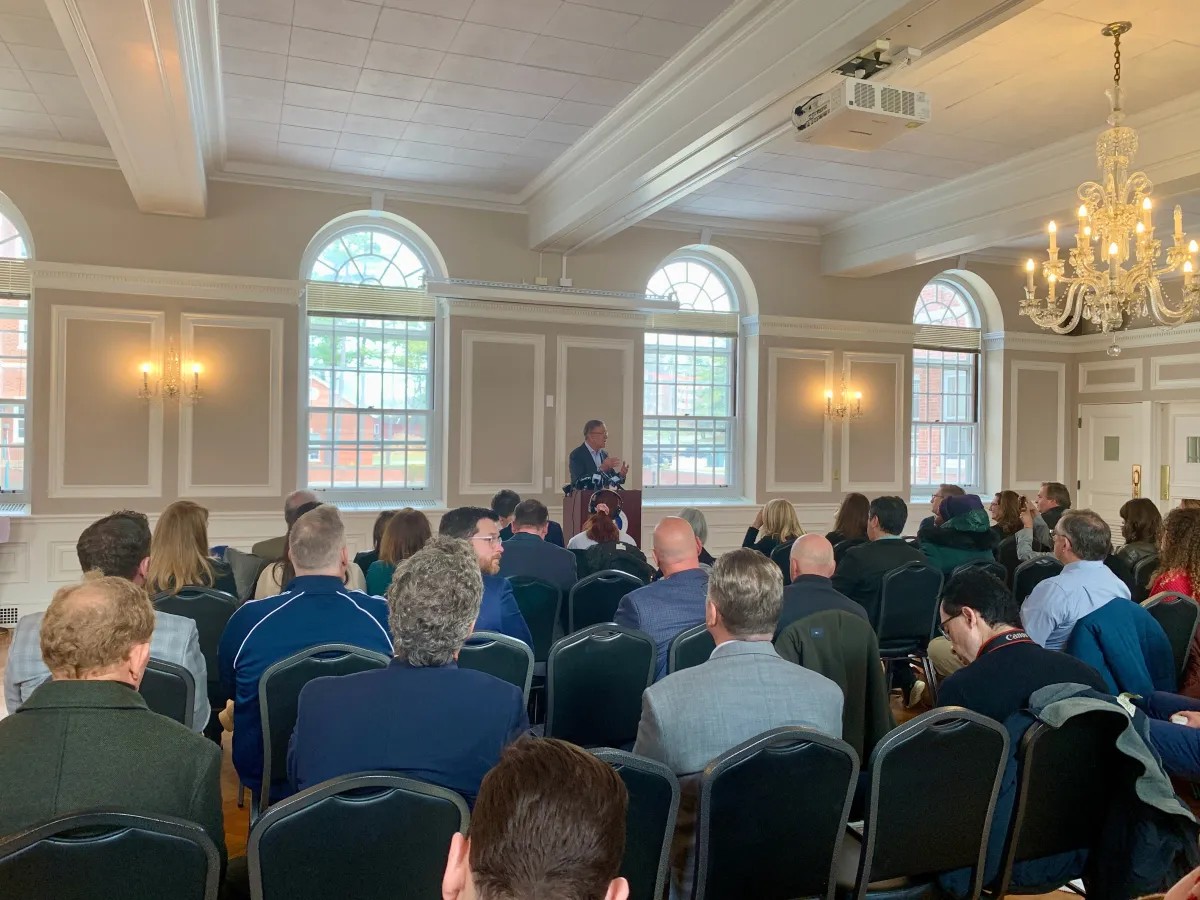
Speaking to a crowd gathered at the University of Saint Joseph in West Hartford on Wednesday morning, state officials emphasized that the state’s remediation efforts will help build off of other housing efforts, including last month’s passage of H.B. 8002, a controversial housing bill that supporters hope will enable the development of more affordable housing in the state.
“This Brownfield program dovetails incredibly well with the new housing bill that has been passed,” said Lt. Gov. Susan Bysiewicz. “We have said in that bill, communities, take a look see what derelict properties there are out there, and build housing. This is funding to make that happen.”
Jim Rivers, executive director of the Northeastern Connecticut Council of Governments, agreed, noting that the brownfield support will help municipalities to start clearing sites and preparing them for future economic development projects.
The grants, he said, “really start that process to give more certainty to developers, to bring forward that investment that you want from the private sector.”
Helping long-awaited projects get started
The state grants will also help start projects that have long been wanted by local officials, finally giving them enough money to get off the ground.
In Ashford and Willington, for example, $200,000 in new state grants will help local officials with an assessment of the Cadlerock property, a 340-acre mass that straddles the town lines. The property has been a source of frustration for years as local officials have tried to figure out how to remediate the site.
“Our goal is to return this property to productive use,” said Ashford First Selectwoman Cathryn Silver-Smith.
The latest round of remediation grants arrives months after significant changes to how the state regulates the cleanup process. In the spring, state legislators approved an overhaul to the Transfer Act, the state’s framework for how to clean up contaminated sites. Next year the state will officially adopt “release-based cleanup regulations,” a framework intended to streamline the process of brownfield remediation, making it easier for properties to be rehabilitated and redeveloped for new use.
Including the latest round of grants announced on Wednesday, the state has issued some $198 million in brownfield remediation grants, covering some 186 properties, according to DECD deputy commissioner Matthew Pugliese. The next round of applications for the grant program will open in January.
As the remediation work continues, state leaders say the effort is having an impact that will ultimately boost the state’s economy. “We’ve done 2,400 acres of brownfields over the last seven years,” Lamont said as the Wednesday event came to a close. “We’ve really liberated a lot of land that would otherwise just not be productive.”
P.R. Lockhart is a reporter for the Connecticut Mirror. Copyright CT Mirror (ctmirror.org).