
By JILL LAWLESS and DANICA KIRKA
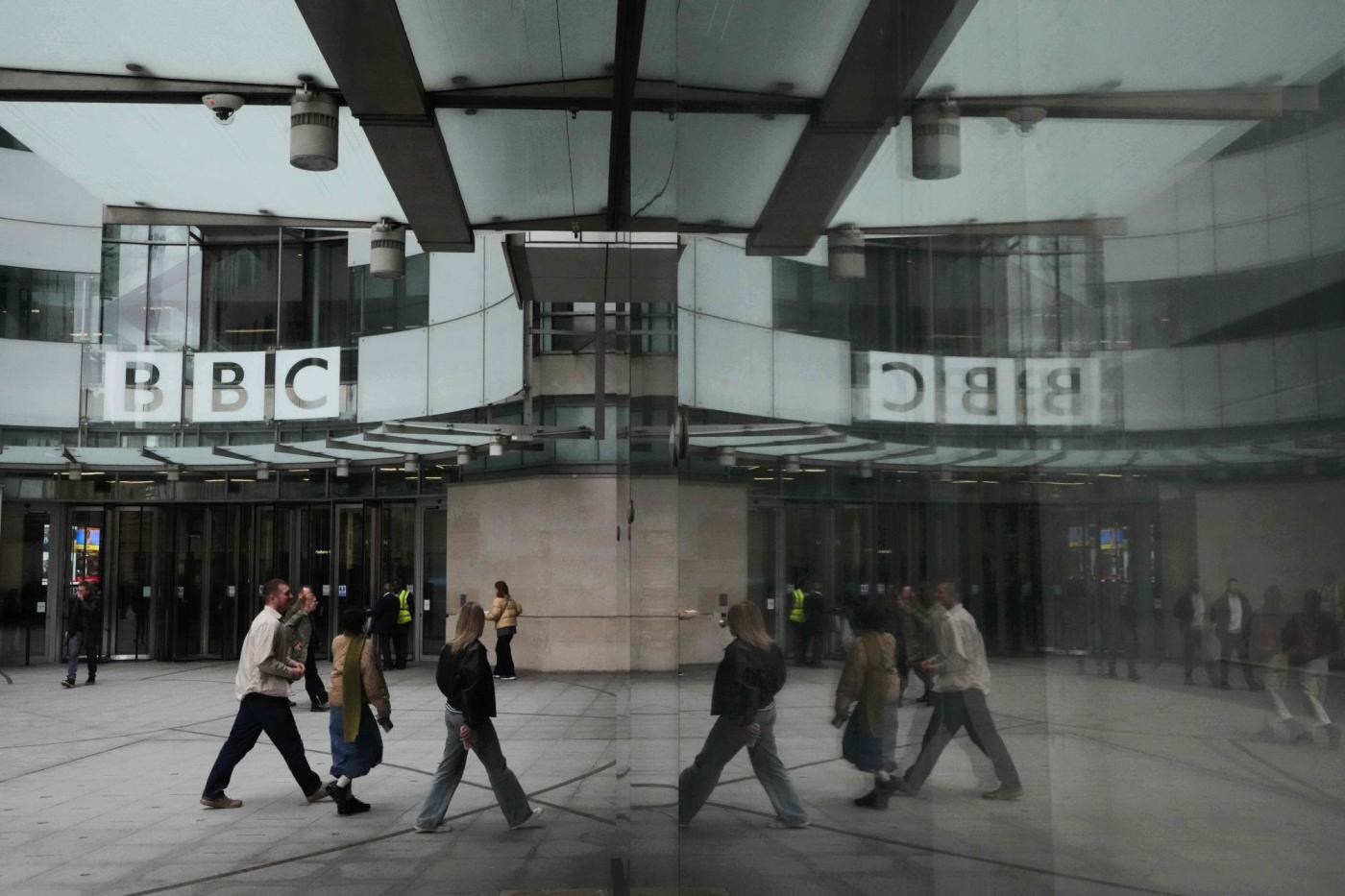
LONDON (AP) — U.S. President Donald Trump is suing the BBC for $10 billion over a television documentary he claims was “false, defamatory, deceptive, disparaging, inflammatory and malicious.”
Britain’s national broadcaster has apologized to Trump over the way it edited a speech in the program, but says it will defend itself against the defamation claim.
The BBC is not the first media organization on the receiving end of a lawsuit from the president. But its position is complicated by its status as a taxpayer-funded public broadcaster and its stature as a closely scrutinized national institution.
A pioneering broadcaster
The BBC was founded in 1922 as a radio service to “inform, educate and entertain,” a mantra still central to its self-image.
It launched the world’s first regularly scheduled television service in 1936, and helped make TV a mass medium when many Britons bought a TV set specifically to watch the 1953 coronation of Queen Elizabeth II.
It operates 15 U.K. national and regional TV channels, several international channels, 10 national radio stations, dozens of local radio stations, the globe-spanning World Service radio and copious digital output including the iPlayer streaming service.
As well as its news output it has a huge global viewership for entertainment shows including “Doctor Who,” “EastEnders,” “The Traitors” and “Strictly Come Dancing.”
The BBC is funded from the public purse
The broadcaster is funded by an annual license fee, currently set at 174.50 pounds ($230), paid by all U.K. households who watch live TV or any BBC content.
The license fee has long had opponents, not least rival commercial broadcasters, and they have grown louder in an era of digital streaming when many people no longer have television sets or follow traditional TV schedules.
The BBC’s governing charter, which sets the license fee, is reviewed once a decade, and the latest round of the process kicked off Tuesday. The center-left Labour government says it will ensure the BBC has “sustainable and fair” funding but has not ruled out replacing the license fee with another funding model.
Managing the broadcaster has become a political football
The broadcaster is bound by the terms of its charter to be impartial in its output. It is not a state broadcaster beholden to the U.K government, but is overseen by a board that includes both BBC staff and political appointees.
It’s frequently a political football, with conservatives seeing a leftist slant in its news programs and some liberals accusing it of having a conservative bias.
It has repeatedly battled British governments over editorial independence, from the 1926 general strike, when Cabinet minister Winston Churchill tried to seize control of the airwaves, to a battle with Tony Blair’s administration over the intelligence used to justify the 2003 invasion of Iraq.
Recently it has been criticized for its coverage of trans issues and the Israel-Hamas war in Gaza. In February, the BBC removed a documentary about Gaza from its streaming service after it emerged that the child narrator was the son of an official in the Hamas-led government.
Documentary that riled Trump
The lawsuit stems from an edition of the BBC’s “Panorama” current affairs series titled “Trump: A Second Chance?” that was broadcast days before the 2024 U.S. presidential election. The film, made by a third-party production company, spliced together two sections of a speech given by Trump on Jan. 6, 2021, into what appeared to be one quote in which Trump urged supporters to march with him and “fight like hell.”
By doing so, it made it look like Trump was giving the green light to his supporters to storm the U.S. Capitol as Congress was poised to certify President-elect Joe Biden’s victory in the 2020 election that Trump falsely alleged was stolen from him.
The BBC apologized last month and two of its top executives resigned.
Trump’s lawyers say the program falsely portrayed the president as a “violent insurrectionist,” caused “massive economic damage to his brand value” and was a “brazen attempt” to interfere in the U.S. election.
The lawsuit, filed in a Florida court, seeks $5 billion in damages for defamation and $5 billion for unfair trade practices.
Legal jeopardy
The BBC said in a statement that “we will be defending this case. We are not going to make further comment on ongoing legal proceedings.”
Media attorney Mark Stephens said Trump and his lawyers face several hurdles. They must prove that the BBC program was shown in Florida and that people in that state thought less of him as a consequence. Trump’s lawyers argue that U.S. subscribers to BritBox and people using virtual private networks could have watched it, but they must prove it definitively, said Stephens, a consultant at the firm Howard Kennedy.
“Allegations of libel are cheap, but proof is dear,’’ Stephens said.
Stephens said Trump’s lawyers also have to deal with the fact that public figures have “to put up with the slings and arrows of incorrect reporting,’’ which are protected under the First Amendment.
While many legal experts have dismissed the president’s claims against the media as having little merit, he has won some lucrative settlements against U.S. media companies and he could try to leverage the BBC mistake for a payout, potentially to a charity of his choice.
The BBC’s position is complicated by the fact that any money it pays out in legal fees or a settlement comes from British taxpayers’ pocket.
“I think President Trump is banking on the fact that the British public will not want to spend the money to defend the claim, nor will they want to pay any money in damages to him,’’ Stephens said. “So it allows him to continue a narrative of fake news and all of those other things at fairly little cost in the global scheme of things.”