
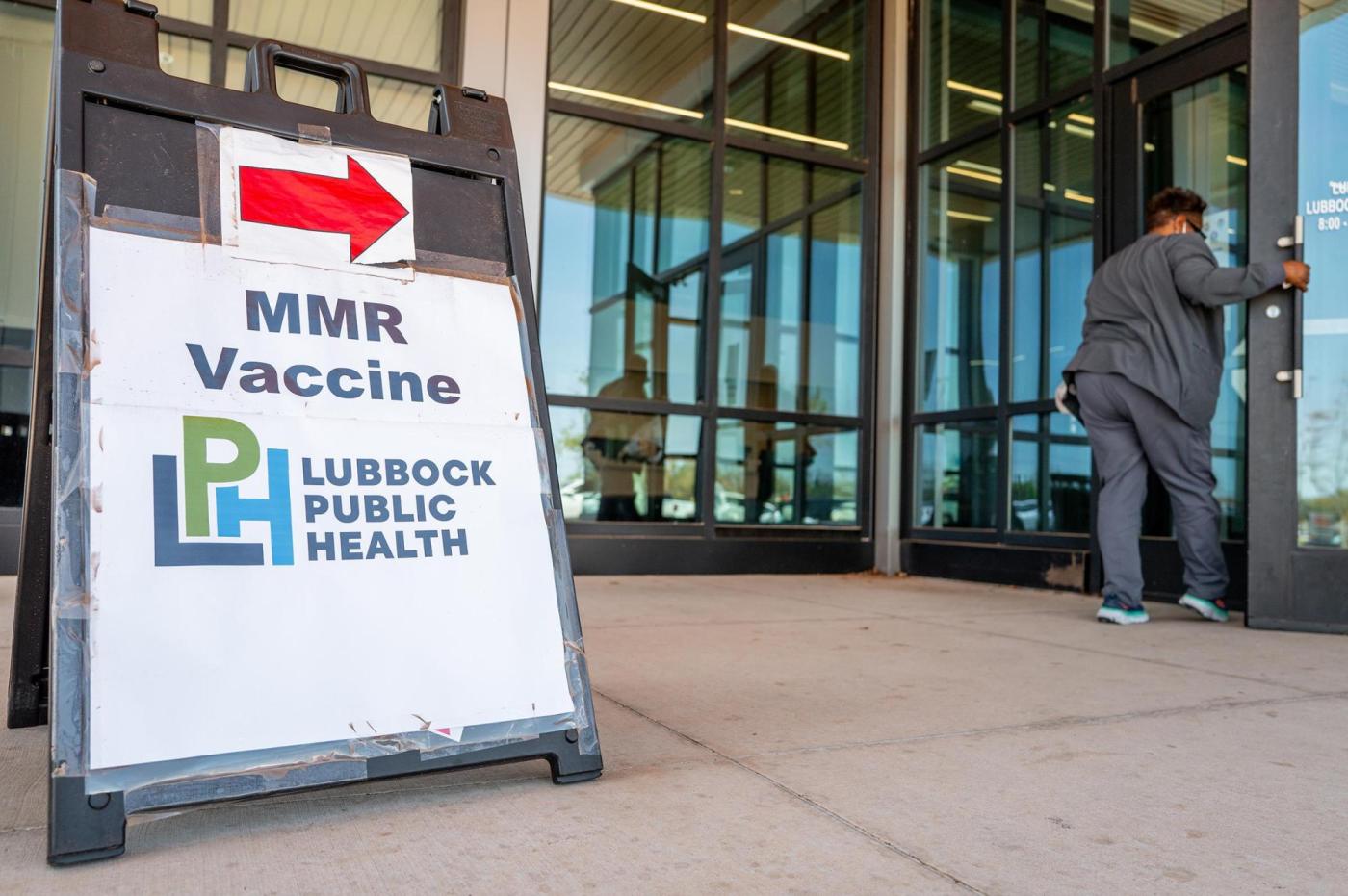
The Connecticut Department of Public Health today said it has confirmed a case of measles in a Fairfield County child who is younger than 10 years old.
It is the first cases of measles confirmed in the state in more than four years, according to DPH. The child was not vaccinated for the virus, DPH said.
“Measles is a highly contagious disease that can spread quickly among unvaccinated people. However, the majority of people exposed to measles are not at-risk of developing the disease since most people have either been vaccinated or have had measles in the past, before vaccination became routine,” DPH has said.
“The single best way to protect yourself and your children from measles is to be vaccinated,” said DPH Commissioner Dr. Deidre Gifford, in a statement.
Symptoms of measles generally begin “7-14 days after exposure to an infected person. A typical case of measles begins with mild to moderate fever, cough, runny nose, red eyes (conjunctivitis), and sore throat,” DPH has said. “Three to five days after the start of these symptoms, a red or reddish-brown rash appears, usually starting on a person’s face at the hairline and spreading downward to the entire body. At the time the rash appears, a person’s fever may spike to more than 104 degrees Fahrenheit.”
According to the federal Centers for Disease Control and Prevention, as of December 9, 2025, “a total of 1,912 confirmed* measles cases were reported in the United States. Among these, 1,888 measles cases were reported by 43 jurisdictions: Alabama, Alaska, Arizona, Arkansas, California, Colorado, Florida, Georgia, Hawaii, Idaho, Illinois, Indiana, Iowa, Kansas, Kentucky, Louisiana, Maryland, Michigan, Minnesota, Missouri, Montana, Nebraska, Nevada, New Jersey, New Mexico, New York City, New York State, North Dakota, Ohio, Oklahoma, Oregon, Pennsylvania, Rhode Island, South Carolina, South Dakota, Tennessee, Texas, Utah, Vermont, Virginia, Washington, Wisconsin, and Wyoming.”
A total of 24 measles cases were reported among international visitors to the United States, according to the CDC.
State Sen. Saud Anwar, D-South Windsor, who is a medical doctor and Senate Chair of the Public Health Committee, said Wednesday, “As a physician, a state senator and a parent, I am deeply concerned by the report of a confirmed measles case involving a young child here in Connecticut. My thoughts and prayers are with this child and their family, and I am hoping for a full and speedy recovery.”
A school-age child died in September from a rare complication of measles contracted in infancy, Los Angeles County health officials said, AP reported.
The child, who had been too young to be vaccinated when they were infected by the virus, died of subacute sclerosing panencephalitis, according to the county health department. The incurable disorder causes progressive brain damage and is nearly universally fatal.
With the United States facing its worst year for measles spread in more than three decades, Connecticut ranks highest in the country for two-dose measles vaccination among kindergartners, according to state public health officials.
“Our high vaccination rates have helped Connecticut remain one of 10 states that has not had a case of measles yet as cases continue to accumulate around the country,” said state Department of Public Health Commissioner Manisha Juthani in a statement.
The Centers for Disease Control and Prevention reported that 98.3% of the state’s kindergarten students received the required measles, mumps and rubella (MMR) vaccine in the 2024-2025 school year, an increase of 0.5% from the previous year.
The DPH has reported that high vaccination rates protect not only vaccinated children but also those who cannot or have not been vaccinated, a concept known as herd immunity.
“Connecticut is one of only 10 states or jurisdictions in the United States to achieve MMR vaccine coverage above the 95% threshold considered necessary for measles herd immunity this school year,” DPH said in a statement.
Schools that achieve herd immunity reduce the risk of outbreaks, according to DPH.
Ian Michelow, professor of pediatrics at the University of Connecticut and division head of infectious diseases and immunology at Connecticut Children’s has said the high vaccination rate in the state was not a random outcome but was by design through legislation passed in 2021.
For more information about measles, visit www.cdc.gov/measles.