
The city is touting its successes of pressuring landlords of troubled properties to either make repairs or relinquish ownership, vowing not to let up on a campaign aimed at improving tenant living conditions and one that doesn’t shy away from naming names of problem landlords.
“We want to send a very strong message to landlords in the city,” Hartford Mayor Arunan Arulampalam said, in a press conference in front of a vacant, blighted building in the city’s South End. “If you refuse to take care of your property, if you are willing to profit off neglect, we are going to come after you.”
In the year since the city released its first list of problem landlords, Arulampalam said 93% of the nearly 900 apartments in multiple buildings controlled by three problem landlords have either been sold or are being renovated. The largest, PAXE Properties and principal Aron Puretz of New York, controlled more than a third of the units. Of the 19 residential properties owned by PAXE, 15 are now under new ownership or are in foreclosure, according to the city.
At the press conference, Arulampalam was surrounded by more than two dozen city employees. They included members of licenses and inspections, development, police and fire — all taking a role, the mayor said, in the effort to push for better housing conditions and overall upkeep of properties. The city also is working with the Office of the Chief State’s Attorney for referrals for potential criminal charges.

The city also recently hired a liaison to field and respond to concerns from tenants in the city, particularly in neighborhoods where there are frequent landlord-tenant conflicts.
The city on Wednesday released a new list of seven landlords with either rundown or vacant properties, the mayor noting owner names, not allowing them, he said, to be shrouded behind the names of limited liability corporations, or LLCs.
The landlords control hundreds of the units throughout the city and three own vacant, decaying properties, the city said.
According to the city, they and the alleged issues are:
 Nisan Bayer, of Spring Valley, N.Y., cited for multiple leaks, rodent and roach infestation; heating problems and damaged windows.
Shlomo Sarot, of Woodmere, N.Y., cited for mice and roach infestation, non-working sinks and excessive heat. A $9,375 lien has been recorded.
Tarequl Ambia, of Manchester, cited for recurring severe rodent and roach infestations. Multiple liens totaling over $30,000 have been recorded.
Stephen Brickman, of New York and Dover, DE, cited for a collapsed kitchen ceiling, peeling paint and structural defects to stairways. A $7,500 lien imposed.
In addition, the city is pressuring landlords of vacant, decaying properties.
The city has invested $250,000 in an effort to secure the vacant, office tower at 25 Sigourney Street, a high-profile target of vandalism and tagging in the past year. The owner is Casey Askar of Naples, Fla., according to the city.
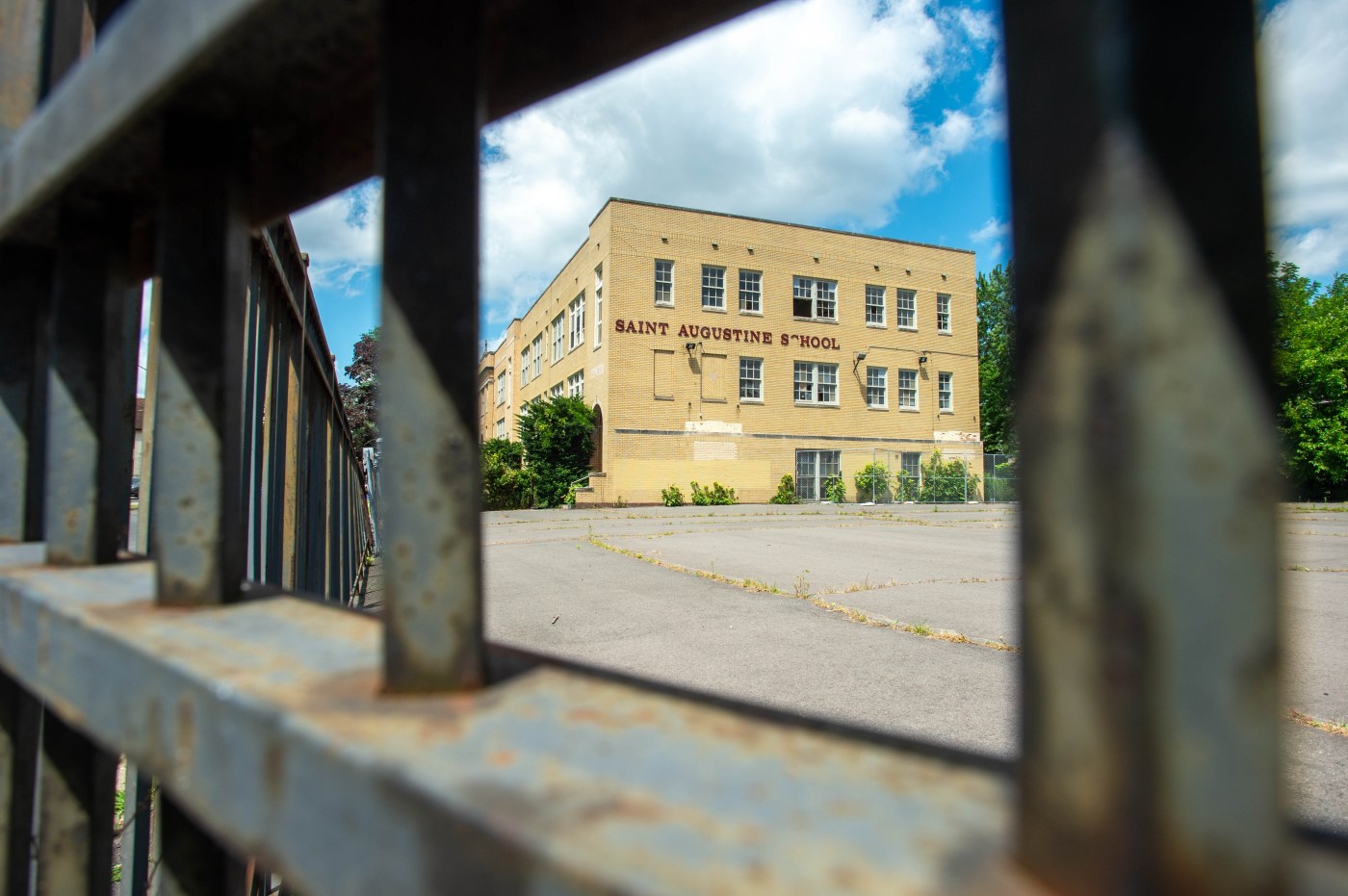
The city also is going after Shmuel Aizenberg of New Haven for multiple properties — including the St. Peter’s Church campus on Main Street, St. Augustine School on Clifford Street and five apartment buildings on Huntington Street — subject to blight and tax liens with foreclosures now pending.
Hanoch Feldman, of Monsey, N.Y., is owner of 715 Wethersfield Ave., a vacant, 12-apartment building, where Wednesday’s press conference was staged. Feldman was among those included on the new list of problem landlords.

Michael D. Perez, the city’s director of blight remediation, said the building was in better condition when Feldman purchased it — and it has not been occupied.
“This was a vacant building that got broken into because it wasn’t being properly supervised by the owner,” Perez said. “Somebody who broke into the building started a fire, as happens when a property is not properly supervised by its owner.”
Perez said, “We have an owner who is not putting money into the building, neglecting it to the point that people breaking in have caused a fire and that not only affected this building and the value of this building, but also the building behind it. We have a housing shortage. We want owners to come in who are going to restore these properties, to provide clean, affordable housing.”
The Wethersfield Avenue property is now in foreclosure and, as is typical in such cases, the city is keeping in close contact with the lender, Perez said.
The city “wants to make sure that the property isn’t going to end up in the hands of somebody else that may do the same thing that this owner did,” Perez said.
Within hours of the press conference, one of the landlords, Bayer, contacted the department of development services. In an email provided by the city, Bayer wrote: “Please send me any open violations or issues that need to be addressed, and I will take of everything ASAP.”
Jessica Doll, executive director of the Connecticut Apartment Association, said the city’s push against problem landlords dovetails with the association’s own efforts.
“Our members work every day to help people live in quality, affordable apartment homes,” Doll said, in a statement. “We believe the rights and responsibilities housing providers and residents have to each other are rooted in the lease agreements they sign, and we support accountability in landlord-tenant relationships to prevent unethical practices and promote safe and ethically sound housing.”
Kenneth R. Gosselin can be reached at [email protected].