
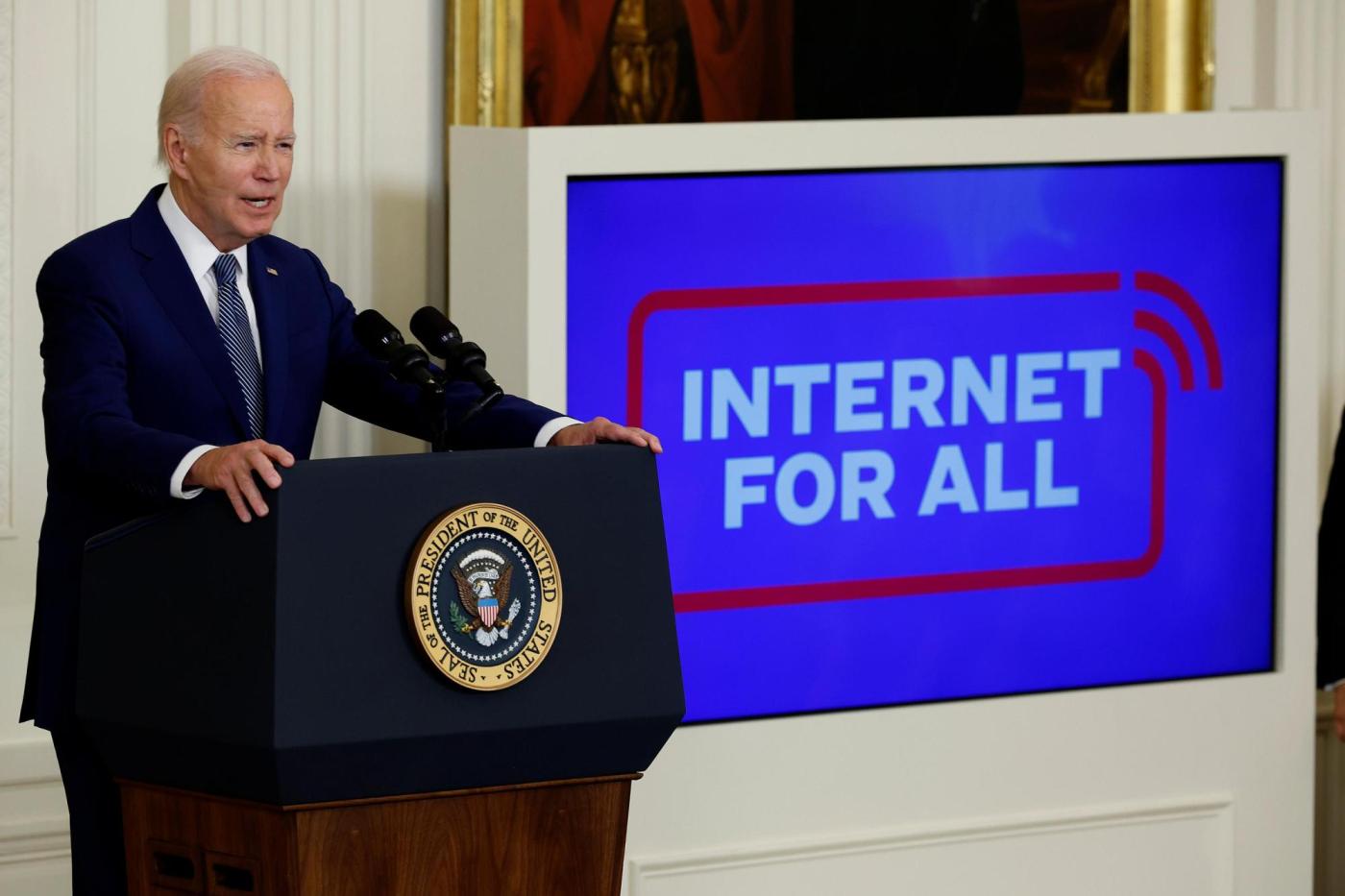
Four years ago, when the Biden administration tasked states with creating plans to drastically expand broadband in the U.S., there was a question of what the call would mean for Connecticut, already one of most well-connected states in the country.
Still, early federal maps identified thousands of places that needed help, suggesting there were more than 15,000 places — ranging from households in rural and geographically isolated communities, to small businesses struggling to afford better connections — in need of reliable high-speed internet.
In the years since, the state has launched a variety of initiatives aimed at improving connections. The ConneCTed Communities Grant Program has provided some $34 million in state grants to help internet service providers build out broadband infrastructure, connecting thousands of locations. Internet providers have also worked to improve service, further reducing the number of households in need.
The federal government’s Broadband Equity, Access, and Deployment (BEAD) program, a $42.45 billion initiative launched in 2021 and aimed at providing additional financial support, was intended to help states move even further toward achieving the goal of “Internet for All.” Connecticut is set to receive some $144 million under the program, money intended to bring high-speed, affordable broadband to the state’s unserved and underserved areas.
After a significant delay, the state received good news last week: Connecticut is one of 18 states to receive federal approval for the final version of its BEAD plan. Connecticut won’t immediately receive the $144 million it has been awarded, but federal approval is seen as a key step in the process, indicating that the state has done enough to receive its funding in the near future.
The announcement was quickly met with praise by state officials.
“Access to fast, affordable, reliable high-speed internet is a requirement of life today, whether it be getting medical care, paying bills, or finding work and educational opportunities,” Governor Ned Lamont said in a statement. “Improving residents’ access to broadband has been a priority of mine since we enacted Connecticut’s first broadband bill in 2021, and this authorization marks another significant step toward that goal.”
But the conditions for the money — the BEAD program initially required multiple application rounds, assessments and administrative requirements — have changed significantly in recent months.
The Trump administration restructured the program, issuing a June policy notice that removed guidelines supporting climate change resilience, workforce diversity and broadband affordability.
The administration instead pushed states to prioritize what it called the “benefit of the bargain” — a call to build broadband infrastructure at low costs, despite states already crafting detailed plans on how the broadband money could be used.
The administration also encouraged a “technology neutral” approach — abandoning the Biden administration’s preference for more expensive fiber connections in favor of a broader range of broadband technology, including satellite programs like Elon Musk’s Starlink and Amazon’s Leo.
Those changes — following years of challenges to federal broadband maps, internet access expansions and regulatory updates — further reduced the number of locations that still qualify for the BEAD program. By the summer of 2025, Connecticut had just 885 locations that were expected to still be served by BEAD, a more than 80% reduction from the initial numbers.
The recent policy changes reduced that number even more. In its updated plan, the state expects to serve 717 locations, leaving some the most expensive and hardest-to-connect locations off of the list.
Now, with the BEAD money on the way, state leaders say they are prepared to use the broadband money as soon as possible.
“We are ready to expand critical infrastructure across the state that will empower our workforce, drive economic development, support healthcare, and advance education,” Department of Energy and Environmental Protection Commissioner Katie Dykes said in a statement. “We look forward to seeing every corner of the state benefit from this program as Connecticut closes the gap on internet access.”
But the federal broadband program is about to launch in a national landscape that is very different from when it was first enacted. And as efforts to close the digital divide shift, changes to the once lauded initiative may render it less effective.
A shift in federal priorities
From the beginning, the BEAD program set out with an ambitious goal: connecting as many people as possible to the internet.
In the past few years, states put together plans outlining how they would accomplish the task. Connecticut first released drafts of its two part broadband plan in 2023 and received federal approval for its initial proposal early in 2024.
The plan was detailed, calling for the state to promote affordability, expand broadband services and provide support to ensure that people didn’t just have internet access, they also knew how to use the internet and could navigate digital tools.
The federal funds were a crucial part of that effort. “BEAD is an infrastructure program,” said Reid Sharkey, a community broadband specialist and researcher with the Benton Institute for Broadband & Society, a national organization that supports expanded internet access. “The first goal is getting broadband service to all of the locations that need it in the country. But then beyond that, the remaining funds are used for sort of maximizing the potential of those networks.”
But the BEAD program has dragged in its rollout. More than three years after it was first announced, the vast majority of the money allotted under BEAD has gone unspent, frustrating broadband advocates and digital policy experts.
The delays in the BEAD program are a key reason why the Trump administration argued that it needed to restructure the initiative. But the new changes to the program are complicated and have raised their own concerns in recent months.
The administration says it is squarely focused on one thing: cost. During the summer, the federal government pivoted to telling states to focus on building broadband for less money, drastically reducing the spending expected under the program. One analysis, completed last month by experts at New York Law School’s Advanced Communications Law and Policy Institute, suggests that states are on track to spend around just half—roughly $21 billion — of the available BEAD funds.
A separate analysis from the institute found that as many as one million locations may still lack high-speed internet after the BEAD program completes distributing funds. The organization has suggested that the leftover money could be used to fund an additional round of BEAD to help close any gaps.
But that solution isn’t currently being backed by the federal government. The administration has instead suggested that it may pull any remaining “non-deployment” funds back from the states, framing the reduced state BEAD spending as “savings” in recent discussions of the program.
“With so much money left over, some people have argued why not spend a little bit more, give them fiber or cable or terrestrial network and not have to give them satellite service,” said Michael Santorelli, the director of the Advanced Communications Law and Policy Institute. “Under the Trump rules, that’s not how it works.”
Connecticut’s plan will expand broadband, but some communities will be left out
For the most part, Connecticut managed to avoid needing to overhaul its BEAD plan. The state still intends to primarily install fiber connections, which are more expensive than satellite-delivered internet, but are generally seen as having better longevity. And the state has used its own money to help establish additional broadband connections in recent years.
But the BEAD changes will affect how Connecticut works to reach more expensive and geographically-isolated areas. In its final broadband plan submitted earlier in the fall, officials noted that the new cost requirements made fiber a financial non-starter in some areas, adding that it was difficult to find an affordable satellite provider that could fill the gap. As a result, some 119 unserved locations, and an additional 49 underserved locations, cannot be helped with BEAD.
In both cases, the state argued that the costs of connecting these areas would be “unreasonably excessive. ”
The Connecticut Department of Energy and Environmental Protection, the agency tasked with overseeing the BEAD application process, acknowledged in an email to the Connecticut Mirror that the new federal guidance affected the state’s plan to connect these areas.
But the agency maintained that the funds will still have a significant impact on communities in the state.
“We intended to finish the job of connecting everyone to the degree possible with BEAD, and are doing so, connecting another 717 program-eligible residential and small business locations in 76 towns throughout the state,” said agency spokesman Will Healey.
“Ultimately, even with the Restructuring Policy Notice, Connecticut has been successful in meeting our key goals for the deployment phase of the program,” he added.
The BEAD program is just one way that the federal government has altered Biden-era broadband initiatives in recent months. Earlier this year, the administration terminated funding that was going to be allotted under the Digital Equity Act, a $2.75 billion proposal that would help states fund efforts to improve digital literacy and related skills in vulnerable communities.
The changes cost Connecticut $20 million, a loss that has frustrated advocates who hoped the money would support workforce development, digital navigation and community education efforts around the country.
“People are still getting scammed every day. People are still not able to apply for jobs, people are still not able to talk to their doctors. All of those things are still happening,” Angela Siefer, the executive director of the National Digital Inclusion Alliance, told the Connecticut Mirror in June. “What’s changed is that we don’t have this federal investment that would allow us to figure out what works.”
Months later, those concerns remain. “A lot of the folks that are going to get service through BEAD have never had access at their home to the Internet,” said Sharkey. “The Digital Equity Act was going to ensure that those folks had an opportunity to really maximize the impact that broadband access could have on their lives.”
And those changes mean that even as the digital divide narrows across the country, broadband advocates and policy experts say that more work will need to be done to ensure that people are able to take advantage of internet access and devices.
The exact impact of Connecticut’s BEAD investments will not be clear until the remaining locations are connected. But for now, state officials say they remain optimistic about the state’s work and what comes next.
“We’ve also prioritized getting the best technology, long-term scalable broadband connections for residents as possible so that the infrastructure investment lasts well into the future,” Healey, the DEEP spokesperson, said in an emailed statement. “ We’ve been able to achieve that end.”
P.R. Lockhart is a reporter for the Connecticut Mirror. Copyright 2025 @ CT Mirror (ctmirror.org).