
Gov. Ned Lamont says he knew about infighting among commissioners at the state’s utility regulatory board, but he did not try to micromanage the agency because it is an independent body.
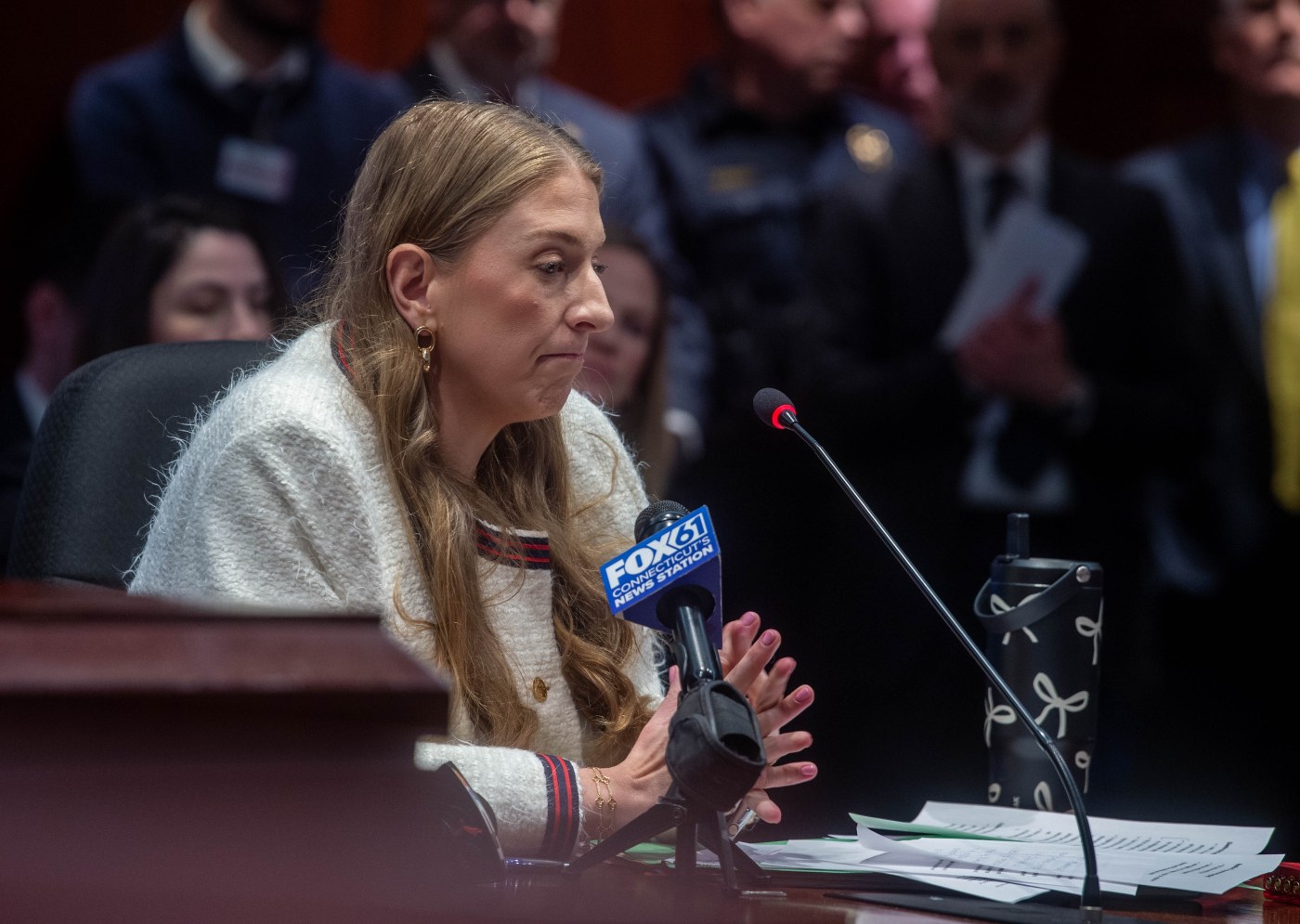
Lamont said in an interview that he spoke about the infighting with Marissa Gillett, the embattled chairwoman of the Public Utilities Regulatory Authority who resigned in October amid long-running controversies and clashes with the state’s electric and gas utility companies. The conversation took place after Lamont was told that two of the three agency commissioners were being frozen out of important decisions and getting little help from agency staffers.
“I remember telling Marissa, ‘Look, there are three commissioners,’ ” Lamont told The Courant during a recent wide-ranging interview in Hartford a day before he announced his campaign for reelection. “‘You’ve got to work together, and they’ve got to be included, and they’ve got to have their rights to staff.’ And she said, ‘All I want to do is know who is talking to which staff.’ That was about the extent of my involvement on that front.”
Lamont added, “You want to know the one thing they agreed on? Three was the right number of commissioners. That was the only thing the three of them agreed on — that that was the right number of commissioners.”
Despite the clashes and complaints, Lamont said he did not attempt to get involved in the regulatory agency’s day-to-day operations.
“It’s an independent agency,” Lamont said. “I can’t micromanage them. We appoint commissioners, and then they do their thing. If I interfere or if I suggest things about a docket, that’s not what my role is at all. I was very careful about that. With the Department of Social Services, I can intrude a little more. PURA is an independent board.”
Lamont was responding to a detailed deposition by PURA commissioner Michael A. Caron in which he said that he had told Lamont about the internal infighting in 2023. Caron remains on the board, but will be stepping down for another commissioner who has been nominated by Lamont.
In his deposition, Caron said that he and fellow commissioner John W. Betkoski were excluded from various decisions after Gillett was appointed as the new chairwoman. Both Caron and Betkoski were former state legislators before their appointment to the formerly low-key utility board that later vaulted into the public eye with front-page headlines over controversies.
Kevin Rennie: CT accomplished what was thought to be impossible
The deposition is part of a continuing civil lawsuit by Eversource Energy against PURA and Gillett over rates and other issues. Under oath, Caron publicly confirmed the infighting at PURA in recent years. With 18 years as a Republican state legislator and then 13 years at PURA, Caron is well known in state government circles.
When asked by Eversource attorney Thomas J. Murphy if Betkoski and he both “stopped getting assigned as presiding officer or lead commissioner” on utility cases, Caron replied, “Correct.”
Caron testified that he and Betkoski had previously sat in on interviews for hiring new staff members at the management level, but that stopped when Gillett became chairwoman. Caron said that he had spoken to both Lamont and his chief of staff, Matthew Brokman, about the internal clashes.
When asked about Caron’s deposition, Lamont said, “I remember he came in. He and Jack [Betkoski] maybe came in. I can’t remember.”
“Separately,” interjected Brokman, who was sitting at a conference table with Lamont during the 40-minute interview that covered his race for a third term and other topics like affordable housing.
“Look, they weren’t getting along very well,” Lamont said of the commissioners.
Among the controversies that have stretched for more than a year include questions about emails and text messages that showed some of the internal workings of the agency. Lamont said that Gillett had taken a strong stance on various rate cases by the utilities.
“I don’t think the utilities are mad at her because of the emails,” Lamont said. “They’re mad because she was really tough in holding them accountable.”
Lamont strongly backed Gillett during months of controversies and stood behind her renomination as she was approved by the legislature. When all Republicans boycotted the vote to protest the process, Gillett was approved 21-0 by the state Senate.
“Look, if you think electricity prices are a big deal, you don’t want a weak PURA that can’t stand up to the utilities, which have an awful lot of power in the legislature and beyond,” Lamont said. “Maybe you think PURA was too aggressive in holding the utilities accountable. I don’t. I think they were tough. … Now, we have a change. We have five commissioners on there who have a breadth of experience. They will have to work constructively with the utilities, but don’t back down.”
Eversource declined to comment on Caron’s deposition. But chief spokeswoman Tricia Modifica addressed the broader issues.
“This chapter between Connecticut and its investor owned utilities has been a dark and unfortunate one, where the destruction of state records, lies under oath to the legislative and judicial branches, and the concealment of state records came to light,” Modifica said. “None of these actions put customers first. Customers must be the focus as we turn the page. We are looking forward as we intend on working closely with Gov. Lamont’s appointees to PURA in ways that make the necessary investments for safe and reliable service for customers, recognizes us as a partner and not an adversary, and advances the policy priorities in the state in a collaborative fashion.”
PURA infighting
After 18 years as a state legislator and 13 years at PURA, Caron said he was flabbergasted at the extent that he was frozen out, saying he was invited to fewer meetings and received little help from fellow employees.
“I felt like the frog in the water. All of a sudden, what the hell?” Caron testified. “Essentially, I was my own staff.”
When Caron and Betkoski saw that their workload was reduced and that they were not being appointed as the lead commissioners on cases, they approached Gillett for an explanation.
“We asked the chair why aren’t we getting dockets?” Caron said. “And her answer was that she wanted to use what she called the Maryland model. She hails from the state of Maryland and felt that a single point of contact would be more efficient.”
Opinion: Don’t let utilities bully Connecticut’s energy regulators
Caron said in his deposition that he spoke with Brokman, Lamont’s chief of staff, to say that he and Betkoski were being frozen out “and not being full partners in the authority leadership.”
He believes the discussion with Brokman took place during the legislative session in 2023, and he added that he then met later with Brokman and Lamont about the issue.
“I recall the governor saying, when I mentioned that I don’t have access to staff, he replied, to the effect, ‘Well, you’re commissioner,’ ” Caron said. “You can go to staff any time you want. Which is my understanding.”
But Caron said that was not the case at PURA under the leadership of Gillett.
Electricity
On the broader issues, Lamont said, “We’ve had the highest electricity prices in the country for the last 50 years. We’re not oil. We’re not Texas. We can’t put a straw in the ground and get oil and gas. Everybody is making up stuff. ‘Hey, let’s have five commissioners, not three. Let’s move it to the taxpayer from the ratepayer.’ All of that is B.S. What you’ve got to do is do everything you can in terms of energy efficiency to reduce demand. We’re doubling down on that. We need more sources of energy, and I’m all of the above.”
Moving forward, Lamont and various legislators want PURA to drop out of the headlines. House Speaker Matt Ritter of Hartford has repeatedly stated that he is tired of reading about the controversies in the newspaper and that the PURA commissioners need to refocus on regulating the utilities. The long-running clashes made it difficult to recruit new commissioners, he said, to an agency that was constantly embroiled in controversy, and he called for a return to a time with fewer clashes.
“It didn’t make it easy for me to recruit people,” Lamont said. “It scared some people off. Let’s let these guys do their job.”
Christopher Keating can be reached at [email protected]